

Bitcoins “whale Ratio” Spikes As US-Iran Conflict Escalates: Heres What It Means For Price

The Bitcoin market is currently navigating a high-stakes “defensive liquidity” environment as global markets reel from the sudden escalation of the US-Iran conflict.
Summary
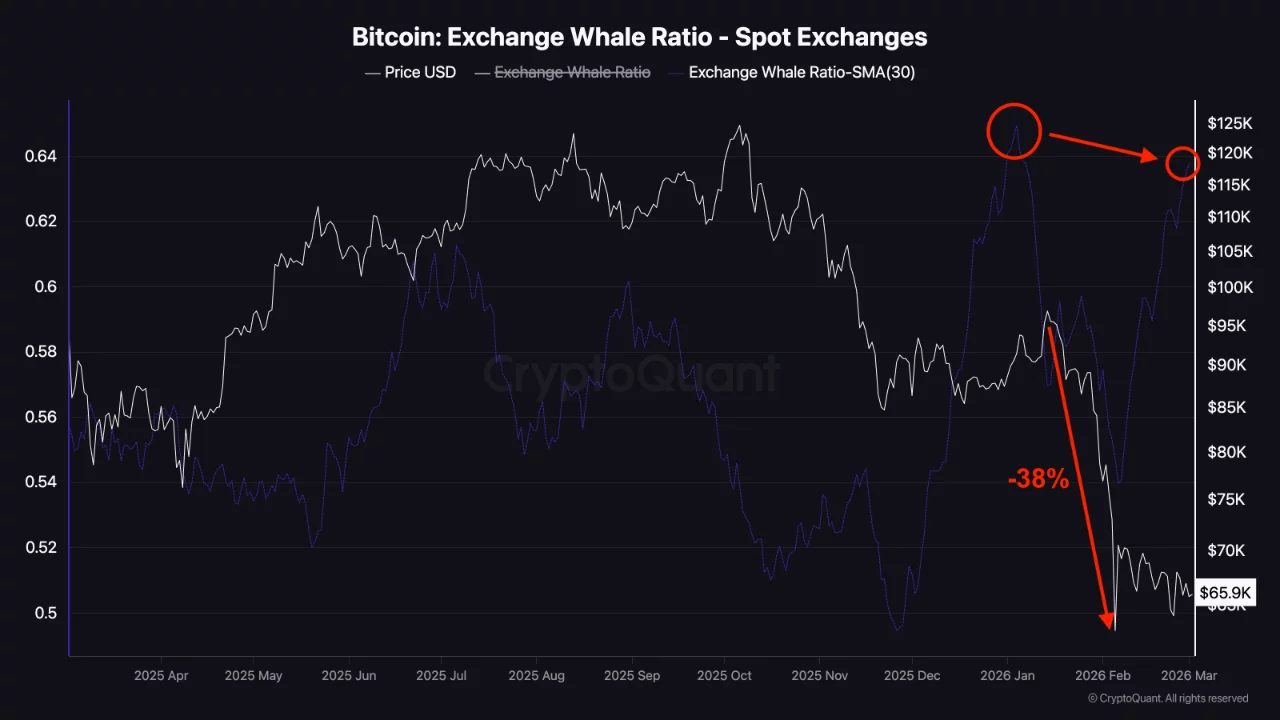
- The “Exchange Whale Ratio” has spiked to levels that historically preceded a 38% price drop, suggesting that large holders are actively repositioning as the US-Iran military conflict escalates following the death of Iran’s Supreme Leader.
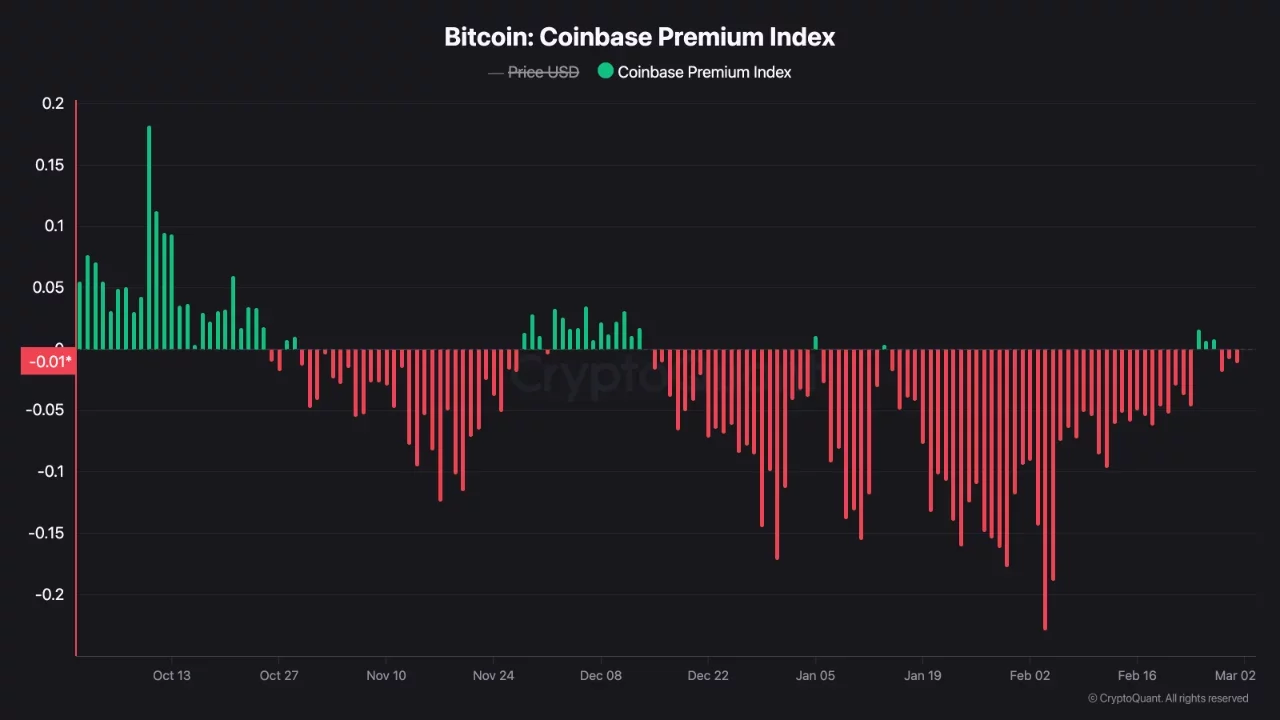
- Despite high whale activity, the Coinbase Premium Index remains negative, indicating that organic U.S. buying interest has vanished as investors pivot toward traditional safe havens like gold and oil.
- While USDC inflows suggest capital is returning to exchanges, this liquidity remains sidelined and inactive, creating a fragile market structure where price action is driven by speculative flows rather than fundamental accumulation.
Following military strikes on February 28, 2026, and subsequent retaliatory drone attacks across the Gulf, the Bitcoin’s (BTC) Exchange Whale Ratio (30d SMA) has begun a sharp ascent.
CryptoQuant data highlights that this specific technical spike historically mirrors the lead-up to major price corrections, such as the 38% decline seen earlier this cycle. While whales aren’t necessarily dumping, their rising activity suggests large-scale players are aggressively repositioning in anticipation of further geopolitical fallout.
Despite the surge in whale movements, organic buying remains notably absent.
The Coinbase Premium Index is firmly in negative territory, signaling that U.S. spot demand has vanished as investors pivot toward traditional safe havens like gold and oil.
On-chain data reveals a “liquidity trap”: while USDC (ERC-20) netflows to exchanges have turned positive, this capital remains sidelined, serving as a defensive buffer rather than fueling Bitcoin purchases.
Meanwhile, USDT continues to migrate toward alternative rails like Tron, further indicating a fragmented and cautious liquidity structure.
The current price action is no longer being driven by fundamental adoption but by tactical positioning against a backdrop of war.
With the Strait of Hormuz effectively closed and global equity futures plunging, Bitcoin’s recent rebound to $66,600 appears fragile. Without a return of sustained spot demand, the market remains susceptible to “flow-driven” volatility where whales dictate the trend.
Until the geopolitical dust settles and U.S. buyers return to the fold, any upward momentum is likely to be met with heavy overhead resistance.
Major Players In Crypto Hacked
Crypto's Billion-Dollar Blind Spot: Inside the Bitget Heist and the Revolut Extortion PlotThere is a particular kind of ... Read more
Bitcoin Suisse Turns Regulation Into Growth
For much of crypto’s short history, growth was measured in trading volumes, token prices and the number of customers w... Read more
Circle Wins Landmark US Banking Licence
Circle Internet Group has finally secured the regulatory prize it has been chasing for more than a year, with the Office... Read more
Crypto Treasuries Chase A New Kind Of Capital
There is a peculiar irony at the heart of the crypto treasury movement. Companies that staked their futures on digital a... Read more
What Strategy's Bitcoin Sale Really Tells Us
There is a moment in every bull run when the narrative starts to fray. Not with a crash, not with a scandal, but with so... Read more
The Clock Is Ticking On UK Stablecoins
The world is not waiting for Britain to make up its mind. While the United States and the European Union have spent the ... Read more