

 The week of July 13th-17th highlights a pivotal shift toward digital integration and structural resilience across global supply chains. From the deployment of automated visibility networks like FourKites to the rise of AI-driven control towers in the energy sector, organizations are increasingly prioritizing real-time data to navigate complex operational constraints. This period also underscores the tension between immediate capital reallocation for AI infrastructure and the long-term necessity of building climate-resilient logistics networks amidst systemic water volatility.
Your Top Supply Chain Stories Here:
The Technology Marketing and Sourcing Partner (TMS) Deploys FourKites for Shipping Needs
 To automate tracking workflows across complex retail and packaging supply chains, shippers are increasingly integrating real-time tracking data directly with existing transportation management software. This transition is demonstrated by the deployment of FourKites’ real-time ocean and rail visibility networks by tms, a global technology, marketing, and sourcing partner. By utilizing a live digital twin of its global ocean shipments and domestic U.S. rail movements, the organization can systematically identify transport disruptions, adjust downstream warehouse scheduling, and update estimated arrival windows. This transition to automated tracking replaces manual status checks, reduces administrative labor hours, and supports strict on-time, in-full (OTIF) delivery compliance by identifying transit delays well ahead of scheduled arrivals.
Connecting Operational Truth to Commercial Decisions: The Evolution of Energy Control Towers
 In capital-intensive and highly volatile sectors, operational data generation often outpaces organizational processing capability. The implementation of digital control towers within energy and resource logistics seeks to resolve this fragmentation by aligning real-time physical flows with commercial constraints. Rather than serving as passive visualization layers, these systems are structured specifically around decision support, integrating supervisory control and data acquisition (SCADA) metrics with downstream variables such as storage capacity, vessel positioning, and customer contracts. By utilizing digital twins to simulate operational adjustments—such as cargo rerouting or maintenance deferrals—organizations can systematically evaluate cost and emissions trade-offs before deploying physical assets. To maintain operational trust in these high-consequence decision networks, these control towers require comprehensive data governance, role-based access, and segmented security controls integrated directly into the core infrastructure.
Capital Squeeze: Enterprise Spending Pivots to Secure Scarce AI Hardware
 The rapid demand for artificial intelligence capabilities is driving a significant realignment of enterprise technology budgets from software and services to physical infrastructure layers. This capital shift was highlighted by a 25 percent reduction in share value for a major enterprise technology provider, following a preliminary second-quarter revenue report of $17.2 billion against Wall Street expectations of $17.86 billion. This variance was primarily driven by enterprise customers abruptly redirecting capital during the final weeks of the quarter to secure supply-constrained servers, storage, and memory ahead of anticipated price increases. This capital reallocation reduced spending on transaction-processing software and mainframe infrastructure, indicating that while total corporate commitment to artificial intelligence remains steady, immediate capital is being heavily concentrated in the foundational hardware tier of the technology supply chain.
Systemic Water Volatility: Rebuilding Logistics Networks for Environmental Baselines
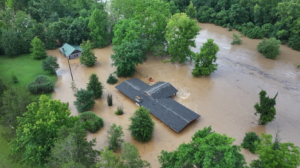
 Environmental volatility is transitioning from a series of isolated disruptions into a systemic, compounding variable that requires a structural rewrite of climate-resilient logistics routing strategies. Global supply networks are increasingly exposed to concurrent water volatility risks, where vital inland waterways face simultaneous closures from flooding and drought, neutralizing traditional barge lanes. To adapt to this baseline of uncertainty, logistics operations are transitioning from static emergency response models toward dynamic network design parameters. This shift involves establishing modal elasticity directly within carrier contracts to allow rapid shifts between barge, rail, and road, extending predictive tracking beyond Tier-1 suppliers to assess regional labor constraints, and integrating predictive climate data as a core parameter in geographic facility-selection models.
J&J Restructures Pharma Supply Chain Amid $55 Billion Domestic Manufacturing Drive
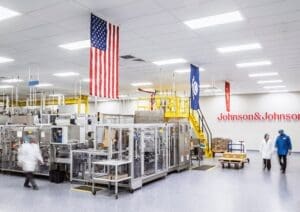 To optimize its global drug-manufacturing footprint, Johnson & Johnson is initiating a comprehensive restructuring of its innovative medicines supply chain. Following a landmark $55 billion multi-year investment commitment designed to localize the production of all U.S.-bound advanced therapies, the organization is streamlining operational workflows by offloading selected production facilities and exiting specific supplier agreements. This consolidation strategy, projected to incur up to $750 million in total decommissioning, asset impairment, and site exit costs through fiscal year 2029, aims to transition capabilities away from older, legacy assets and concentrate high-volume operations within next-generation domestic hubs. By prioritizing localized, high-efficiency facilities for complex modalities like cell therapies and biologics, the strategy aims to mitigate long-term geopolitical and regulatory supply risks while aligning manufacturing capacity directly with regional demand signals.
Song of the week:
AI Is Reshaping Supply Chain Execution. Here’s What Comes Next.
Two ARC Advisory Group white papers on the next stage of AI in supply chain operations.
AI is moving beyond isolated copilots and technical architecture into coordinated operational decision systems. This ARC Advisory Group white paper explains how supply chain AI is shifting from capability to execution, where context, governance, workflows, thresholds, and action pathways determine whether AI improves real decisions across planning, logistics, sourcing, fulfillment, and risk management.
Download Our Featured White Paper:
AI in the Supply Chain Part II: From Architecture to Execution - Defining the Decision Intelligence Layer in Modern Supply Chain
Download Our Foundational White Paper:
AI in the Supply Chain: Architecting the Future of Logistics with A2A, MCP, and Graph-Enhanced Reasoning
Explore Our Domains
Planning, Execution & Visibility | Transportation & Logistics Operations | Warehousing, Fulfillment & Automation | Global Trade & Compliance | AI & Advanced Analytics | Data, Integration & Interoperability | Supply Chain Platforms | Risk & Resilience | Sustainability & ESG
Independent ARC research for supply chain leaders and technology decision-makers.