

Peninsula Istanbul: A Hotel From A Bygone Age
In the past two decades, Istanbul's Karaköy district, a historically significant port on the north bank where the Golden Horn meets the Bosphorus, has shed its rough-edged, utilitarian skin. Once merely a footnote in travel guides as a gritty remnant of the Byzantine era, the area has now witnessed a staggering transformation, totalling an investment of $1.7 billion. This metamorphosis is most notably epitomized by the creation of the world's inaugural subterranean cruise ship terminal at Galataport, a project reminiscent of Istanbul's Roman cisterns, famously depicted in the James Bond film "From Russia with Love".
Crafted by the esteemed Istanbul architectural firm Autoban, the terminal is a marvel of engineering, featuring a sequence of hydraulic metal barriers that seamlessly integrate into the promenade. These barriers remain inconspicuous when dormant but transform into a functional barricade as ships arrive, revealing access pathways for passengers to the customs area.
The now revitalized Galataport is characterized by its 1.2-kilometer esplanade, a bustling hive of activity with its array of shops, eateries, and cafes, frequented by both locals and tourists alike. The area is also the new domicile for two significant art establishments: the Istanbul Museum of Painting and Sculpture, housed in a repurposed warehouse, and the Istanbul Modern, which has found a new home in an impressive glass and aluminium edifice designed by Renzo Piano.
Central to this rejuvenated district is The Peninsula hotel, a prestigious addition by Hongkong and Shanghai Hotels. Set to be fully operational imminently, the hotel is situated amidst an environment still witnessing some developmental strides. A poignant reflection of contemporary security measures is the mandatory walkthrough of a knife arch and baggage scanning to access the esplanade.
Strategically positioned, The Peninsula Istanbul offers unparalleled access to Istanbul's historic heart. A mere five-minute stroll brings one to the Galata Bridge, leading to Sultanahmet – the location of monumental landmarks like the Topkapi Palace, Hagia Sophia, and the Sultan Ahmed Mosque. Other noteworthy sites include the Grand Bazaar, Rüstem Paşha Mosque, and the Kılıç Ali Pasha Mosque, a lesser-known gem designed by the acclaimed 16th-century architect Mimar Sinan.
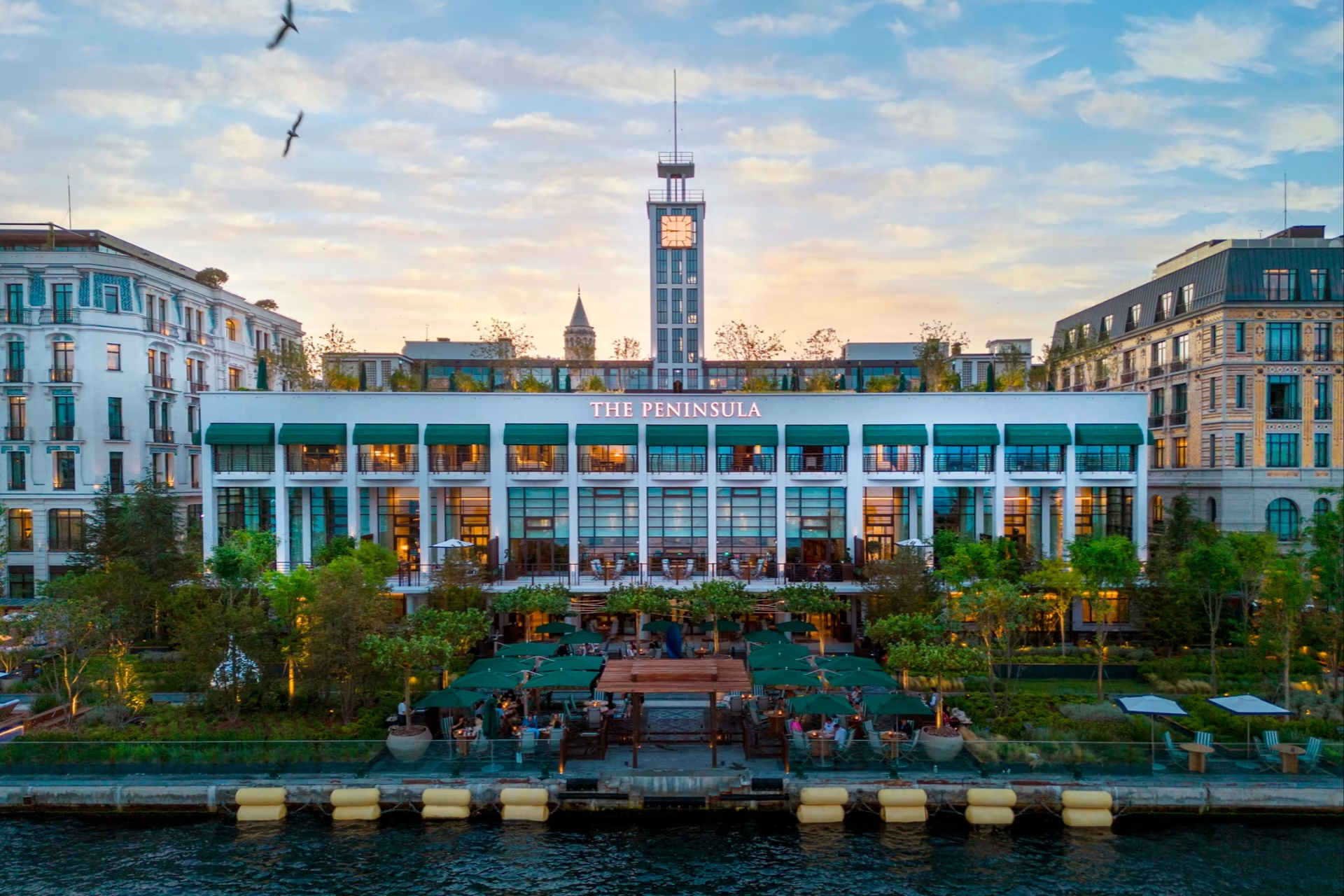
The Peninsula itself is an architectural tapestry, comprising three historic buildings and a contemporary extension. Its nucleus, the former Karaköy passenger terminal, is a Bauhaus-style icon dating back to 1937, flanked by two late Ottoman era structures and a modern addition featuring guest rooms and a grand ballroom. The interior design, orchestrated by Zeynep Fadıllıoğlu, blends classical contemporary aesthetics with subtle nods to traditional Turkish artistry, evident in the intricate details and luxurious materials used throughout the property.
Technological sophistication is a hallmark of The Peninsula, with user-friendly touchscreens controlling various amenities, though some features like the nail dryer and magnetic wireless chargers might strike one as slightly superfluous.
For guests keen to immerse in Istanbul's cultural tapestry, the hotel's "Peninsula Academy" offers bespoke tours, including a journey through the lens of famed photographer Ara Güler. A guided excursion with Sinan Sökmen, an eminent local historian and author, promises an enlightening exploration of Istanbul's hidden treasures, from ancient caravanserais to magnificent mosques and historical beverage haunts.
Culinary experiences at The Peninsula are diverse and exquisite. Chef Fatih Tutak, a Michelin-starred maestro, helms Gallada, a rooftop dining venue with a Silk Road-inspired menu, blending Central Asian and Turkish cuisines into a gastronomic symphony. The hotel also houses The Lobby, a restaurant offering an international menu crafted by Chef Alessandro Santi, set against a backdrop of sumptuous gardens and stunning waterfront views.
The Peninsula's clientele is predominantly international, with a notable presence of American guests, attributable to the brand's recognition in the U.S. Jonathan Crook, the British general manager, also highlights growing interest from Mexico and Brazil.
As for the cost of indulging in this luxurious haven, it stands as one of Istanbul's priciest accommodations. The starting rate for the basic room category is steep, and opting for a Bosphorus view incurs a significant additional charge. However, for those seeking a more economical option, nearby alternatives such as the Novotel offer a feasible solution, allowing one to still partake in the Peninsula's culinary offerings.
By Brett Hurll
Meta Rises On The Back Of Connect
Meta’s AI Moment: Can Muse Justify the Bill?There are moments in the market when investors stop asking whether a compa... Read more
A Buyout Of Another British Fintech
Monzo and Nubank: A Marriage of Digital Banking AmbitionMonzo’s reported discussions with Brazil’s Nubank have the p... Read more
Major Players In Crypto Hacked
Crypto's Billion-Dollar Blind Spot: Inside the Bitget Heist and the Revolut Extortion PlotThere is a particular kind of ... Read more
Does The West Have A Problem With Government Bonds
If you have been following the financial pages over the past few weeks, one theme has begun to stand out from the usual ... Read more
Meta Faces Its Big Tobacco Moment
For years, the largest social media companies have faced accusations that their platforms damage young people. They have... Read more
Sequencing Resilience: Defining A New Category
Why the industry must treat Retirement Portfolio Resilience as a distinct allocation alongside retirement income solutio... Read more