

India On Track For Record IPO Year
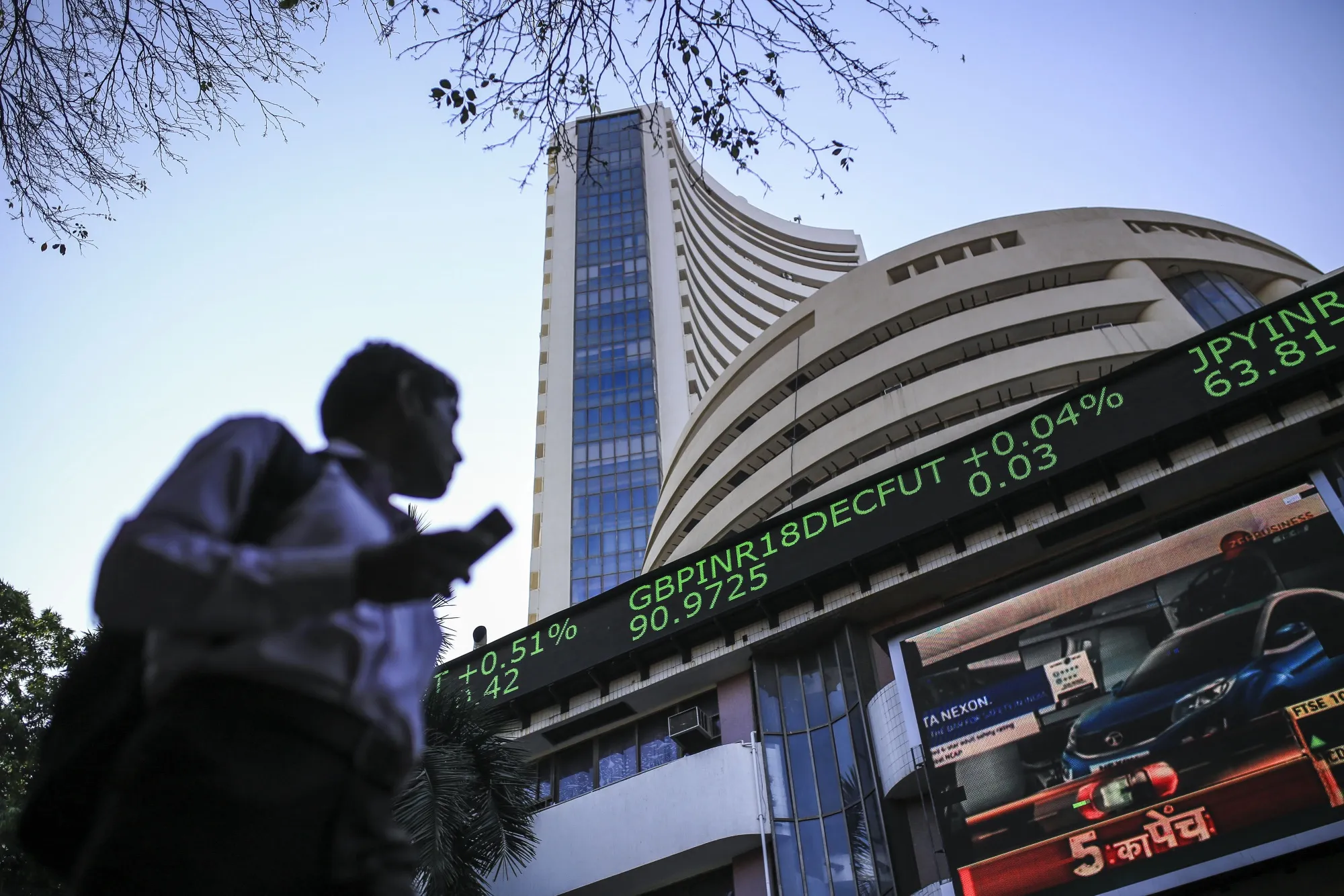
India is set for a record year in initial public offerings, as a buoyant domestic market and a string of interest rate cuts fuel investor appetite for equities. The amount raised in primary listings so far has reached $6.7bn, up from $5.4bn over the same period last year, making India the world’s largest IPO market outside the United States, according to Dealogic data.
Several landmark flotations are due to come to market in the coming months, including Tata Capital’s anticipated $2bn offering, which analysts say could propel the total raised past last year’s figure of $21bn. “We are going to see a significant acceleration in the primary market compared to the first half,” said Sunil Khaitan, managing director and head of India financing at Goldman Sachs. He expects as much as $20bn in new equity issuance during the second half of the year.
The resurgence comes despite a turbulent backdrop earlier in 2025, when India faced multiple headwinds. The blue-chip Nifty 50 index had started the year on a weak footing, reflecting concerns over slowing growth, a brief military flare-up with Pakistan, and pressure from tariffs imposed by US President Donald Trump. Yet the benchmark has rebounded strongly, climbing around 7% year to date and approaching a record high.
Part of that recovery has been driven by the Reserve Bank of India’s decision to cut interest rates by a full percentage point since January. Officials say the move was designed to support the economy as inflationary pressures eased and growth indicators stabilised. The policy shift has boosted risk appetite, with retail investors pouring household savings into equity mutual funds at record pace. The rally has also been supported by personal income tax cuts that have left consumers with more discretionary capital.
“Further central bank interest rate cuts should fuel domestic investor appetite for equities in general, including IPOs,” said Hasnain Malik, head of equity strategy at emerging markets research group Tellimer. “Foreign institutional investors are still ‘underweight’ in India relative to their benchmark indices, which means they have capacity for these IPOs.”
Even as foreign investors remain cautious, the scale of local participation has been striking. Overseas institutions have withdrawn $8bn from Indian equities this year amid concerns about high valuations and global trade tensions. However, the outflows have been dwarfed by more than $42bn of inflows from domestic funds, according to Goldman Sachs estimates.
India’s pipeline of listings has swelled as companies look to take advantage of the recovery in valuations. ICICI Prudential Asset Management, a joint venture between ICICI Bank and Prudential, this week announced plans to go public, in what is expected to be the third Indian IPO this year valued at over $1bn.
Investor sentiment has been bolstered by strong aftermarket performance among newly listed companies. HDB Financial Services, which debuted at the start of the month with a $1.5bn offering, has risen 5%. IT services provider Hexaware has gained nearly 15% since its $1bn listing in February.
“These two deals certainly add to the confidence of a long list of IPO candidates in the country,” said Perris Lee, head of Asia-Pacific equity capital markets at Mergermarket. “We should expect more medium- to jumbo-size IPOs to test market appetite soon.”
Among the companies preparing to list are the Indian arm of South Korea’s LG, online brokerage Groww, and ecommerce platform Meesho. Tata Capital’s flotation is seen as a bellwether for broader sentiment, with bankers expecting strong demand across institutional and retail tranches.
Despite the buoyant mood, some analysts warn that risks remain. India has yet to reach a comprehensive trade agreement with Washington, and President Trump has repeatedly threatened fresh tariffs if progress stalls. Tensions between the two governments have created uncertainty over the outlook for exporters and sectors reliant on American demand.
“We need a few more [IPO] deals to go well to determine if the bull market is back, especially at a time when the macro background remains uncertain,” Lee cautioned.
Still, market participants say India’s economic fundamentals are relatively robust compared with other emerging markets, helping underpin confidence among domestic buyers. The government has focused on infrastructure spending, technology investment, and measures to support small businesses, policies that have bolstered consumption and employment.
The prospect of further rate reductions could add momentum. Inflation, which spiked last year, has moderated in recent months, creating scope for the Reserve Bank to ease policy further if growth softens. Some investors see this as a supportive backdrop for equities, particularly as returns in fixed-income markets have become less compelling.
“Retail investors have been the backbone of this rally,” Malik said. “They are reallocating savings to equities because of tax incentives, low interest rates, and the sense that India’s growth story remains intact despite short-term noise.”
While foreign funds remain wary, many are expected to re-engage if valuations settle. “Foreign institutional investors are still structurally underweight,” Malik noted. “That leaves considerable room for participation in the IPO pipeline.”
For now, the focus is squarely on execution. Bankers say deal-making is likely to intensify over the coming months as companies rush to price offerings while sentiment remains constructive. If Tata Capital and other major floats land successfully, India could set a new record for annual equity fundraising.
“The IPO market is in the midst of a revival,” Khaitan said. “Companies are taking advantage of strong liquidity and positive momentum. But they also know that windows can close quickly, especially in an environment where global risks are still very much in play.”
Market watchers agree that the second half of the year will be decisive. Success will hinge on whether the recent wave of listings can sustain gains in the aftermarket and whether policymakers can steer the economy through external shocks. For now, India’s IPO pipeline remains among the world’s most active, a sign that confidence is returning, even in a volatile global landscape.
Meta Rises On The Back Of Connect
Meta’s AI Moment: Can Muse Justify the Bill?There are moments in the market when investors stop asking whether a compa... Read more
A Buyout Of Another British Fintech
Monzo and Nubank: A Marriage of Digital Banking AmbitionMonzo’s reported discussions with Brazil’s Nubank have the p... Read more
Major Players In Crypto Hacked
Crypto's Billion-Dollar Blind Spot: Inside the Bitget Heist and the Revolut Extortion PlotThere is a particular kind of ... Read more
Does The West Have A Problem With Government Bonds
If you have been following the financial pages over the past few weeks, one theme has begun to stand out from the usual ... Read more
Meta Faces Its Big Tobacco Moment
For years, the largest social media companies have faced accusations that their platforms damage young people. They have... Read more
Sequencing Resilience: Defining A New Category
Why the industry must treat Retirement Portfolio Resilience as a distinct allocation alongside retirement income solutio... Read more