

Apple's AI Strategy: A Bold Move Towards Integration And Market Expansion
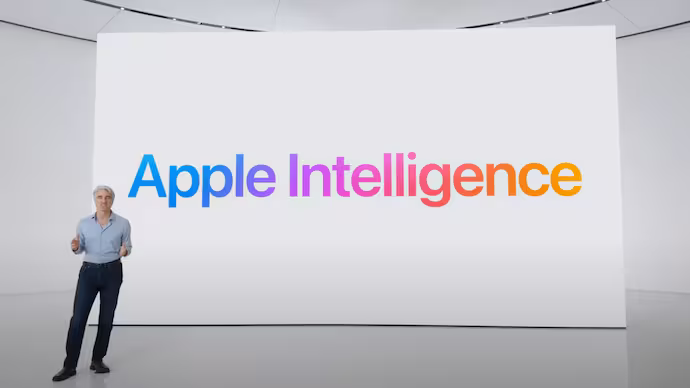
In an era where artificial intelligence (AI) is at the forefront of technological advancements, Apple's strategic decision to partner with OpenAI marks a significant yet surprising shift in its approach to AI integration. The announcement, made at Apple's annual Worldwide Developers Conference (WWDC), underscored the tech giant's ambition to not only catch up with competitors but also leverage AI to enhance its ecosystem and drive device sales.
A Surprising Partnership
Historically, Apple has been known for its preference for in-house innovation, rarely relying on third-party technologies for core functionalities. This makes its partnership with OpenAI particularly noteworthy. Tim Cook, Apple's CEO, emphasized that AI represents "the next big step for Apple," introducing a suite of generative AI models dubbed "Apple Intelligence." These models are set to be embedded in the upcoming iOS 18, iPadOS 18, and macOS Sequoia operating systems.
Unlike its rivals, Apple has not developed generative models of the same complexity and scale. Instead, it has created a foundational model with 3 billion parameters, a stark contrast to OpenAI's GPT-4 and Google's Gemini Pro, which boast over a trillion parameters. This strategic decision allows Apple to act as a gateway to more advanced AI products available in the market, enhancing its existing capabilities without fully relying on external entities.
Emphasizing Control and Privacy
Apple's AI strategy heavily emphasizes control and privacy, key differentiators that the company believes will resonate with its user base. Craig Federighi, Apple's Senior Vice President for Software, highlighted that personal data used to train Apple's AI models would remain within the Apple ecosystem, enhancing user privacy and security. This approach ensures that AI processes run primarily on devices, with cloud interactions being handled by Apple's own servers.
This focus on privacy extends to the integration with OpenAI's ChatGPT, which will handle more complex queries beyond Apple's own AI capabilities. Siri, Apple's virtual assistant, will prompt users before utilizing ChatGPT, ensuring transparency and user control. OpenAI has committed to maintaining robust privacy protections, including not storing requests and obscuring IP addresses to prevent profiling.
Driving Device Sales
A critical aspect of Apple's AI integration strategy is its potential to drive device sales. The new AI features, including custom-generated emojis, advanced photo editing, writing and drawing assistants, and a more contextually aware Siri, will only be available on the latest and most powerful devices. This includes the iPhone 15 Pro, Pro Max, and newer devices equipped with the M series chips for laptops and tablets.
This move creates a compelling incentive for users to upgrade their devices to access these enhanced functionalities. Francisco Jeronimo, Vice President of Data and Analytics at IDC, described this transition as "the beginning of a new era for Apple and their users," predicting a future "supercycle" of device sales driven by AI features.
Apple's decision to partner with OpenAI and integrate generative AI models into its ecosystem marks a bold and surprising move. By emphasizing control, privacy, and seamless integration, Apple aims to enhance its product offerings and drive device sales. As the company navigates the complexities of AI integration and market expectations, its success will hinge on its ability to balance innovation with user trust and privacy. This strategic shift could indeed herald a new era for Apple, positioning it as a leader in the intelligent device market.
Meta Rises On The Back Of Connect
Meta’s AI Moment: Can Muse Justify the Bill?There are moments in the market when investors stop asking whether a compa... Read more
A Buyout Of Another British Fintech
Monzo and Nubank: A Marriage of Digital Banking AmbitionMonzo’s reported discussions with Brazil’s Nubank have the p... Read more
Major Players In Crypto Hacked
Crypto's Billion-Dollar Blind Spot: Inside the Bitget Heist and the Revolut Extortion PlotThere is a particular kind of ... Read more
Does The West Have A Problem With Government Bonds
If you have been following the financial pages over the past few weeks, one theme has begun to stand out from the usual ... Read more
Meta Faces Its Big Tobacco Moment
For years, the largest social media companies have faced accusations that their platforms damage young people. They have... Read more
Sequencing Resilience: Defining A New Category
Why the industry must treat Retirement Portfolio Resilience as a distinct allocation alongside retirement income solutio... Read more