

It has become something of a cliché to compare our own era to the nineteen-thirties, though for the most part such comparisons are wildly overblown. It is usually journalists who make these comparisons, and one can't help but see it as a solipsistic attempt to cast themselves as heroic truth-tellers in the mould of the minority of western intellectuals who stayed honourable during that period, the "low dishonest decade" as W.H. Auden called it.
Where the comparison with the thirties does perhaps carry weight is in the domestic arena. Not least because that miserable decade was pregnant with the hope that things could be better if rationality was brought to bear on problems like poverty and ill health.
The real question is whether today's radicals can usher in change comparable to that era - full employment, a universal education system, social welfare, a national health service, as well as redesigned and modernised towns and cities – without the destructive interregnum of a major war.
Bound up in the so-called 'spirit of 45' is the idea of 'public' ownership, or in practice state ownership. For example, the Transport Act of 1947 created British Railways by merging the big four rail routes.
Thatcherism sought to tear up the post-45 settlement and we find ourselves today in something of a stalemate. Many of the old industries have been closed down or sold off, while national institutions like the NHS are deemed untouchable.
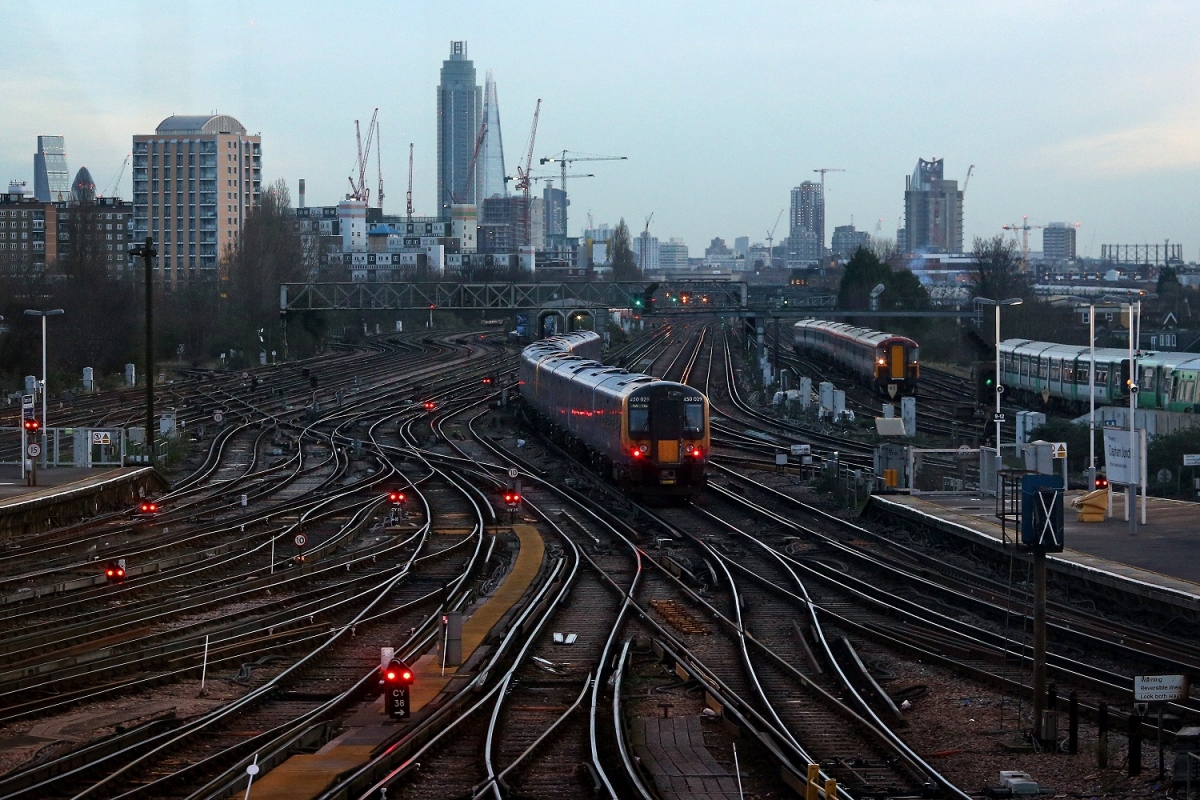
The railways were privatised in the early nineteen-nineties by the government of John Major. Thus whenever the service seems to deteriorate or there is a steep rise in fares, the call goes out to bring the railways back into public ownership. There seems to be widespread public support for doing so as well.
And fares do seem to keep going up. On Tuesday (5 December), it was announced that train fares are set to rise by an average of 3.4% from January, the biggest rise in five years. An off-peak return ticket on the train from London to Bristol now costs around £80, which is about the same as a return flight to Spain with one of the budget carriers. On the plane you will get a seat too, which is by no means guaranteed on one of the busy commuter routes.
Some will cite ticket price rises as the inevitable cost of a better service, yet many of the improvements on the railways in recent years – safety and punctuality are far better today than 20 years ago – are actually products of state-controlled Network Rail, where privatisation was reversed after the disastrous era of Railtrack.
Services have improved because of massive investment by the state, not because of capitalist competition. And anyway, competition is something of a misnomer when it comes to trains: the railways can never function like a regular business in that train companies can never be allowed to fail. You can't let the network go down for a week – leaving passengers high and dry - out of misplaced fealty to free market dogma.
But would the nationalisation of train franchises make journeys any cheaper? Not necessarily. Rail fares are going up at present because the government is trying to shift the burden of subsidy from the state onto the passenger.
For example, figures from the Office of Rail and Road for October show that £4.2bn was given to the rail industry in 2016-17 - a drop of 13% on the previous year.
Rail franchises are not (at present anyway) the cash cows they are made out to be. As the Observer reported last year: "farepayers put £8.8bn into the railways in 2014-2015, compared with £3.5bn from the state. Next to this combined "input" of £12.3bn, private operators took out £222m in dividend payments".
In other words, compared to other sums being ploughed into the railways, the rate of profit being taken out is relatively low. Of course, 200 million is not a figure to be sniffed at in austere times, but it is far from the sort of money that is going to drastically bring down the price of a train ticket or yield vast improvements to the service – new carriages alone can cost several billion pounds.
Money to really shake things up would have to be found by either cutting costs (see job losses), adding to Network Rail's growing pile of debt (£40bn), or by asking the taxpayer to cough up. None of these options is particularly attractive.
Of course, nationalisation is arguably a good idea in principle. Not necessarily the nationalisation model of the past, but a model in which public ownership actually meant public ownership – or at least democratic control.
The best argument for social democracy today is that it would extend participation and genuine accountability to the huge swathes of economic life that are the preserve of what are effectively little dictators.
But taking the railways into public ownership would not magically bring down fares or solve the problems inherent to the system. A state-run rail network would bring before any government a new set of difficult choices, and it is silly to pretend otherwise.