


The recent introduction of tariffs by the US administration on steel and aluminium products has reignited a heated debate about protectionism and the future of globalisation. First directed mainly at China, the tariff exemptions against allies – the EU, Mexico and Canada – have now been lifted. This means there will now be a 25% duty on European steel and a 10% duty on European aluminium that is exported to the US.
EU leaders are clearly angry with the decision. The EU is officially challenging the tariffs at the World Trade Organisation's trade court. Meanwhile, leaders from Germany, France, the UK and Italy are likely to take the US president to task over the matter at the upcoming G7 summit.
There is clearly a political element at play, but here I outline the economic costs – and possible benefits – for the EU, so long as things do not escalate.
According to standard international trade theory, when a large economy such as the US introduces a tariff (which is basically an import tax) on a good, the price of that good will increase in the US and decline elsewhere. So steel and aluminium will become more expensive in the US and less expensive globally.
The reason behind this is that the tariff will make importing foreign steel and aluminium into the US more expensive – because the foreign supply of these goods in the US is reduced. Exports from countries around the world that were previously heading to the US now have to be redirected to other countries. As a consequence, world supply (outside the US) of steel and aluminium will increase and so its price in world markets will fall.
Winners and losers
These price movements will cause several effects in different countries around the world. Focusing on the 28 EU countries, overall the net effect of the US tariff to EU countries is going to be negative and there will be two types of broad effects – direct and indirect.
The direct effect in the EU will be negative for aluminium and steel producers and their workers, since their exports to the US are going to be hampered. The position of EU aluminium and steel producers could further deteriorate because the US has already introduced tariffs for these goods to other countries such as China and producers from these countries are already trying to redirect their exports from the US to the EU.
But the significance of EU steel and aluminium exports is rather small – about 1.23% and 0.43% of total EU exports to the US. The indirect effect on EU countries will be positive for firms that use steel and aluminium intensively – primarily manufacturing and also construction.
This is because the lower steel and aluminium price outside the US will reduce their costs and could be passed onto consumers in the form of lower prices. Exactly how big this positive effect will be, in reality, depends on numerous factors – the size of the US steel and aluminium market, the exact market conditions of these goods globally, the elasticity of demand and supply and possible exchange rate fluctuations.
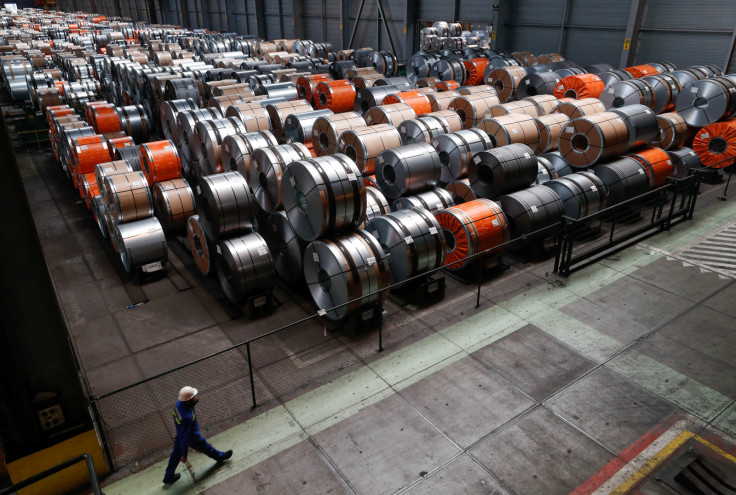
The adverse effect on steel and aluminium producers in the EU is not going to be distributed evenly across countries. Those with bigger exposure to exports into the US are going to be affected more. The biggest EU aluminium exporters to the US are Germany, with a 29% share of total EU exports to the US, followed by France (15%), Italy (12%), Austria (9%) and the UK (7%).
For steel, the largest EU exporters to the US are Germany, with a 23% share of the bloc's exports, followed by the UK, Sweden, the Netherlands and Italy, which all have an 11% share of exports.
Another dimension to the problem from an EU country's perspective is how important these exports to the US are at a national level. Luxembourg, for example, exports steel to the US and this makes up a significant portion of its total exports to US, between 15% and 31% during the period 2000-17. So Luxembourg could be disproportionately hit by the tariffs.
Similarly, for Greece and Romania, steel made up more than 10% of their total exports going to US in 2015. So, although these exports levels to the US seem low when compared with other EU countries, they are of high economic significance at a national level. Hence, these countries are going to experience some of the most adverse effects of the US tariffs.
Risks of escalation
The most worrying aspect of Trump's decision to introduce tariffs is the rhetoric that has been used by some EU and US officials regarding a "trade war". It is expected somehow that the EU, along with Mexico and Canada, will retaliate with their own protectionist measures against US products. This escalation will make everyone worse off in the end.
The US has also looked at the possibility of introducing more tariffs, on imported cars and trucks. This is a much more important and large sector in terms of value and share of EU exports. Then there is the risk that various EU countries might push for protectionist policies in an attempt to win popularity among their electorates.
As things stand, the tariffs on steel and aluminium introduced by the US do not pose a threat to the global economy, even though they are clearly a negative development in international relations. But the adoption of protectionist rhetoric by other major economies and, even worse, the implementation of such policies could potentially be very harmful for global trade and prosperity.
Agelos Delis, Lecturer in Economics, Aston University
This article was originally published on The Conversation. Read the original article.