

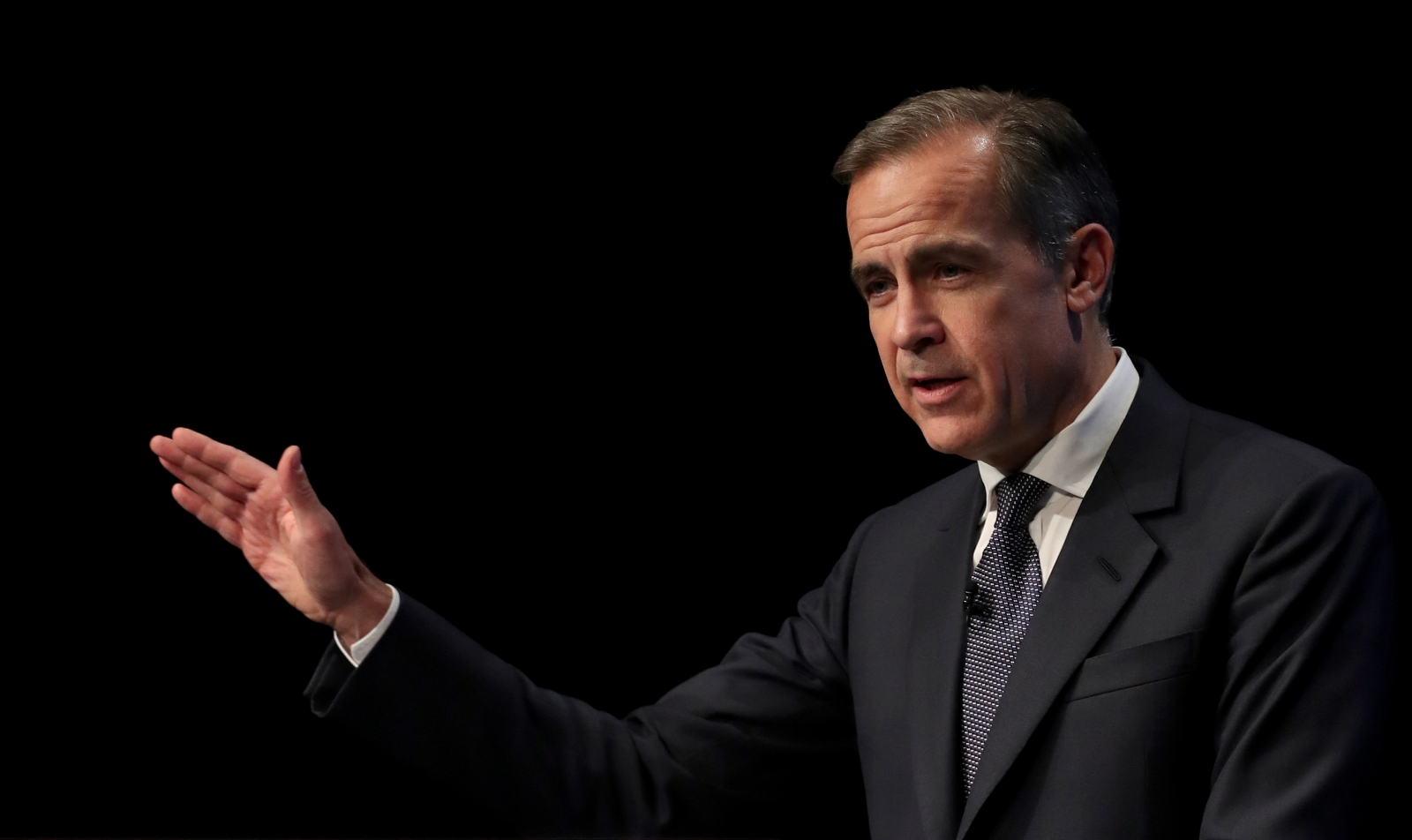
The Bank of England (BoE) will do whatever it can to support Britain's economy in the event of any Brexit shock, governor Mark Carney has said.
Carney said Threadneedle Street policymakers had already drawn up plans to ensure the UK's financial system was safeguarded and inflation kept under control, regardless of whether Britain reached a trade agreement with the bloc or not.
Talks between Britain and the EU have moved at a slow pace, with the two sides unable to agree on some of the most fundamental issues such as the divorce bill, Irish border and citizens rights.
These three areas have been the sticking points throughout all six rounds of negotiations that have been ongoing since the start of summer.
Earlier this week, Michel Barnier, the man at the head of the EU's Brexit negotiating team warned that he was now planning for a possible collapse in the talks, but Carney said the BoE would be ready to support the UK economy.
"We will do whatever we can to support the economy during the transition - whether there is no deal or a comprehensive deal," he said in an interview with ITV's Good Morning Britain.
"We can provide support by keeping prices low and stable and by making sure banks can withstand whatever shock that might come whatever deal we have.
"People shouldn't have to worry about inflation and financial stability. We'll make sure inflation stays low and the banks stay strong."
The BoE and Carney came under scrutiny from pro-Brexit MPs and economists in the lead-up to the last year's referendum, when they were accused of adopting scaremongering tactics to convince people to back the remain campaign.
In the months following the vote, critics pointed at a set of better-than-expected economic data as proof the approach taken by the Bank had been too alarmist.
However, while the UK's economy fared better than forecast in the immediate aftermath of the vote, signs of a slowdown have since begun to emerge, while the pound is still approximately 10% lower against the dollar than it was up to June 2016.
Last month, the Office for National Statistics (ONS) reported that Britain's gross domestic product (GDP) grew 0.4% on a quarterly basis in the three months to the end of September, up from the 0.3% recorded in the previous quarter, which analysts expected to remain unchanged.
However, Carney maintained Brexit had dealt a severe blow to the economy.
"We have not done as well in the short term as we would have done if the vote had gone the other way," he explained. "We've gone from being the fastest growing economy in the G7 to one of the slowest."