

Zhao Weiguo: Chinese Regulator Accuses Chip Tycoon Of Corruption
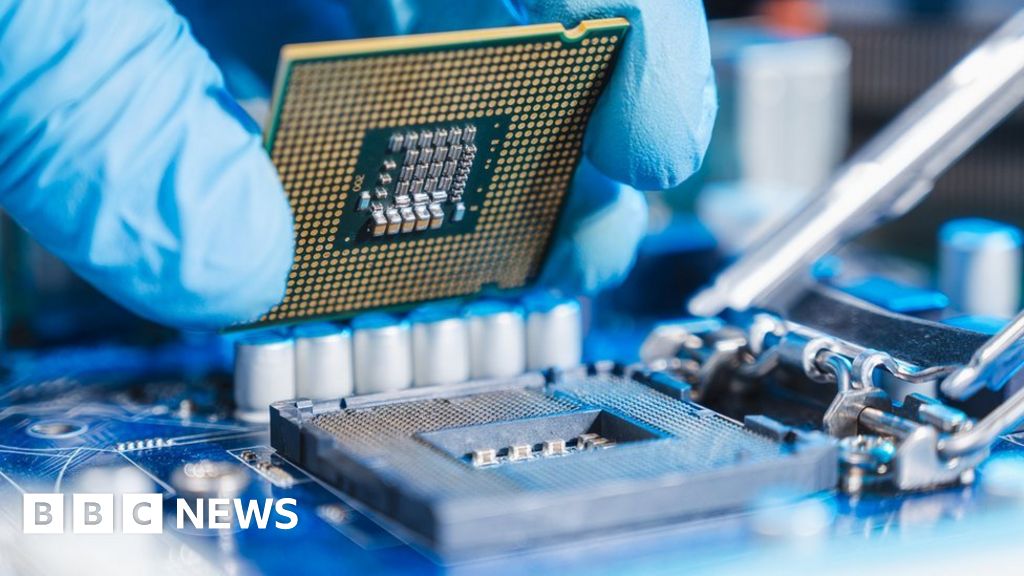
Mr Zhao led one of China's leading chipmakers
China's anti-fraud watchdog has accused chip tycoon Zhao Weiguo of corruption, in the latest sign of trouble faced by the country's semiconductor industry.
Mr Zhao is the former chairman of computer chipmaker Tsinghua Unigroup.
Key players in the sector were investigated for corruption last year after the government poured billions of dollars into projects which stalled or failed.
Mr Zhao and Tsinghua Unigroup did not respond to BBC requests for comment.
In a statement, the Central Commission for Discipline Inspection alleges that Mr Zhao "took the state-owned company he managed as his private fiefdom."
The regulator says he handed profitable businesses to his relatives and friends, and purchased goods and services from companies managed by his associates at "prices significantly higher than the market".
Mr Zhao's case, it adds, has been handed to prosecutors who will file charges against him.
Tsinghua Unigroup was once a branch of the prestigious Tsinghua University, attended by President Xi Jinping.
Over the last decade, the state-backed company made a series of acquisitions and emerged as one of China's leading chipmakers.
However, it racked up debt under Mr Zhao's leadership and defaulted on several bond payments in 2020.
The company completed a 20-month restructuring last July. This placed it under the control of a consortium led by two state-backed venture capital firms.
Around that time, Mr Zhao stepped down as the chairman of Tsinghua Unigroup. Chinese media outlets reported that he had been taken from his home by authorities for investigation.
Several other leading figures in the Chinese semiconductor industry have also been placed under investigation.
Semiconductors, which power everything from mobile phones to military hardware, are at the centre of a bitter dispute between the US and China.
In October, Washington announced that it would require licences for companies exporting chips to China using US tools or software, no matter where they were made in the world.
Earlier this month, the Netherlands said it also planned to put restrictions on its "most advanced" microchip technology exports to protect national security.
China has invested billions of dollars in recent years to build up its domestic chip-making capabilities.
In 2019, the country set up a new national $29bn (£23.7bn) semiconductor fund to reduce its reliance on the West.
You may also be interested in:
Watch: How the semiconductor shortage could be a problem for you
From Chip War To Cloud War: The Next Frontier In Global Tech Competition
The global chip war, characterized by intense competition among nations and corporations for supremacy in semiconductor ... Read more
The High Stakes Of Tech Regulation: Security Risks And Market Dynamics
The influence of tech giants in the global economy continues to grow, raising crucial questions about how to balance sec... Read more
The Tyranny Of Instagram Interiors: Why It's Time To Break Free From Algorithm-Driven Aesthetics
Instagram has become a dominant force in shaping interior design trends, offering a seemingly endless stream of inspirat... Read more
The Data Crunch In AI: Strategies For Sustainability
Exploring solutions to the imminent exhaustion of internet data for AI training.As the artificial intelligence (AI) indu... Read more
Google Abandons Four-Year Effort To Remove Cookies From Chrome Browser
After four years of dedicated effort, Google has decided to abandon its plan to remove third-party cookies from its Chro... Read more
LinkedIn Embraces AI And Gamification To Drive User Engagement And Revenue
In an effort to tackle slowing revenue growth and enhance user engagement, LinkedIn is turning to artificial intelligenc... Read more