

Your Graphics Card's So Fat, It's Got Its Own Gravity Alert
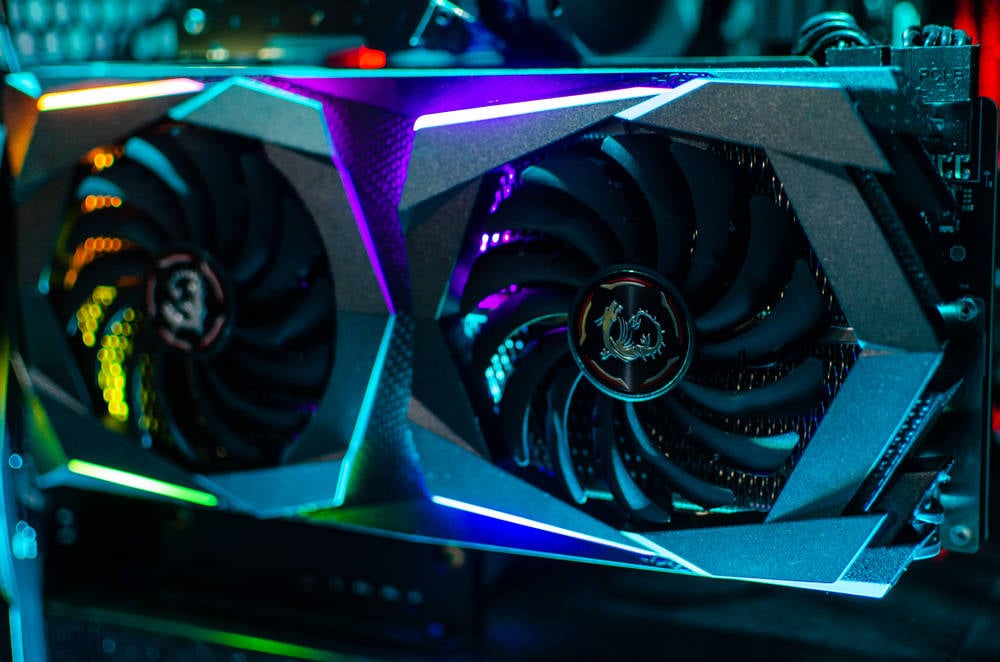
Graphics cards are now getting so bulky and heavy that device maker Asus has decided customers need a way to detect any sagging or movement of the GPU in its PCIe slot.
The Asus ROG Astral line of graphics adapters now features a built-in sensor, a Bosch Sensortec Inertial Measurement Unit (IMU), intended to detect any changes in the GPU's position, according to Jon Peddie Research (JPR).
Styled as the Equipment Installation Check, this is to warn users about any potential issues with the GPU sagging under its own bloated weight, or Premature GPU Droop Syndrome (PGDS), as we fondly imagine it being labeled.
"Heavy GPUs can put stress on PCIe slots, and while reinforced slots and support brackets can help, they may not be enough to prevent long-term mechanical strain. The Equipment Installation Check feature can warn users if the support bracket slips or loosens over time," JPR president Jon Peddie wrote.
It is understood an update to the Asus GPU Tweak utility enables the app to alert users if there has been any movement in the card that may point to a potential droop situation. However, we suspect the damage may already have been done by the time any movement of your GPU is actually detected.
- Nvidia's latest AI PC boxes sound great – if you're a data scientist with $3,000 to spare
- Nvidia GPU roadmap confirms it: Moore's Law is dead and buried
- Nvidia's Vera Rubin CPU, GPU roadmap charts course for hot-hot-hot 600 kW racks
- Dell discloses monster 20-petaFLOPS desktop built on Nvidia's GB300 Superchip
This is a danger of PC gaming that had hitherto passed unnoticed by at least some members of The Reg news desk, but considering that some of the latest GPU cards now weigh in at over 3 kg (approximately 6.61 pounds), we are not entirely surprised.
In fact, some of the Asus ROG Astral cards not only have their own substantial built-in fan to keep them cool, but also come with a separate radiator equipped with another three fans. No wonder that goal of limiting climate change to 1.5° C of warming is beginning to look unachievable.
This wouldn't be the first time that GPUs have caused havoc for their owners. A few years back, Nvidia faced a lawsuit in the US over melting power cables supplying the juice to its RTX 4090 cards.
However, Premature GPU Droop Syndrome seems to have been a problem developing over some time, as some motherboard makers are reportedly fitting reinforced PCIe slots in an attempt to combat the risk of damage to the board caused by an overblown GPU.
We've asked Asus for comment. ®
From Chip War To Cloud War: The Next Frontier In Global Tech Competition
The global chip war, characterized by intense competition among nations and corporations for supremacy in semiconductor ... Read more
The High Stakes Of Tech Regulation: Security Risks And Market Dynamics
The influence of tech giants in the global economy continues to grow, raising crucial questions about how to balance sec... Read more
The Tyranny Of Instagram Interiors: Why It's Time To Break Free From Algorithm-Driven Aesthetics
Instagram has become a dominant force in shaping interior design trends, offering a seemingly endless stream of inspirat... Read more
The Data Crunch In AI: Strategies For Sustainability
Exploring solutions to the imminent exhaustion of internet data for AI training.As the artificial intelligence (AI) indu... Read more
Google Abandons Four-Year Effort To Remove Cookies From Chrome Browser
After four years of dedicated effort, Google has decided to abandon its plan to remove third-party cookies from its Chro... Read more
LinkedIn Embraces AI And Gamification To Drive User Engagement And Revenue
In an effort to tackle slowing revenue growth and enhance user engagement, LinkedIn is turning to artificial intelligenc... Read more