

Why Strawberry Experts Are Hoping To Serve Up An Ace
By Victoria Craig
BBC reporter
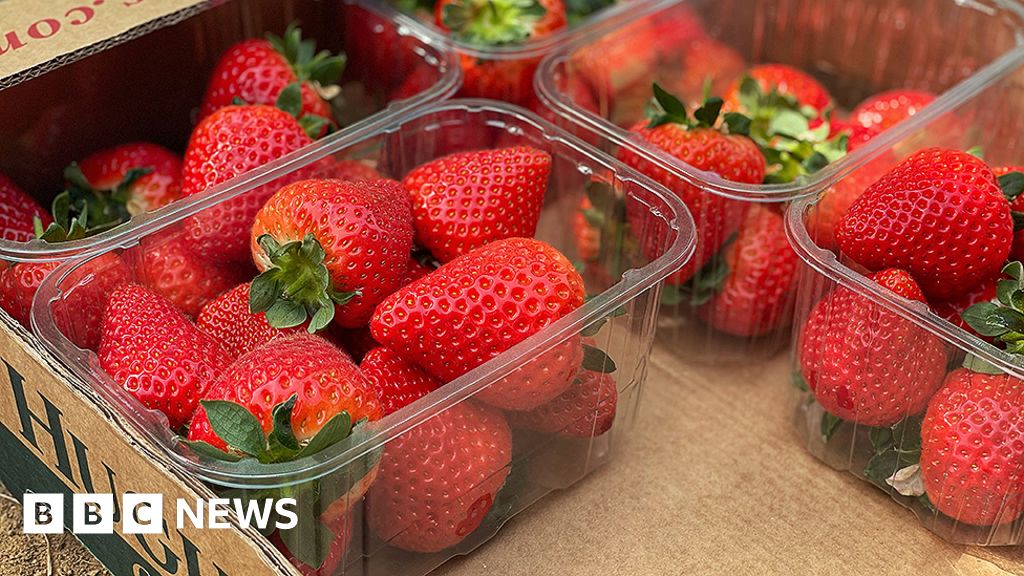
Whether their favourite players win or lose, crowds flocking to The Wimbledon Tennis Championships find pleasure, or consolation, in the food that's become an event staple - strawberries and cream.
Over 100,000 punnets are scoffed during Wimbledon fortnight with a staggering 7000 litres of cream. Now UK scientists have come up with a new variety of strawberry, which they hope could extend these hungry snackers' enjoyment further through summer and well into autumn.
The new berry on the block is called the Malling Ace. And for the last six years, researchers at NIAB in East Malling, Kent - the UK's largest horticulture research and development centre - have been tinkering with strawberry varieties to come up with one they feel not only suits British palates, but makes growing and harvesting easier for the producers.
"It's got really good, juicy flavour... fantastic fruit size. And it yields really highly as well," says Adam Whitehouse, senior NIAB fruit breeder.
There are traditionally two kinds of strawberry plants for the UK market: June bearers, which produce fruit in the peak summer months - and ever bearers, which grow berries until October.
June bearers are the berries that shoppers are likely most familiar with because those are the ones that pack supermarket shelves from May to July.
Ever bearer varieties, though, Whitehouse says, have been less common because they haven't been able to produce the juicy, sweet fruit customers want. He hopes that The Ace, will change all that.
The plant's construction offers a further advantage, too. Because the Ace grows in a way that sends leaves to the top and fruit toward the bottom, it's much easier for bees to access the flowers to pollinate them. The berries then grow on individual shoots, rather than in a cluster, which makes the harvesting process simpler.
This is good for speed and efficiency, which could help farmers save money on labour- one of their biggest production costs.
That offers potential relief for British farms that are contending with difficulty finding staff, partly as a result of Brexit, the UK's departure from the European Union.
"We are starting to hear about labour shortages on farms across the country of anything from 5-15%, which is a significant shortfall for most big businesses," says Nick Marston, chairman of the British Summer Fruits organisation, which represents the country's soft-fruit growers.
Marston adds the coronavirus pandemic has also had an impact on picking. In 2020, farms were able to recruit workers from other industries who had been laid off or furloughed. That, Marston says, added up to about 10% of the horticulture workforce.
This year, though, with the economy mostly reopened and hospitality and construction employees back in their jobs, there are fewer domestic workers available to help with the summertime harvest.
Labour shortages, Marston predicts, will remain a long-term problem for the industry - so any innovations in strawberry cultivation and production could go a long way towards helping ease that strain.
"It's about long season, fruit quality," he says. "It's about consistent quality - so, as much of that fruit as possible being suitable for a supermarket punnet, and having a plant that presents the fruit well to the picker."
So, how long before the Ace's bright red berries land in a supermarket punnet near you?
Whitehouse says the plants are being released to growers this year who will then propagate them to build up their stocks of the plant. This means, that by next year, some strawberries could be available to the public, with distribution at supermarkets likely in 2023.
From Chip War To Cloud War: The Next Frontier In Global Tech Competition
The global chip war, characterized by intense competition among nations and corporations for supremacy in semiconductor ... Read more
The High Stakes Of Tech Regulation: Security Risks And Market Dynamics
The influence of tech giants in the global economy continues to grow, raising crucial questions about how to balance sec... Read more
The Tyranny Of Instagram Interiors: Why It's Time To Break Free From Algorithm-Driven Aesthetics
Instagram has become a dominant force in shaping interior design trends, offering a seemingly endless stream of inspirat... Read more
The Data Crunch In AI: Strategies For Sustainability
Exploring solutions to the imminent exhaustion of internet data for AI training.As the artificial intelligence (AI) indu... Read more
Google Abandons Four-Year Effort To Remove Cookies From Chrome Browser
After four years of dedicated effort, Google has decided to abandon its plan to remove third-party cookies from its Chro... Read more
LinkedIn Embraces AI And Gamification To Drive User Engagement And Revenue
In an effort to tackle slowing revenue growth and enhance user engagement, LinkedIn is turning to artificial intelligenc... Read more