

Who Allowed The Energy Price Cap To Rise So Much? And Other Questions
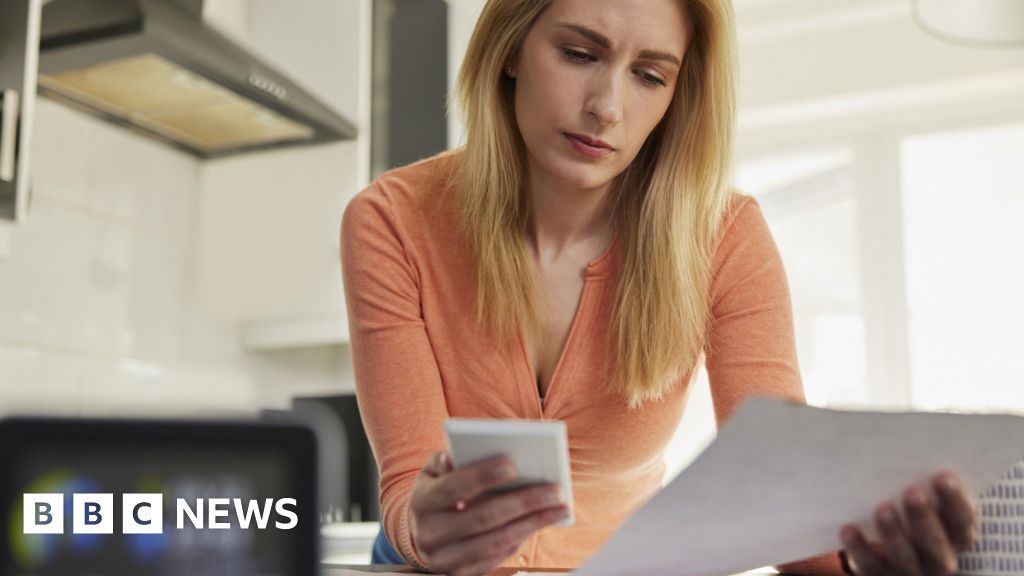
Millions of households are facing a £700 a year rise in energy costs, alongside hikes in the cost of council tax, water bills and other utilities.
It has led to warnings that many people on lower incomes will be forced to choose between paying for heating, or food.
A selection of your questions have been answered by:
- Kevin Peachey - personal finance correspondent
- Nicholas Barrett - Reality Check
Why do we pay more using a prepayment meter? - Gary Steventon
For the 4.5 million people on prepayment meters, the price of energy has now risen by an average £708 - to £2,017 a year.
That compares to an annual rise of £693 - to £1,971 - for those on standard tariffs, paid by direct debit.
Energy regulator Ofgem's argument is that there are higher fixed costs associated with running a prepayment meter.
Charities and some suppliers have said that these customers are often among the most vulnerable and should be given more help by the government.
Who allowed the price cap to increase by so much, especially when the energy companies have made record profits? - Chris Yaxley
The price cap, covering England, Wales and Scotland, is set every six months by energy regulator Ofgem. It is designed to reflect the costs faced by suppliers and to prevent profiteering.
There has been a huge rise this time, owing to the rising cost energy companies pay for gas. This is now being passed on to customers.
There has been a debate about whether energy companies should be taxed more, with the money raised used to help those struggling with bills.
Energy companies argue that their retail arms are making very little, or no, profit. While the energy generation business is having a much better time of it, they argue that they are already heavily taxed.
Gas prices do not increase by themselves. What is causing the increase? - John Ashburn
There are a host of reasons why the wholesale price of gas - paid by energy companies - has been volatile. At present it is about six times higher than it was a year ago.
One reason is the surge in demand for energy, as businesses and economies get going again after the lifting of Covid restrictions. There is also the ongoing issue of a shortage of gas storage across Europe.
A further rise in the price cap - predicted to push up the typical household energy bill by another £600 a year - is expected in October.
This is mainly because of the potential restriction of Russian gas supplies - linked to the war in Ukraine.
While we get very little gas from Russia in the UK, we are affected by the global price of gas.
Can people forced to work from home ask employers to contribute to energy bills? - Andrew Green
There is nothing to stop you asking. What response you get from your employer is down to them.
Some employers have offered temporary grants and payments, to help their staff pay their energy bills.
Unions and employees themselves are likely to point to the rising cost of living - including higher energy bills - to ask for higher salaries.
Will giving up Netflix, Amazon Prime, alcohol and mobile phones offset the rising cost? - Leslie Cox
The average UK household spends about £916 on alcohol each year.
The cheapest Netflix plan costs £84 a year, while Amazon Prime costs £96.
Some mobile phone deals exceed £80 a month but, depending on your contract, you may be able to switch to a SIM-only deal for as little as £36 a year.
Giving up all of these costs could save between £1,132 and £2,056 a year.
A 54% rise in the energy price cap means a household using a typical amount of gas and electricity will now pay £1,971 per year.
So, going without could make a difference.
But even then, a further rise pushing the annual bill up to £2,600 should be expected in October, analysts have told the BBC.
Image source, Getty Images
How is the assistance provided going to help pensioners who have been robbed of a triple-lock increase? Dave
The triple-lock, a policy used to set the rise in state pensions, was suspended last year because it followed the average rise in wages and would have meant an increase of 8%.
At the time that seemed like a big increase, but inflation is now 6.2%.
Instead of the state pension going up by 8%, it's going up by 3.1% - based on the rate of inflation in September last year, which is a much smaller pay rise for state pensioners.
Changes announced by Chancellor Rishi Sunak in the Spring Statement were mostly aimed at working people who pay National Insurance. There has not been any specific new support for pensioners.
Why have tariffs on 100% renewable electricity gone up? - Karl Oldham
Eco providers are still affected by wholesale prices, which are driving bill rises.
These providers try to buy in advance from renewable sources, and invest in schemes for renewable generation.
But ultimately, at present, they have to source electricity from the National Grid - some of which is generated from gas.
As a result, they are not immune to the situation in the wider market, and prices charged by renewable generators have been going up too.
From Chip War To Cloud War: The Next Frontier In Global Tech Competition
The global chip war, characterized by intense competition among nations and corporations for supremacy in semiconductor ... Read more
The High Stakes Of Tech Regulation: Security Risks And Market Dynamics
The influence of tech giants in the global economy continues to grow, raising crucial questions about how to balance sec... Read more
The Tyranny Of Instagram Interiors: Why It's Time To Break Free From Algorithm-Driven Aesthetics
Instagram has become a dominant force in shaping interior design trends, offering a seemingly endless stream of inspirat... Read more
The Data Crunch In AI: Strategies For Sustainability
Exploring solutions to the imminent exhaustion of internet data for AI training.As the artificial intelligence (AI) indu... Read more
Google Abandons Four-Year Effort To Remove Cookies From Chrome Browser
After four years of dedicated effort, Google has decided to abandon its plan to remove third-party cookies from its Chro... Read more
LinkedIn Embraces AI And Gamification To Drive User Engagement And Revenue
In an effort to tackle slowing revenue growth and enhance user engagement, LinkedIn is turning to artificial intelligenc... Read more