

What Is A Recession And How Could It Affect Me?
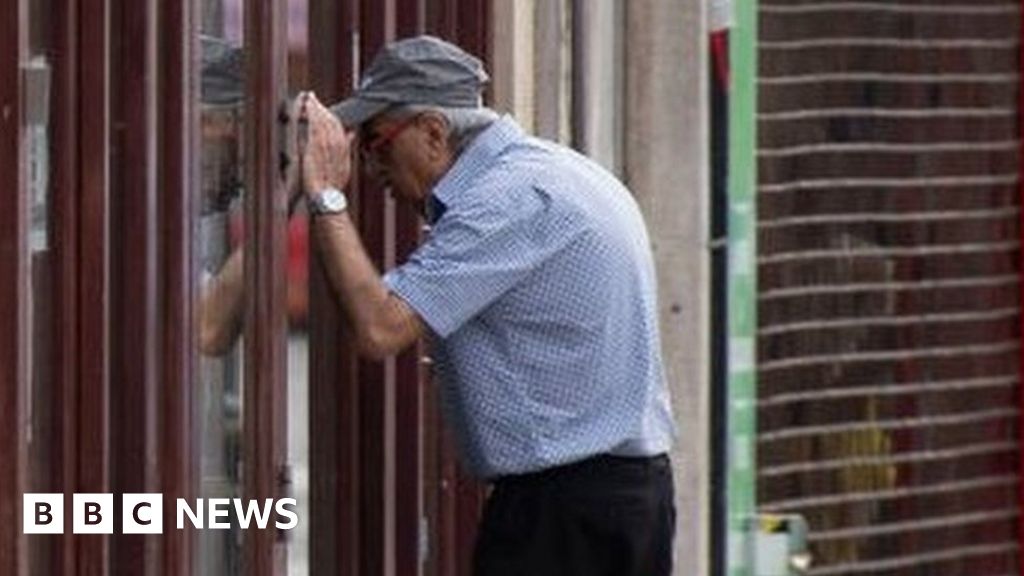
The Bank of England is predicting a recession for the UK economy will begin later in 2022.
So what exactly does that mean?
What is a recession?
In normal times, a country's economy grows.
Its citizens, on average, become slightly richer as the value of the goods and services it produces - its Gross Domestic Product (GDP) - increases.
But sometimes their value falls, and a recession is usually defined as when this happens for two three-month periods - or quarters - in a row.
When this happen it's a sign the economy is doing badly.
The last time the UK went into recession was in 2020 at the height of the coronavirus pandemic.
Why does a recession matter?
For most people, economic growth is good.
It usually means there are more jobs, and companies are more profitable and can pay employees and shareholders more.
A growing economy also gives the government more money in taxes. So it can cut taxes, or spend more on benefits, public services and government workers' wages.
When the economy shrinks, all these things go into reverse.
Are we going back into recession?
The Bank of England thinks so, and suggests it will be a long one.
It predicts a decline of almost 1% in the size of the economy in the last three months of 2022, and thinks it will shrink in every quarter of 2023.
It blames that on very sharp increases in prices, especially for energy, with people's incomes continuing to fall after adjusting for rising prices.
Inflation (the amount prices are rising) will rise to more than 13% before the end of the year, the Bank predicts, up from its already high level above 9%.
What is happening around the world?
Other economies are also struggling, with the International Monetary Fund's latest World Economic Outlook carrying the title "Gloomy and more uncertain".
It highlights downturns in China and Russia, alongside higher-than-expected inflation, especially in the United States and Europe.
This is partly blamed on Russia's war in Ukraine, which has increased energy prices and food prices.
There are also continuing effects from Covid19.
Image source, Getty Images
The US and other major economies are also currently struggling
How could a recession affect me?
Some people may lose their jobs, or find it harder to get promotions, or pay rises big enough to allow them to cope with increases in prices.
Graduates and school leavers could find a first job harder to get.
However, the pain of a recession is typically not felt equally across society, and inequality can increase.
Benefit recipients and those with fixed incomes are particularly likely to struggle.
What can be done?
When the economy is struggling to grow at the same time as there is high inflation there is a situation called stagflation, which is very difficult to solve.
Usually, the Bank of England - which is independent of government - would cut interest rates if the country was going into a recession, but in fact it has just raised them because prices are rising so fast.
Similarly, there is a debate going on between Rishi Sunak and Liz Truss - the two Conservative candidates to be the next prime minister - as to whether taxes should be cut to stimulate the economy or raised to combat inflation.
How long have recent recessions been?
The recession in 2020 only lasted for six months, although the 19.4% contraction in the UK economy between April and June was the largest on record.
The one before that started in 2008 due to the financial crisis.
It started in April 2008 and went on for five quarters, which is the same length of recession that the Bank of England expects this time round.
From Chip War To Cloud War: The Next Frontier In Global Tech Competition
The global chip war, characterized by intense competition among nations and corporations for supremacy in semiconductor ... Read more
The High Stakes Of Tech Regulation: Security Risks And Market Dynamics
The influence of tech giants in the global economy continues to grow, raising crucial questions about how to balance sec... Read more
The Tyranny Of Instagram Interiors: Why It's Time To Break Free From Algorithm-Driven Aesthetics
Instagram has become a dominant force in shaping interior design trends, offering a seemingly endless stream of inspirat... Read more
The Data Crunch In AI: Strategies For Sustainability
Exploring solutions to the imminent exhaustion of internet data for AI training.As the artificial intelligence (AI) indu... Read more
Google Abandons Four-Year Effort To Remove Cookies From Chrome Browser
After four years of dedicated effort, Google has decided to abandon its plan to remove third-party cookies from its Chro... Read more
LinkedIn Embraces AI And Gamification To Drive User Engagement And Revenue
In an effort to tackle slowing revenue growth and enhance user engagement, LinkedIn is turning to artificial intelligenc... Read more