

Warning: That New AMD Ryzen 7000 Laptop May Not Be As Fresh As You Think
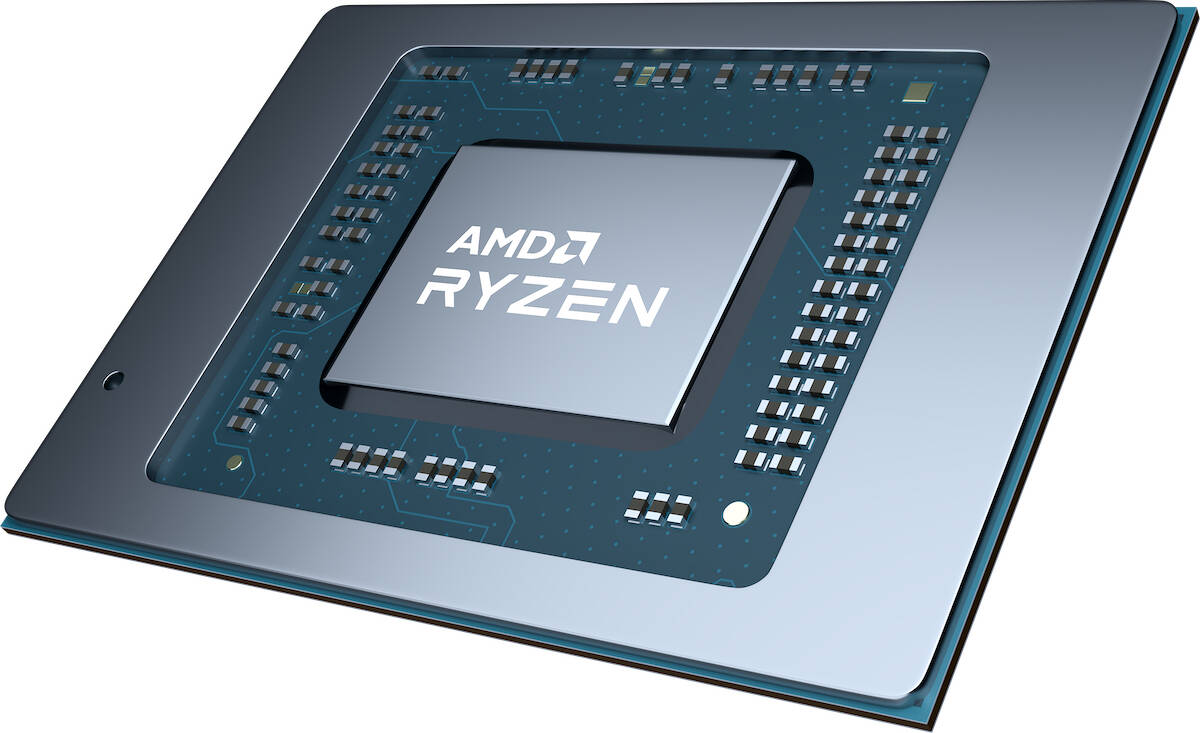
AMD has apparently dug deep into its spare parts bin with today's launch of its 7020-series mobile processors, which it says will bring all-day battery life to more entry-level notebooks.
“At any price point, users should feel confident they are getting the best experience possible from AMD,” said Saeid Moshkelani, GM of AMD’s client business unit, in a canned statement.
That’s unless of course you thought you were buying something with a remotely modern architecture. AMD’s 7020-series mobile chips aren’t based on Zen 4 as found in its desktop chips. They don’t even use AMD’s two-year-old Zen 3 architecture. No, these chips are using AMD’s Zen 2 cores that launched alongside its Ryzen 3000-series parts in 2019.
In fact, AMD’s 7020-series mobile processors are a hodgepodge of tech. While they may be based on a three-year-old core architecture, the chips are manufactured using a TSMC 6nm process. The chips also borrow the integrated RDNA 2 graphics introduced with AMD’s Ryzen 6000 mobile parts.
So while the CPU cores may be old, the GPU and process node aren't as elderly. AMD says this combination allowed it to achieve up to 12 hours of battery life in notebooks priced as little as $399.
AMD’s 7020-series mobile processors are available in three SKUs:
- Ryzen 5 7520U: 4 cores / 8 threads, with a base clock of 2.8GHz, a boost clock of 4.3GHz, and 6MB of cache.
- Ryzen 3 7320U: 4 cores / 8 threads, with a base clock of 2.4GHz, a boost clock of 4.1GHz, and 6MB of cache.
- Athlon Gold 7220U: 2 cores / 4 threads, with a base clock of 2.4GHz, a boost clock of 3.7GHz, and 5MB of cache.
All three chips feature a 15W TDP, integrated Radeon 610M graphics, and support for LPDDR5 memory.
Notebooks equipped with these chips are expected to begin shipping from Acer, HP, and Lenovo in time for the holiday season.
- AMD admits its Ryzen mobile naming scheme is a mess, promises to clean it up
- AMD refreshes desktop CPUs with 5nm Ryzen 7000s that can reach 5.7GHz with 16 cores
- AMD smartNICs to meld ASICs, FPGAs, Arm cores
- AMD touts big datacenter, AI ambitions in CPU-GPU roadmap
AMD recycling cores in its mobile line is by no means a new phenomenon. The x86 biz has a longstanding tradition of shoehorning older architectures into “new” chips, as a cost cutting measure.
However, the behavior has led to confusion for customers who believe they’re buying current-generation chips, only to discover later the hardware is based on an older Zen architecture. For example, AMD’s Ryzen 5000 processors used Zen 3 and Zen 2 cores depending on which SKU you were looking at. And to make matters worse, higher numbered SKUs didn’t always translate into the new architecture.
AMD attempted to rectify this earlier this month with a new naming scheme for its mobile parts. Starting with its Mendocino and Dragon Range processor families, the first two digits now refer to the generation and product family, while the second two digits denote core architecture and feature availability. A final character serves to identify the form factor and TDP. So, the 7520U refers to a seventh-gen Ryzen 5 with a Zen 2 core, and a 15W TDP.
And as we’ve seen with today’s launch, the naming scheme also extends to the chip house’s longstanding Athlon line, which unlike Intel’s Pentium and Celeron brands, is still kicking. ®
From Chip War To Cloud War: The Next Frontier In Global Tech Competition
The global chip war, characterized by intense competition among nations and corporations for supremacy in semiconductor ... Read more
The High Stakes Of Tech Regulation: Security Risks And Market Dynamics
The influence of tech giants in the global economy continues to grow, raising crucial questions about how to balance sec... Read more
The Tyranny Of Instagram Interiors: Why It's Time To Break Free From Algorithm-Driven Aesthetics
Instagram has become a dominant force in shaping interior design trends, offering a seemingly endless stream of inspirat... Read more
The Data Crunch In AI: Strategies For Sustainability
Exploring solutions to the imminent exhaustion of internet data for AI training.As the artificial intelligence (AI) indu... Read more
Google Abandons Four-Year Effort To Remove Cookies From Chrome Browser
After four years of dedicated effort, Google has decided to abandon its plan to remove third-party cookies from its Chro... Read more
LinkedIn Embraces AI And Gamification To Drive User Engagement And Revenue
In an effort to tackle slowing revenue growth and enhance user engagement, LinkedIn is turning to artificial intelligenc... Read more