

Waitrose Will Never Stock Chlorinated Chicken, Says Boss
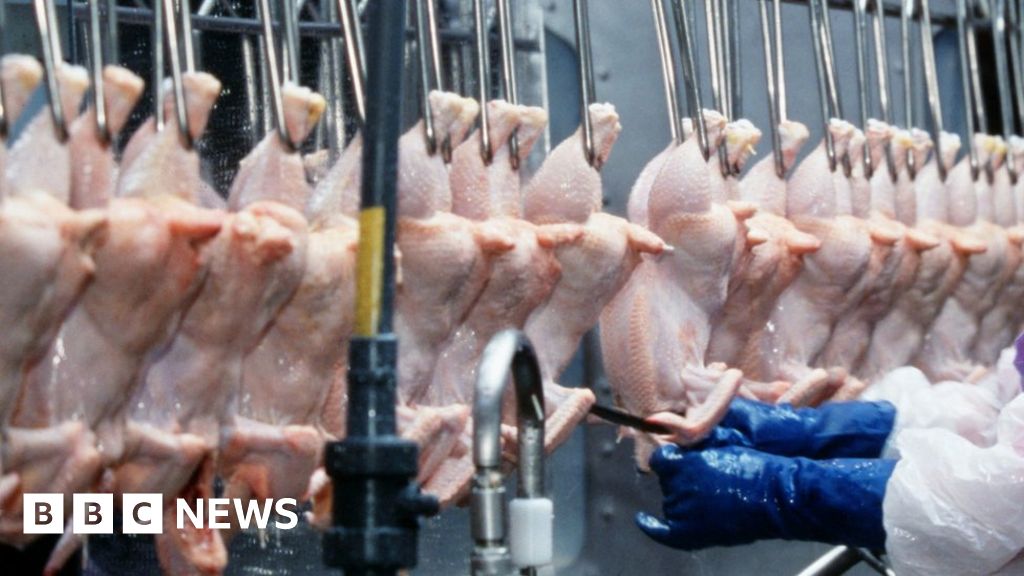
 Image copyright
Getty Images
Image copyright
Getty Images
The new boss of supermarket Waitrose has backed calls to stop any relaxation of rules banning imports of chlorinated chicken and hormone-injected beef.
James Bailey said Waitrose would not stock such products.
The message supports a National Farmers Union campaign to ban imports of food produced to a lower standard than currently allowed in the UK.
Trade Secretary Liz Truss told MPs last week that the UK's food standards will not be compromised by new trade deals.
She was responding to concerns among food campaigners and environmental groups that lowering standards for imported produce could form part of a future UK-US trade deal.
But fears over chlorine-washed chicken and other US farming practices have been described by Woody Johnson, the US ambassador to the UK, as "inflammatory and misleading".
Earlier this year, Mr Johnson said it was important that US beef and poultry should be allowed into the UK.
He said the process was used by EU farmers to treat vegetables, and that it was the best way to deal with salmonella and other bacteria.
'Unacceptable'
In Waitrose's Weekend magazine, Mr Bailey pointed out that a million people have signed a National Farmers Union (NFU) petition calling for laws to prevent future trade deals leading to food imports that would be illegal to produce in the UK.
"We will never sell any Waitrose product that does not meet our own high standards," he said.
He said that "any regression from the standards we have pioneered for the last 30 years would be an unacceptable backwards step".
He added: "It would be simply wrong to maintain high standards at home yet import food from overseas that has been produced to lower standards.
"We would be closing our eyes to a problem that exists in another part of the world and to animals who are out of our sight and our minds."
Why ban chlorine-washed chicken?
Washing chicken in chlorine and other disinfectants to remove harmful bacteria was a practice banned by the European Union (EU) in 1997 over food safety concerns.
It's not consuming chlorine itself that the EU is worried about - in fact in 2005 the European Food Safety Authority said that "exposure to chlorite residues arising from treated poultry carcasses would be of no safety concern".
Chlorine-rinsed bagged salads are common in the UK and other countries in the EU.
But the EU believes that relying on a chlorine rinse at the end of the meat production process could be a way of compensating for poor hygiene standards - such as dirty or crowded abattoirs.
Instead, the EU says the best way to eliminate the risk of salmonella and other bacteria is to maintain high farming and production standards.
The majority of British consumers are against imports of lower standard food, according to a Which? survey published on Thursday.
Some 95% of consumers said it is important for the UK to maintain existing food standards, which ban the use of chlorine-washing, growth hormones and many pesticides.
Meanwhile 86% fear a weakening of standards could lead to the import of products banned in the UK.
Which? warned that could lead to chlorinated chicken and hormone-treated beef being served up in schools, hospitals and restaurants, where people may have little information or choice about what they eat.
Sue Davies, head of consumer protection and food policy at Which?, said: "Food standards in the UK must not be compromised by any trade deal that would betray decades of progress on food safety, quality and animal welfare."
A Department for International Trade spokesman said: "This government has been clear it will not sign a trade deal that will compromise our high environmental protection, animal welfare and food safety standards.
"Chlorinated chicken and hormone-injected beef are not permitted for import into the UK. This will be retained through the EU Withdrawal Act and enshrined in UK law at the end of the transition agreement."
From Chip War To Cloud War: The Next Frontier In Global Tech Competition
The global chip war, characterized by intense competition among nations and corporations for supremacy in semiconductor ... Read more
The High Stakes Of Tech Regulation: Security Risks And Market Dynamics
The influence of tech giants in the global economy continues to grow, raising crucial questions about how to balance sec... Read more
The Tyranny Of Instagram Interiors: Why It's Time To Break Free From Algorithm-Driven Aesthetics
Instagram has become a dominant force in shaping interior design trends, offering a seemingly endless stream of inspirat... Read more
The Data Crunch In AI: Strategies For Sustainability
Exploring solutions to the imminent exhaustion of internet data for AI training.As the artificial intelligence (AI) indu... Read more
Google Abandons Four-Year Effort To Remove Cookies From Chrome Browser
After four years of dedicated effort, Google has decided to abandon its plan to remove third-party cookies from its Chro... Read more
LinkedIn Embraces AI And Gamification To Drive User Engagement And Revenue
In an effort to tackle slowing revenue growth and enhance user engagement, LinkedIn is turning to artificial intelligenc... Read more