

US Telcos Ordered To 'rip And Replace' Huawei Components
- Published
image copyrightGetty Images
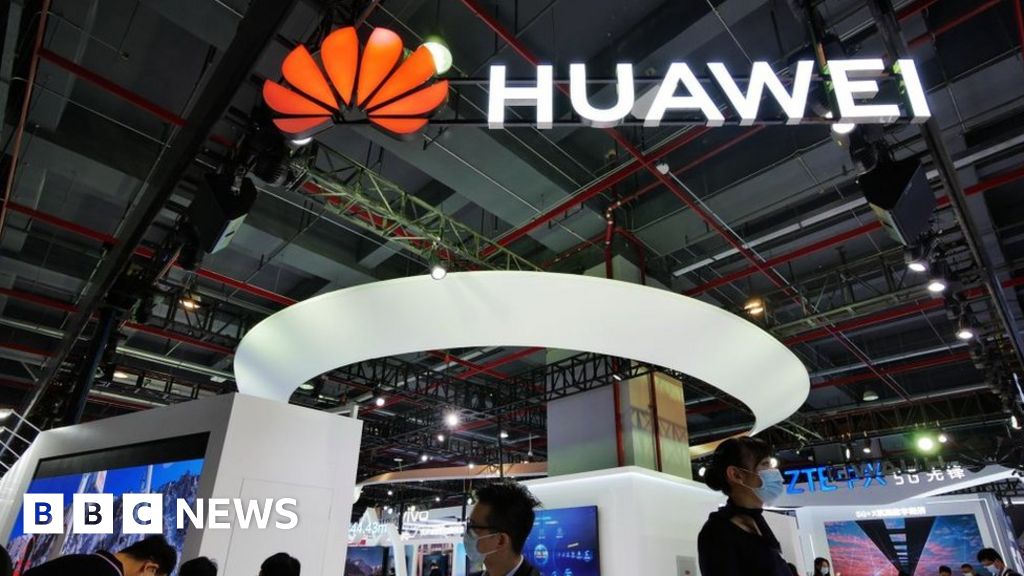
The US Federal Communications Commission (FCC) has ordered certain US telecommunications companies to remove Huawei equipment from their network.
The FCC has also started the process of revoking China Telecom's authorisation to operate in the US.
The "rip and replace" order is the latest US move against Huawei made on national security grounds.
The order includes subsidies for smaller carriers for removing and replacing the equipment.
However, the commission can't actually implement the reimbursements without the approval of funding from congress.
FCC chairman Ajit Pai said Huawei has close ties to the Chinese military and intelligence communities as well as the Communist Party, and those ties are at "every level of the company—all the way up to its founder".
"The concerns about Huawei aren't just hypothetical: Independent entities have identified numerous security vulnerabilities in Huawei equipment and found it to be less secure than that of other companies—perhaps deliberately so," Mr Pai said.
He said Huawei is also subject to "sweeping" laws compelling the company's assistance and cooperation with Chinese intelligence services and forbidding the disclosure of that assistance.
The FCC will publish a list of communications equipment and services determined to be a risk to national security.
It has estimated the programme will require at least $1.6bn (£1.2bn) to reimburse eligible providers, who take federal subsidies mostly to provide service in rural areas of the US.
Huawei has long denied US accusations that it is a government-run company and a threat to national security.
In a statement, the company expressed disappointment with the decision.
"This overreach puts US citizens at risk in the largely underserved rural areas - during a pandemic - when reliable communication is essential," the company said.
On Thursday the FCC also rejected a petition from Huawei asking the agency to reconsider its decision designating the company as a national security threat to communications networks.
China Telecom ban
The FCC also began the process of revoking China Telecom's authorisation to "provide domestic interstate and international telecommunications services within the United States".
The company's US subsidiary was asked in April to "show cause why the Commission should not start a process for revoking and terminating" its authorisation.
The FCC said that China Telecom had "failed to provide a satisfactory response to the concerns".
From Chip War To Cloud War: The Next Frontier In Global Tech Competition
The global chip war, characterized by intense competition among nations and corporations for supremacy in semiconductor ... Read more
The High Stakes Of Tech Regulation: Security Risks And Market Dynamics
The influence of tech giants in the global economy continues to grow, raising crucial questions about how to balance sec... Read more
The Tyranny Of Instagram Interiors: Why It's Time To Break Free From Algorithm-Driven Aesthetics
Instagram has become a dominant force in shaping interior design trends, offering a seemingly endless stream of inspirat... Read more
The Data Crunch In AI: Strategies For Sustainability
Exploring solutions to the imminent exhaustion of internet data for AI training.As the artificial intelligence (AI) indu... Read more
Google Abandons Four-Year Effort To Remove Cookies From Chrome Browser
After four years of dedicated effort, Google has decided to abandon its plan to remove third-party cookies from its Chro... Read more
LinkedIn Embraces AI And Gamification To Drive User Engagement And Revenue
In an effort to tackle slowing revenue growth and enhance user engagement, LinkedIn is turning to artificial intelligenc... Read more