

US Tariff Terrors Prompt Nokia Profit Drop, TI Inventory Binge
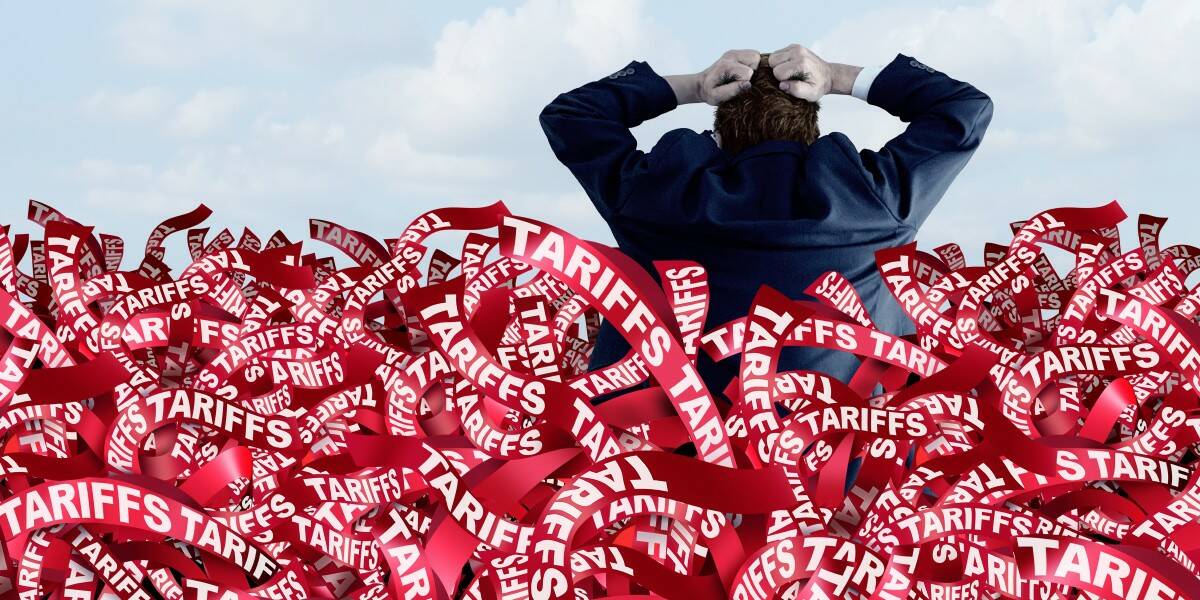
More tariff turmoil emerged this week as Nokia slashed its profit guidance for the year due to looming US levies on imported goods, while Texas Instruments' shares took a beating over fears that growth seen in Q2 will fall away following customer stockpiling to avoid import duties.
The Trump administration announced tariff rates earlier this month that are set to come into effect on August 1. These include levies of 25 percent on goods from countries including Japan and Korea, which supply many key IT components such as memory and solid-state drives, and so are likely to hurt US tech firms as much as foreign suppliers.
Washington was also – at the time of writing – set to impose import taxes of 30 percent on all items shipped from the European Union, unless a trade deal can be reached before the deadline.
Network infrastructure biz Nokia, based in Finland, cited "currency headwinds" from the weaker US dollar as well as tariff uncertainty for its decision to lower profit guidance for this year to between €1.6 billion to €2.1 billion ($1.9 billion to $2.5 billion) from its earlier stated range of €1.9 billion to €2.4 billion ($2.2 billion to $2.8 billion).
Nokia said its underlying business performed as expected through the first half of 2025, but in light of those currency and tariff headwinds, which are outside its control and have transpired since its Q1 results, the company felt it prudent to lower the operating profit outlook.
At the same time, chipmaker Texas Instruments (TI) today reported second quarter revenue of $4.45 billion, up 16 percent on the same period last year, and recorded a 25 percent in operating profit to $1.56 billion.
During a conference call for investors and analysts, however, TI execs repeatedly pointed to tariffs and other potential risks that could disrupt supply chains, and warned this was causing unpredictability in customer ordering behavior.
"We continue to see two distinct dynamics at play," said CEO Haviv Ilan. "First, tariffs and geopolitics are disrupting and reshaping global supply chains. As we work closely with our customers, we are leveraging our global manufacturing capabilities to support their needs."
Ilan said that some of the Q2 surge could be explained by customers building up their inventory in preparation for new tariffs being imposed.
"We did see that in the early part of the quarter; there was an acceleration of demand... as expected, when customers are sitting on low inventories and there is a lot of noise around tariffs. That has normalized through the quarter and we are kind of back right now to what drives our day-to-day is just a cyclical recovery."
- ASML shares tumble as US tariff turmoil rattles investors
- Smartphones in the doldrums due to crap demand and tariff woes
- CIOs pause net-new IT investments as global tariff jitters bite
- Trump tariffs turn techies topsy-turvy as US braces for PC tax
As TI looks ahead to its Q3 results, Ilan said: "I think it's prudent to remember that what we saw in Q2 is probably a combination of customers wanting to have a little bit more inventory because of tariffs, and also the cyclical recovery. I would assume that some of it was for, you know, building a little bit of inventory on those shelves to protect themselves from tariffs, if you will."
Despite the firm's outlook being for higher revenue again in Q3, in the range of $4.45 billion to $4.80 billion, its shares were down by about 12 percent in after earnings trading. This is because of the cautious tone adopted by management, according to MarketWatch.

It quotes Bernstein analyst Stacy Rasgon saying that the company's attitude "appears to have shifted markedly with seemingly more caution around the geopolitical and tariff environment, and an admission of probable tariff-related pull-forward now somewhat tempering the company's continued optimism around the cycle."
In other words, some of the positive trend seen in the latest quarter may have related to customers buying up products in advance of expected tariff moves.
TI also warned that its forecast for Q3 "does not include changes related to recently enacted US tax legislation," referring to President Trump's budget bill that was passed this month. ®
From Chip War To Cloud War: The Next Frontier In Global Tech Competition
The global chip war, characterized by intense competition among nations and corporations for supremacy in semiconductor ... Read more
The High Stakes Of Tech Regulation: Security Risks And Market Dynamics
The influence of tech giants in the global economy continues to grow, raising crucial questions about how to balance sec... Read more
The Tyranny Of Instagram Interiors: Why It's Time To Break Free From Algorithm-Driven Aesthetics
Instagram has become a dominant force in shaping interior design trends, offering a seemingly endless stream of inspirat... Read more
The Data Crunch In AI: Strategies For Sustainability
Exploring solutions to the imminent exhaustion of internet data for AI training.As the artificial intelligence (AI) indu... Read more
Google Abandons Four-Year Effort To Remove Cookies From Chrome Browser
After four years of dedicated effort, Google has decided to abandon its plan to remove third-party cookies from its Chro... Read more
LinkedIn Embraces AI And Gamification To Drive User Engagement And Revenue
In an effort to tackle slowing revenue growth and enhance user engagement, LinkedIn is turning to artificial intelligenc... Read more