

US Supreme Court Blocks Child Slavery Lawsuit Against Chocolate Firms
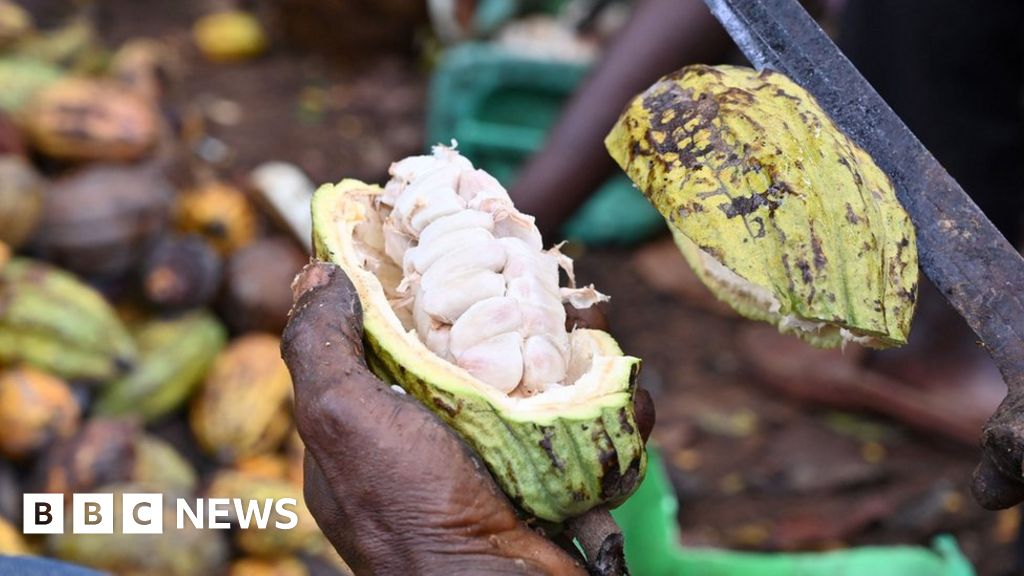
image copyrightGetty Images
The US Supreme Court has ruled food giants Nestlé USA and Cargill can't be sued for child slavery on African farms from where they buy their cocoa.
Six African men alleged that they were trafficked from Mali and forced to work on cocoa farms in Ivory Coast.
The group say both companies perpetuated that slave trade to keep cocoa prices low.
The court ruled 8-1 that the group had no standing because the abuse happened outside the US.
But it stopped short of a definitive ruling on whether the Alien Tort Act - an 18th century law - could be used to hold US companies to account for labour abuses committed in their supply chains abroad.
About 70% of the world's cocoa is produced in West Africa, and much of this is exported to America.
It's estimated that 1.56m children work on cocoa farms in Ivory Coast and Ghana, according to a report published by the US Department of Labor last year.
In their lawsuit, the group of men alleged that they were forced to work on the cocoa farms for 12-14 hours a day. They also said they were kept under armed guard while they slept, in order to prevent them from escaping, and were paid little beyond basic food.
image copyrightGetty Images
While decrying child slavery, the companies argued the case should instead be made against the traffickers and the farmers who kept them in such conditions.
In its decision, written by Justice Clarence Thomas, the court ruled that while Nestlé USA and Cargill provided the farms with technical and financial resources, there was no evidence that business decisions made in the US led to the men's forced labour.
To activists who have fought chocolate firms for years, the ruling came as a blow.
"They decided on the budgets, they decided on the planning, on the business aspects - all those things were done from the US," said Terry Collingsworth, executive director of International Rights Advocates, speaking to Fortune Magazine.
Mr Collingsworth said his legal team would file a new lawsuit, alleging that many decisions made by Nestlé and Cargill in the US helped to pave the way for the use of child slaves in Ivory Coast.
In a statement, Nestlé USA said it had never engaged in child labour and remained "unwavering in [its] dedication to combating child labour in the cocoa industry".
From Chip War To Cloud War: The Next Frontier In Global Tech Competition
The global chip war, characterized by intense competition among nations and corporations for supremacy in semiconductor ... Read more
The High Stakes Of Tech Regulation: Security Risks And Market Dynamics
The influence of tech giants in the global economy continues to grow, raising crucial questions about how to balance sec... Read more
The Tyranny Of Instagram Interiors: Why It's Time To Break Free From Algorithm-Driven Aesthetics
Instagram has become a dominant force in shaping interior design trends, offering a seemingly endless stream of inspirat... Read more
The Data Crunch In AI: Strategies For Sustainability
Exploring solutions to the imminent exhaustion of internet data for AI training.As the artificial intelligence (AI) indu... Read more
Google Abandons Four-Year Effort To Remove Cookies From Chrome Browser
After four years of dedicated effort, Google has decided to abandon its plan to remove third-party cookies from its Chro... Read more
LinkedIn Embraces AI And Gamification To Drive User Engagement And Revenue
In an effort to tackle slowing revenue growth and enhance user engagement, LinkedIn is turning to artificial intelligenc... Read more