

US Supreme Court Asked If Cops Can Plant Spy Cams Around Homes
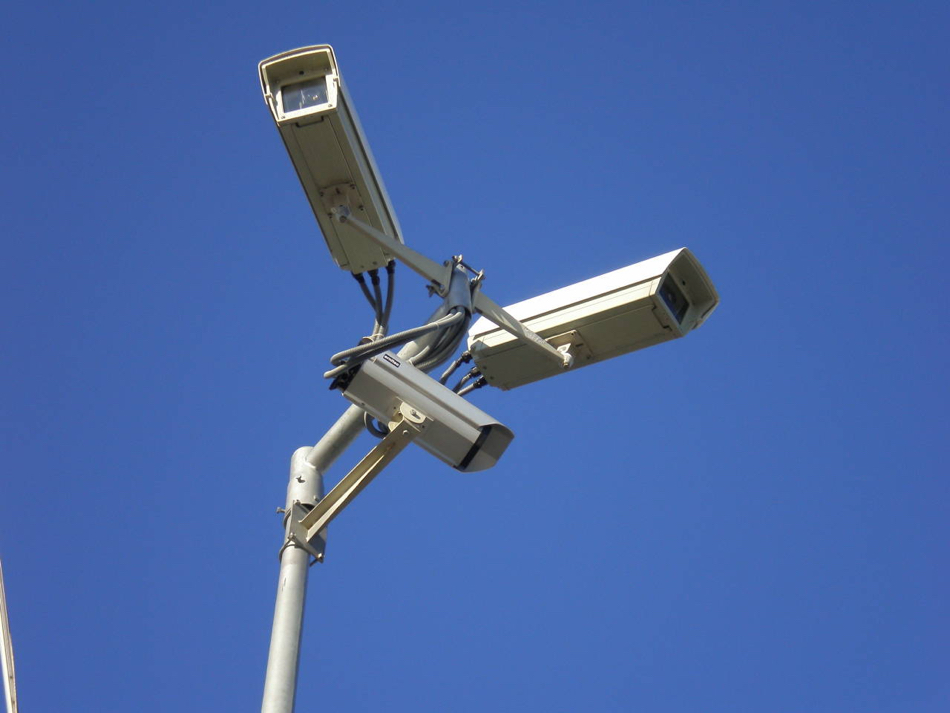
The American Civil Liberties Union on Friday asked the US Supreme Court to consider whether surveillance cameras placed on utility poles by police without a warrant should be allowed to watch people in their homes.
The ACLU petition [PDF] for a writ of certiorari – asking the Supreme Court to review a lower court's decision – follows from the US First Circuit Court of Appeals being unable to reach a decision about the lawfulness of cameras placed to surveil homes.
It relates to a criminal case, Moore v. United States, in which ATF agents placed a camera on a utility pole in Massachusetts and recorded the home and surroundings of petitioner, Daphne Moore, and others for an eight month period.
The agents initially were investigating Moore's daughter, Nia Moore-Bush (who subsequently changed her name to Nia Dinzey after marriage) and her husband on suspicion of selling unlicensed firearms and later suspected their involvement in the sale of illegal drugs.
Moore-Bush and four-defendants were indicted for illegal drug distribution on January 11, 2018. Almost a year later, on December 20, 2018, Daphne Moore was indicted for illegal drug distribution, conspiracy, money laundering, and making false statements to authorities.
The defendants filed a motion to suppress the evidence gathered as a result of the challenged surveillance and the federal district court hearing the case granted the motion, finding that eight-month camera placement required a warrant.
But the First Circuit Court of Appeals deadlocked 3-3 on that issue. The appellate judges were unable to reconcile United States v. Bucci (2009), which found utility pole surveillance is not an unlawful search, with United States v. Carpenter (2011), which found that warrantless seizure of cellphone records did violate the Fourth Amendment. A separate Massachusetts court decision, Commonwealth v. Mora (2020) found utility pole cameras violated the state constitution.
- San Francisco cops can use private cameras to live-monitor 'significant events'
- Privacy watchdog steps up fight against Europol's hoarding of personal data
- Is computer vision the cure for school shootings? Likely not
- Amazon has repackaged surveillance capitalism as reality TV
The ACLU petition essentially asks the Supreme Court to provide more guidance about what the Fourth Amendment "right of the people to be secure in their persons, houses, papers, and effects, against unreasonable searches and seizures" means in an era when electronics can erase property lines.
That legal point aside, the appeals judges reversed the district court's evidence suppression order based on the "good faith" exception afforded the rules of evidence exclusion. Moore-Bush subsequently pleaded guilty in July and was sentenced to 86 months in prison and four years of supervised release. Proceedings against petitioner Daphne Moore have been stayed until the lawfulness of the utility pole search is resolved.
The ACLU contends long-term utility pole surveillance should require a warrant.
"This technology allows police to secretly watch and record highly invasive details of our private lives, from when we leave and return home, to what we carry with us when we do, to who visits us, and when," said Nathan Freed Wessler, deputy director of the ACLU's Speech, Privacy, and Technology Project, in a statement. "Without a warrant requirement, nothing stops police from using these small, cheap cameras to watch anyone's — or everyone's — homes without limit."
The US Supreme Court has not yet decided whether it will consider the case. ®
From Chip War To Cloud War: The Next Frontier In Global Tech Competition
The global chip war, characterized by intense competition among nations and corporations for supremacy in semiconductor ... Read more
The High Stakes Of Tech Regulation: Security Risks And Market Dynamics
The influence of tech giants in the global economy continues to grow, raising crucial questions about how to balance sec... Read more
The Tyranny Of Instagram Interiors: Why It's Time To Break Free From Algorithm-Driven Aesthetics
Instagram has become a dominant force in shaping interior design trends, offering a seemingly endless stream of inspirat... Read more
The Data Crunch In AI: Strategies For Sustainability
Exploring solutions to the imminent exhaustion of internet data for AI training.As the artificial intelligence (AI) indu... Read more
Google Abandons Four-Year Effort To Remove Cookies From Chrome Browser
After four years of dedicated effort, Google has decided to abandon its plan to remove third-party cookies from its Chro... Read more
LinkedIn Embraces AI And Gamification To Drive User Engagement And Revenue
In an effort to tackle slowing revenue growth and enhance user engagement, LinkedIn is turning to artificial intelligenc... Read more