

US Science Left Out In The Cold Amid Plans To Retire Antarctic Icebreaker
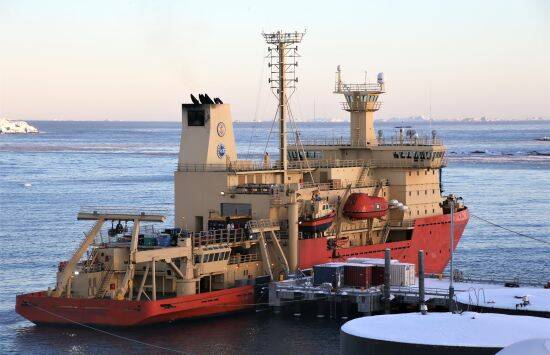
A letter protesting the imminent demise of US research vessel and icebreaker the Nathaniel B. Palmer was this week sent to the National Science Foundation (NSF) amid proposed funding reductions.
The fate of science in the US has come under scrutiny following proposals to make deep cuts to the budget. The NSF is aiming to get by with much, much less. One staffer told The Register that shrinkage of 65 to 75 percent was on the cards as the agency, responsible for promoting scientific progress and nurturing national talent, adjusts to new realities.
On the chopping block, and lurking in the agency's FY 2026 budget request to Congress [PDF], is the line "NSF intends to terminate the lease of the research vessel Nathaniel B. Palmer in FY 2026."
Launched in 1992, the Nathaniel B. Palmer is a 308-foot research ship that can operate all year round in Antarctic waters. It has a crew of 22 and can accommodate 45 scientists and technicians. According to the NSF, it sails an average of 240 days per year.
Research Vessel Icebreaker Nathaniel B. Palmer (pic: National Science Foundation)
But, if the proposed budget is anything to go by, not for much longer. With no immediate replacement available, the NSF appears set to retire the vessel.
Noting the increases in marine capability from nations such as the UK, China, and Korea, the letter says: "The early loss of the N.B. Palmer is troubling" and highlights the science that has come from the vessel and its predecessors, all of which have "helped grow the US's standing as a leader of international scientific research."
"There's no replacement for a dedicated research vessel that can access remote sea ice-covered regions of Antarctica and that allows sampling of the full depth of the ocean and coastal regions on land."
- The real reason why Trump is killing the Mauna Loa observatory in Hawai'i
- NASA Goddard Center Director quits as agency staffers issue dissent letter
- NASA veteran warns Hubble faces death by a hundred cuts
- Thousands of NASA senior staffers expected to quit after budget slashed
There is a replacement on the way, but it is not expected to be operational until the 2030s, according to reports. The expectation was that the Nathaniel B. Palmer would be kept operational, but under the proposal, a coverage gap seems almost inevitable. There is also every possibility that the axe might fall on planning for the Palmer's replacement.
Talking to Science, Carlos Moffat, a physical oceanographer at the University of Delaware and one of the organizers of the letter, called the proposal to cut off funding for planning the vessel's successor "a one-two punch."
While plans are afoot to plug the gap with Research Vessel Sikuliaq, a co-organizer of the letter, Julia Wellner, a marine geologist at the University of Houston, called the vessel "wholly unsuited to most of what we do in Antarctica". She called out the lack of berths, reduced icebreaking capabilities, and the potential for diminishing resources devoted to the Arctic (the vessel is currently based in Alaska).
Although the budget proposal is just that – a proposal – the uncertainty is not ideal for scientists planning research that may or may not happen depending on the fate of the US's Antarctic icebreaker.
The Register asked the NSF to comment on the proposal and letter, but the agency has yet to respond. ®
From Chip War To Cloud War: The Next Frontier In Global Tech Competition
The global chip war, characterized by intense competition among nations and corporations for supremacy in semiconductor ... Read more
The High Stakes Of Tech Regulation: Security Risks And Market Dynamics
The influence of tech giants in the global economy continues to grow, raising crucial questions about how to balance sec... Read more
The Tyranny Of Instagram Interiors: Why It's Time To Break Free From Algorithm-Driven Aesthetics
Instagram has become a dominant force in shaping interior design trends, offering a seemingly endless stream of inspirat... Read more
The Data Crunch In AI: Strategies For Sustainability
Exploring solutions to the imminent exhaustion of internet data for AI training.As the artificial intelligence (AI) indu... Read more
Google Abandons Four-Year Effort To Remove Cookies From Chrome Browser
After four years of dedicated effort, Google has decided to abandon its plan to remove third-party cookies from its Chro... Read more
LinkedIn Embraces AI And Gamification To Drive User Engagement And Revenue
In an effort to tackle slowing revenue growth and enhance user engagement, LinkedIn is turning to artificial intelligenc... Read more