

US Department Of Defense Funds Google And SkyWater To Enable Open Source Chips
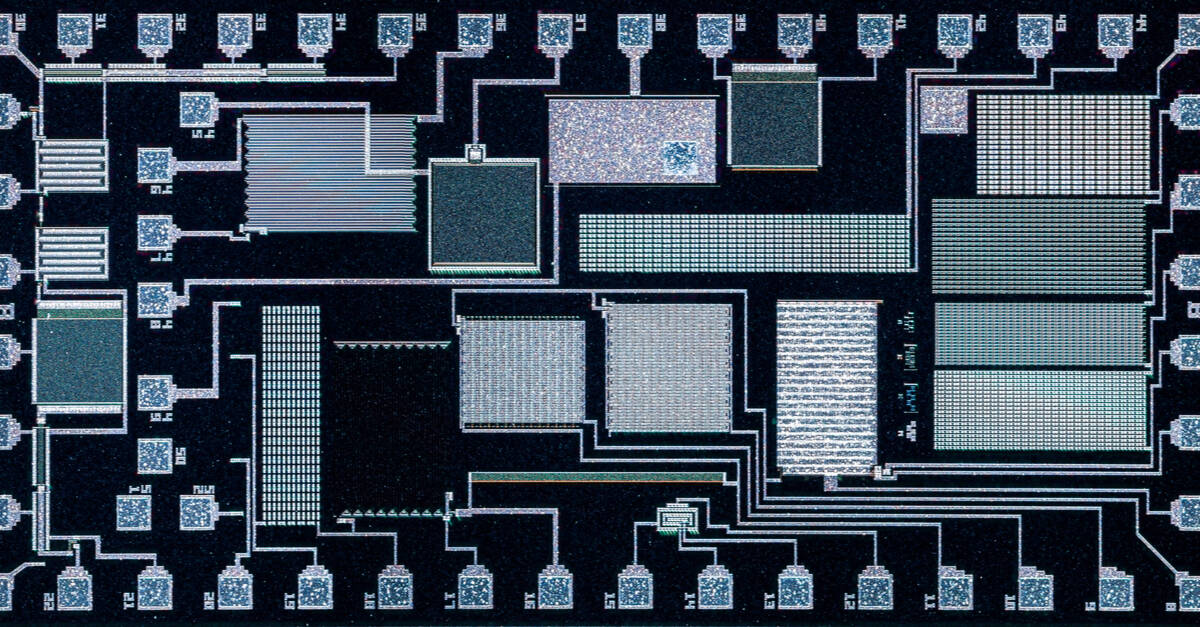
Google has linked up with chip fabrication company, SkyWater Technology, on an open source chip technology program with funding from the US Department of Defense (DoD) to build a reliable source of components for defense applications.
SkyWater announced it has received $15 million in funding from the DoD to develop open source design capabilities for its 90nm production process. To enable this, the company has turned to Google to provide the compute resources and other expertise to realize the project.
It seems the pair have some history in this respect, with Google working with US-investor-owned SkyWater in 2020 to enable open source design of custom ASICs to be manufactured on its 130nm mixed-signal CMOS process.
SkyWater said its new SKY90-FD open source offering is based on fully depleted silicon on insulator (FDSOI) CMOS technology developed at MIT’s Lincoln Laboratory. It is intended to open up a pipeline for chip creation and give a boost to innovation, as well as providing a pathway to volume production for custom chip designs.
The DoD said it is already using many open source software projects, and this approach is thus playing a growing role in mission-critical systems and defense applications. A key advantage of open source is transparency, according to the DoD, which enables identification of design flaws and malicious code, something that is not always possible with proprietary software.
The DoD program manager for this project, Dr. Matthew Kay, said that developments such as this were important in ensuring a reliable source of US-made chips for defense applications.
"Investments in commercial endeavors such as the partnership between SkyWater and Google is another example of how the Department of Defense can leverage technology advancements within the open source community to effectively and efficiently improve our defensive posture for the future," he said.
For its part, Google already has has a long-standing history of supporting open source silicon, being a founding member of the RISC-V Foundation and the Linux Foundation's CHIPS Alliance project.
- If you want to make your own chip and aren't Microsoft rich, who do you turn to?
- If you wanna make your own open-source chip, just Google it. Literally. Web giant says it'll fab them for free
- RISC-V keeps its head down amid global chip war
- Why Intel killed its Optane memory business
Will Grannis, CEO of the newly created Google Public Sector division, said this public-private partnership with the DoD and SkyWater represents a new era in accessible chip design driven by an open source approach.
"Our collaboration will help address the historical limitations of chip design and production for national defense by improving accessibility for researchers and developers to innovate faster and at lower costs," he said.
"Google provides the compute, engineering know-how, and platform that accelerates chip design; SkyWater provides the next-gen chip design system and fabrication in a secure commercial environment; and the DoD investment makes this all scalable and accessible."
The $15 million in funding from the DoD announced this week is part of a previously announced $27 million package for SkyWater, a portion of which will go towards developing its 90nm Rad-Hard process (RH90), engineered to produce radiation-hardened electronics which can operate in harsh environments.
SkyWater also welcomed the passing of the CHIPS and Science Act by the US Congress, saying it would help put the country on a more equal footing with Europe and Asia in rebuilding "a deteriorating domestic manufacturing environment."
SkyWater CEO Thomas Sonderman said that the "bold, historic vote" recognized that America "needs to do more to compete in a global economy and to bolster our national security." ®
From Chip War To Cloud War: The Next Frontier In Global Tech Competition
The global chip war, characterized by intense competition among nations and corporations for supremacy in semiconductor ... Read more
The High Stakes Of Tech Regulation: Security Risks And Market Dynamics
The influence of tech giants in the global economy continues to grow, raising crucial questions about how to balance sec... Read more
The Tyranny Of Instagram Interiors: Why It's Time To Break Free From Algorithm-Driven Aesthetics
Instagram has become a dominant force in shaping interior design trends, offering a seemingly endless stream of inspirat... Read more
The Data Crunch In AI: Strategies For Sustainability
Exploring solutions to the imminent exhaustion of internet data for AI training.As the artificial intelligence (AI) indu... Read more
Google Abandons Four-Year Effort To Remove Cookies From Chrome Browser
After four years of dedicated effort, Google has decided to abandon its plan to remove third-party cookies from its Chro... Read more
LinkedIn Embraces AI And Gamification To Drive User Engagement And Revenue
In an effort to tackle slowing revenue growth and enhance user engagement, LinkedIn is turning to artificial intelligenc... Read more