

Ukraine War: Fraudsters Exploit Crisis To Steal Money
By Kevin Peachey
Personal finance correspondent, BBC News
Image source, Getty Images
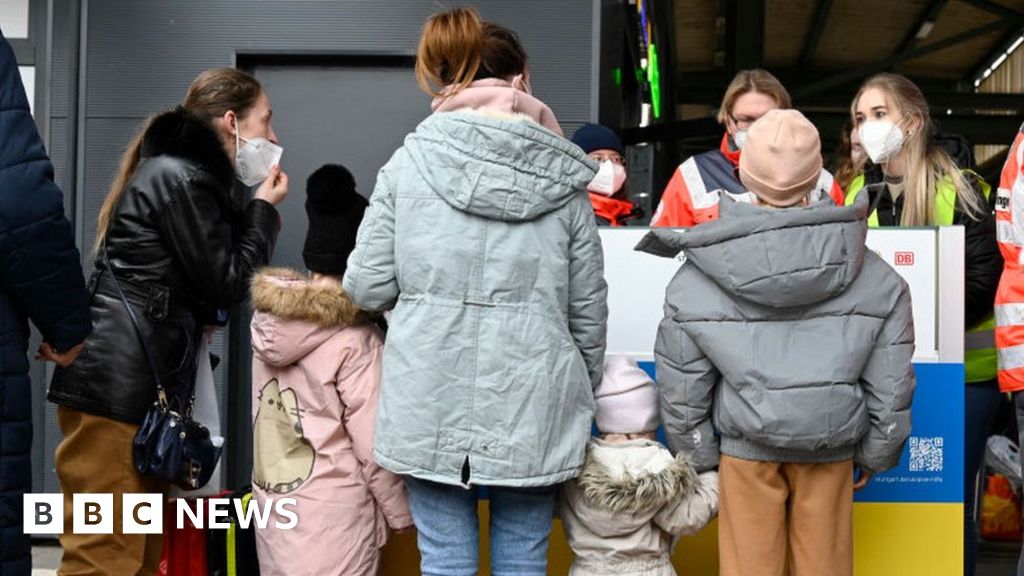
Scenes of those fleeing Ukraine have prompted people in the UK to donate money
Fraudsters are masquerading as victims of the war in Ukraine in an attempt to steal money from well-meaning UK residents.
Con-artists are also seizing on people's eagerness to help victims of the crisis by creating false charity websites to trick people into donating.
One expert said the fraud was "evil", but unsurprising given the profile of the conflict.
The prevalence of such scams is expected to build in the coming weeks.
"As with every global crisis, we going to see a sharp increase in these scams," said fraud protection expert Charlie Shakeshaft.
How the scams work
He said three specific scams have started to emerge as fraudsters seek to exploit the situation.
The first is a donation scam. Fraudsters blitz people with emails or text messages encouraging them to give money to victims of the war. The messages include a link to a false charity website.
The messages may be directed at the numbers of people already on so-called suckers lists, because they have previously been tricked, or are promising targets for fraudsters.
The second scam uses emotional posts from fraudsters pretending to be victims of the war asking for money.
Thirdly, there is a variation of a common scam in which an individual is supposedly a Ukrainian businessman trying to move money out of the country, and who needs to use a bank account outside the country. In reality, it is a fraudster attempting to steal that volunteer's bank details and drain their account.
War in Ukraine: More coverage
Separately, HM Revenue and Customs (HMRC) is warning people to be on their guard for scams following the deadline for self-assessment tax returns.
The UK's tax authority said it had received 570,000 reports of scam attempts in the last year.
Most prevalent at this time of year are texts, emails or calls either offering a "refund" or demanding unpaid tax, with victims mistakenly thinking the contact refers to their self-assessment return.
Phone calls had become more of an issue recently, HMRC said, with 3,995 reports in January compared with 425 in April 2020.
Myrtle Lloyd, HMRC's director general for customer services, said: "If someone contacts you saying they are from HMRC, wanting you to transfer money or give personal information, be on your guard."
She urged people not to be rushed, and to double check via a dedicated page on the government website.
From Chip War To Cloud War: The Next Frontier In Global Tech Competition
The global chip war, characterized by intense competition among nations and corporations for supremacy in semiconductor ... Read more
The High Stakes Of Tech Regulation: Security Risks And Market Dynamics
The influence of tech giants in the global economy continues to grow, raising crucial questions about how to balance sec... Read more
The Tyranny Of Instagram Interiors: Why It's Time To Break Free From Algorithm-Driven Aesthetics
Instagram has become a dominant force in shaping interior design trends, offering a seemingly endless stream of inspirat... Read more
The Data Crunch In AI: Strategies For Sustainability
Exploring solutions to the imminent exhaustion of internet data for AI training.As the artificial intelligence (AI) indu... Read more
Google Abandons Four-Year Effort To Remove Cookies From Chrome Browser
After four years of dedicated effort, Google has decided to abandon its plan to remove third-party cookies from its Chro... Read more
LinkedIn Embraces AI And Gamification To Drive User Engagement And Revenue
In an effort to tackle slowing revenue growth and enhance user engagement, LinkedIn is turning to artificial intelligenc... Read more