

UK Fast-tracks Law To Tackle Russian 'dirty Money'
By Beth Timmins
Business reporter, BBC News
Image source, Getty Images
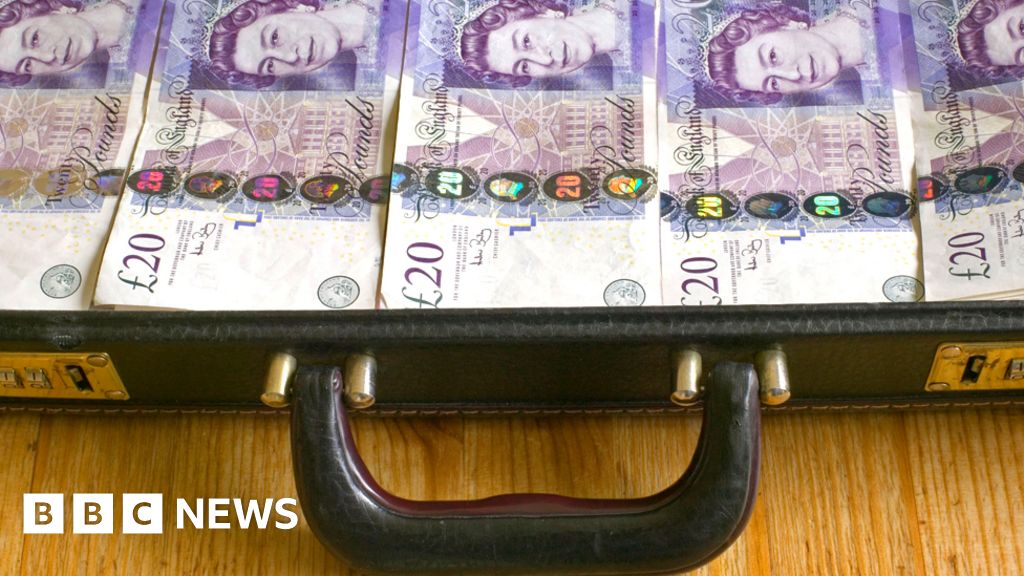
The aim is to stop overseas criminals from using agents to create companies or buy property for them in the UK
The UK is fast-tracking legislation to target money-laundering by foreign oligarchs.
The government's move follows Russia's decision to invade Ukraine.
As part of the measures, foreign property owners will have to declare their identities rather than using companies as a façade.
It follows the economic sanctions announced by Prime Minister Boris Johnson on Tuesday which targeted major Russian banks and leaders.
Mr Johnson said that there is "no place for dirty money" in the UK.
"We are going faster and harder to tear back the façade that those supporting Putin's campaign of destruction have been hiding behind for so long."
"Those backing Putin have been put on notice: there will be nowhere to hide your ill-gotten gains," Mr Johnson added.
The government said the legislation will support the National Crime Agency work in targeting corruption.
The Economic Crime Bill will include a new register that will mean foreign owners of UK property must declare and verify their identities with Companies House.
The aim is to stop overseas criminals and oligarchs from using agents to create companies or buy property for them in the UK.
Entities that refuse to declare their owners will face restrictions in selling property and those who break the rule could be imprisoned for up to five years.
The register also applies to property bought by overseas owners up to 20 years ago in England and Wales and from December 2014 for property in Scotland.
Companies House will also have more information on firms to increase corporate transparency, the government said.
The National Crime Agency's 'Kleptocracy' cell, announced last week, will also begin to investigate sanctions evasion and be able to seize crypto-assets used for money-laundering.
'Time is up for Putin's cronies'
The legislation also strengthens Unexplained Wealth Orders (UWOs) which were powers brought into force in January 2018 in the fight against suspected criminal money invested in property.
However, UWOs have been used just four times since 2018 and only one has resulted in property being surrendered so far.
UWOs will be reformed to give law enforcement agencies more time to review case material and to protect them from substantial legal costs if they pursue reasonable cases which are ultimately unsuccessful.
Home Secretary Priti Patel said: "Time is up for Putin's cronies hiding dirty money in the UK and this new legislation will help to crack down on economic crime, including removing key barriers to using Unexplained Wealth Orders."
Shadow chancellor Rachel Reeves said that Labour supports the legislation and will "scrutinise the strength of these measures, which the government must enact in their strongest form to tackle dirty money once and for all."
Image source, Getty Images
Labour said the measures were "welcome" but "don't yet go far and fast enough"
"The long overdue Register of Overseas Entities, originally promised in 2016, must now be implemented at speed. Any transition period must be completed by the end of March and be accompanied by tough enforcement measures," she continued.
Business Secretary Kwasi Kwarteng said the new register will "shine a light" on who owns what in the UK so the government could "flush out the oligarchs, criminals and kleptocrats who think they can use UK property to hide their illicitly obtained wealth."
Shadow home secretary Yvette Cooper said the measures were "welcome" but "don't yet go far and fast enough".
"Alongside strong sanctions we need an urgent crackdown on illicit finance, corruption and organised crime linked to Russia. For too long the City of London and the UK economy has been used as a laundromat by corrupt elites linked to organised crime," Ms Cooper added.
The anti-corruption organisation Transparency International has identified at least £1.5bn of UK property owned by Russians accused of financial crime or with links to the Kremlin.
As part of the latest round of sanctions, Mr Johnson said the government will also limit the amount of money Russian nationals will be able to deposit in their UK bank account.
From Chip War To Cloud War: The Next Frontier In Global Tech Competition
The global chip war, characterized by intense competition among nations and corporations for supremacy in semiconductor ... Read more
The High Stakes Of Tech Regulation: Security Risks And Market Dynamics
The influence of tech giants in the global economy continues to grow, raising crucial questions about how to balance sec... Read more
The Tyranny Of Instagram Interiors: Why It's Time To Break Free From Algorithm-Driven Aesthetics
Instagram has become a dominant force in shaping interior design trends, offering a seemingly endless stream of inspirat... Read more
The Data Crunch In AI: Strategies For Sustainability
Exploring solutions to the imminent exhaustion of internet data for AI training.As the artificial intelligence (AI) indu... Read more
Google Abandons Four-Year Effort To Remove Cookies From Chrome Browser
After four years of dedicated effort, Google has decided to abandon its plan to remove third-party cookies from its Chro... Read more
LinkedIn Embraces AI And Gamification To Drive User Engagement And Revenue
In an effort to tackle slowing revenue growth and enhance user engagement, LinkedIn is turning to artificial intelligenc... Read more