

Tulip Tower: Government Rejects Plans For London Skyscraper
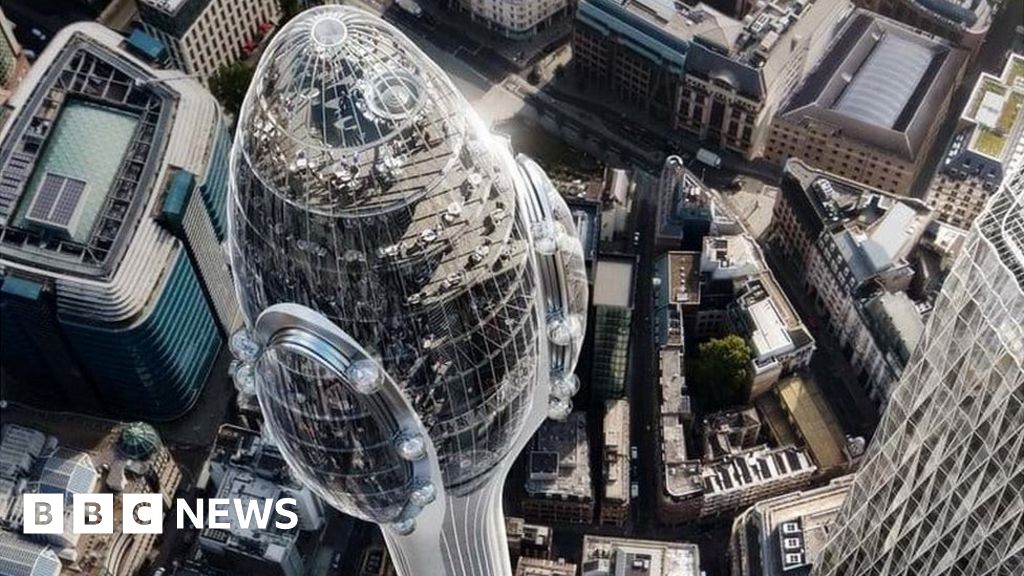
Image source, Foster + Partners
The 1,000 ft tower was planned for 20 Bury Street, beside the Gherkin tower
The Tulip skyscraper will not be built after a government panel found it to be "poor and unsympathetic to the historical context" of the capital.
An appeal was launched by those behind the tower but it has been dismissed by the planning inspectorate.
Sadiq Khan said he was delighted with the result.
However the mayor added he was "disappointed the case went to appeal in the first place, incurring unnecessary costs to the taxpayer".
Image source, Foster + Partners
Gondolas would have taken visitors on an eight-minute loop of the tower
The skyscraper had been proposed to be built on Bury Street, beside the Gherkin tower.
The 210-page report from the government's planning inspectorate lays out the reasons for dismissing the appeal, which had been launched by architect Foster + Partners and their client Jacob Safra.
Reasons for rejecting the plans included:
- The setting would harm views of nearby world heritage sites including the Tower of London
- It would stand out as "different and less cohesive" beside other local buildings
- Using vast quantities of reinforced concrete for the foundations and lift shaft was "highly unsustainable"
Mr Khan previously cited a number of concerns raised in a London Review Panel report in 2019, which said it would harm the skyline and had few public benefits.
A spokesman for the mayor's office said: "Sadiq has long argued that the proposed tower would be little more than a concrete lift shaft with a viewing gallery at the top, offering very little in terms of benefits for Londoners, with no new office space or housing."
Related Internet Links
The BBC is not responsible for the content of external sites.
From Chip War To Cloud War: The Next Frontier In Global Tech Competition
The global chip war, characterized by intense competition among nations and corporations for supremacy in semiconductor ... Read more
The High Stakes Of Tech Regulation: Security Risks And Market Dynamics
The influence of tech giants in the global economy continues to grow, raising crucial questions about how to balance sec... Read more
The Tyranny Of Instagram Interiors: Why It's Time To Break Free From Algorithm-Driven Aesthetics
Instagram has become a dominant force in shaping interior design trends, offering a seemingly endless stream of inspirat... Read more
The Data Crunch In AI: Strategies For Sustainability
Exploring solutions to the imminent exhaustion of internet data for AI training.As the artificial intelligence (AI) indu... Read more
Google Abandons Four-Year Effort To Remove Cookies From Chrome Browser
After four years of dedicated effort, Google has decided to abandon its plan to remove third-party cookies from its Chro... Read more
LinkedIn Embraces AI And Gamification To Drive User Engagement And Revenue
In an effort to tackle slowing revenue growth and enhance user engagement, LinkedIn is turning to artificial intelligenc... Read more