

The African Tech Firm Hoping To Power Space Missions
By Elna Schutz
Business reporter, Cape Town, South Africa
Image source, Elna Schutz
"Most satellites are simply computers that are tossed out the side of a rocket [that] are tumbling in space," says Jonathan Lun.
Mr Lun and his Cape Town-based company, Hypernova Space Technologies, are keen to give these tumbling satellites a little bit more autonomy.
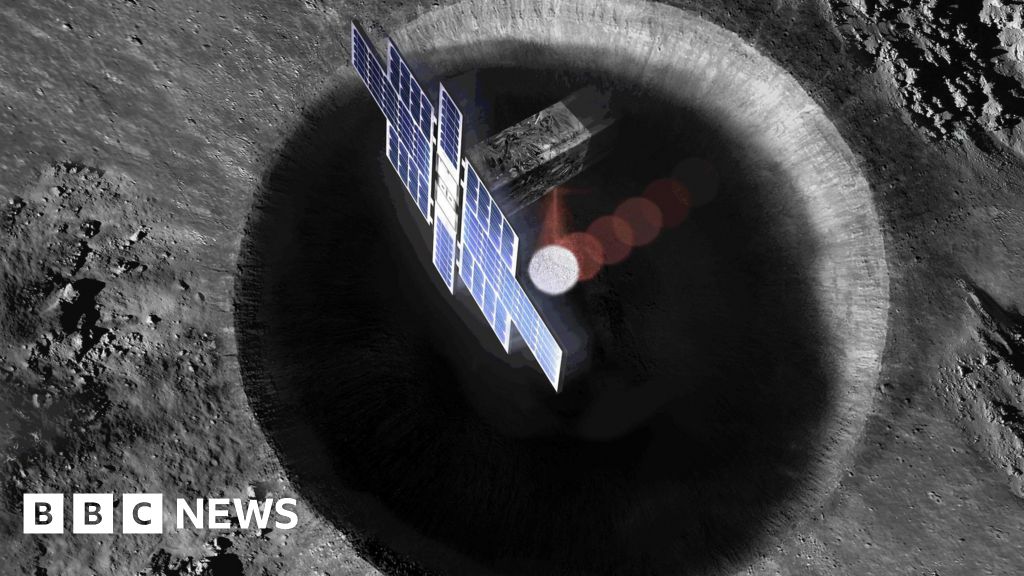
The firm has developed a thruster system that could give even the smallest types of satellites the capacity to move around.
The company is hopeful that their technology could be applied to nanosatellites which are small satellites weighing under 10kg and, even applied to the tiniest of them all, the 10cm cubes known as cubesats.
There are an estimated 3,200 nanosatellites floating around in orbit already, and that number is expected to grow rapidly in the near future: SpaceX alone is in the process of launching a constellation of around 42,000 satellites.
But experts are concerned that this explosion in numbers may lead to problems.
Without manoeuvrability - the capacity to change direction - nanosatellites risk colliding with each other, causing space debris which might cause problems for other missions.
Image source, Getty Images
Mobility would also make it much easier to retrieve, or dispose of, satellites once their working life was over.
But as nanosatellites are deliberately designed to be small and cheap, any new thruster technology needs to be simple to be commercially viable.
Around a decade ago, Mr Lun came across an interesting thruster technology that had previously been researched by Nasa but never fully pursued. He found that an electric reaction could be used to vaporise solid metal fuel, a process which then created a jet of fast-moving plasma that could propel a satellite along.
One big advantage to using solid fuels in this way would be that the material would be stable enough to add to a thruster-system prior to launch - removing the need for any last-minute fuelling before sending satellites off into space.
"They don't have to worry about filling it up, they don't have to worry about [the material] being toxic, they don't have to worry about it during launch, something breaking and leaking," adds Stephen Tillemans, the head of engineering at Hypernova.
Mr Tillemans confirms the company has successfully run several environmental tests, such as, running the thruster in a vacuum, in extreme temperatures, and with high vibration. Hypernova's first mission in space will be in early 2022 with EnduroSat, a company based in Bulgaria.
Together, the companies are aiming to assess the performance of the thruster technology in space, including measuring its force and demonstrating that it can successfully change the orbit of a satellite.
Image source, Endurosat
Hypernova are not alone in their research, other organisations are also investing in developing the thruster technology that could propel small satellites through space, including MIT in the US, and the European Space Agency and its Helicon Plasma Thruster.
Hypernova is also collaborating with other players in the South African space industry, such as the Electrical and Electronic Engineering department at Stellenbosch University, which is currently developing a technology that would allow satellites to dock with each other.
Image source, ESA
Looking much further in to the future, Mr Lun is confident that it would be possible to scale-up Hypernova's thruster technology so it could potentially be used for much bigger satellites and more ambitious missions.
He is even hopeful that using metal as a fuel will facilitate bigger opportunities for the industry as a whole because thrusters could potentially be powered using substances found in space - both substances mined in-situ, or collected from space debris, for instance.
"So, if we can now switch over from rare expensive liquids and gases as fuel sources, to move stuff around in space with cheap and abandoned iron ore or other metals, it changes the game completely."
From Chip War To Cloud War: The Next Frontier In Global Tech Competition
The global chip war, characterized by intense competition among nations and corporations for supremacy in semiconductor ... Read more
The High Stakes Of Tech Regulation: Security Risks And Market Dynamics
The influence of tech giants in the global economy continues to grow, raising crucial questions about how to balance sec... Read more
The Tyranny Of Instagram Interiors: Why It's Time To Break Free From Algorithm-Driven Aesthetics
Instagram has become a dominant force in shaping interior design trends, offering a seemingly endless stream of inspirat... Read more
The Data Crunch In AI: Strategies For Sustainability
Exploring solutions to the imminent exhaustion of internet data for AI training.As the artificial intelligence (AI) indu... Read more
Google Abandons Four-Year Effort To Remove Cookies From Chrome Browser
After four years of dedicated effort, Google has decided to abandon its plan to remove third-party cookies from its Chro... Read more
LinkedIn Embraces AI And Gamification To Drive User Engagement And Revenue
In an effort to tackle slowing revenue growth and enhance user engagement, LinkedIn is turning to artificial intelligenc... Read more