

Teardown Shows Apple IPhone 14 Pro Is Not Pro-repair
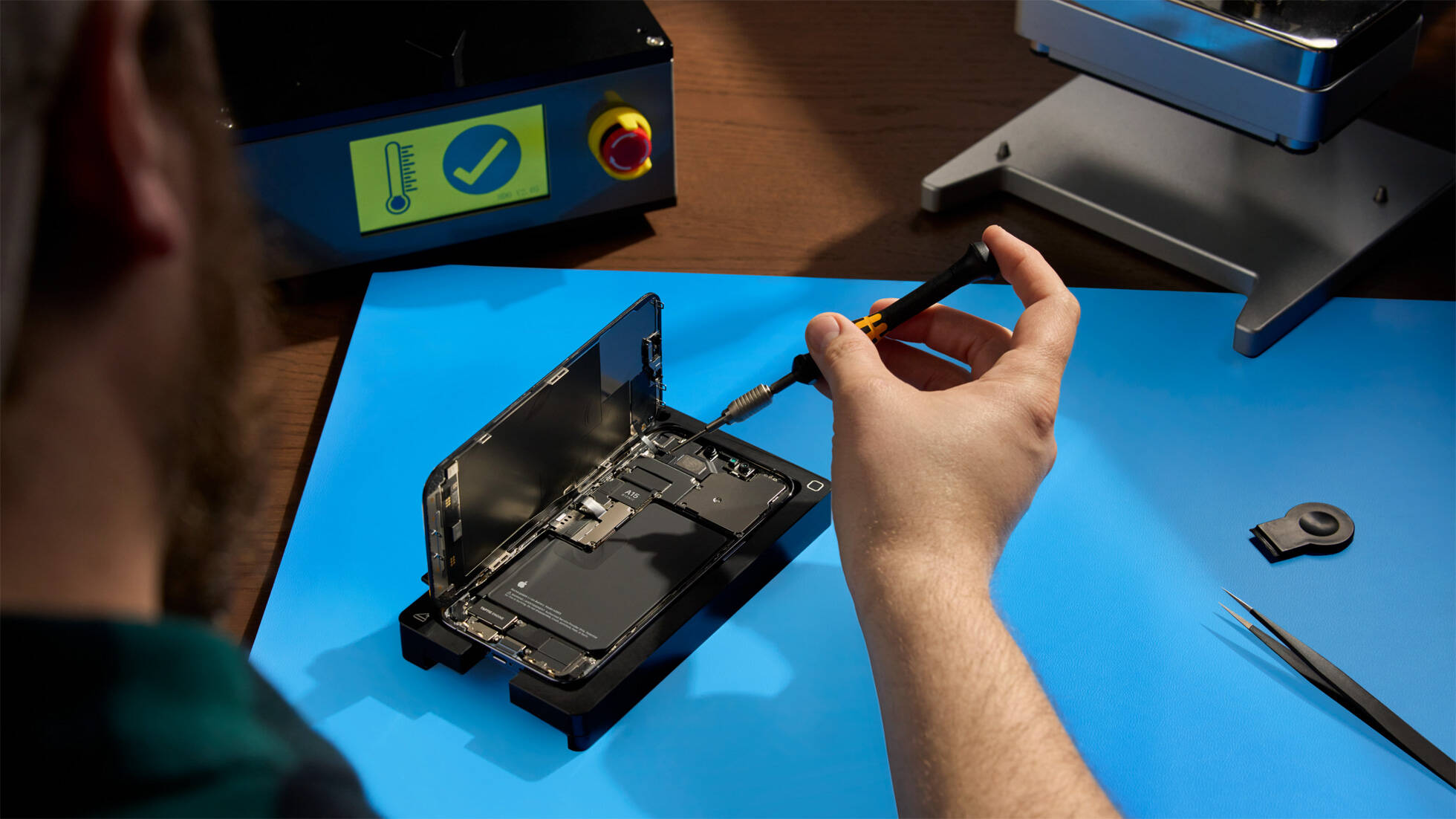
Apple's iPhone 14 can be repaired more easily than its predecessors, but its Pro model retains the architectural inaccessibility of older iPhones and resists replacement parts, even authentic Cupertino kit.
In a video published to YouTube, repair advocate Hugh Jeffreys recently completed a teardown of two iPhone 14 Pros that he'd purchased for $3,500 and found that while Apple has made some concessions to device repairability, its iPhone Pro line continues to be allergic to swapped parts.
"With previous iPhone models Apple has programmed its software to reject certain parts that were not installed by Apple," Jeffreys explained. "This included cameras, batteries, and displays causing artificial issues, disabled features, and warning messages. The question is 'is the iPhone 14 [Pro] any different?'"
The answer, despite Apple's claimed support for Self Service Repair, is no: when Jeffreys took apart his two iPhone Pros and swapped the Apple-installed components, the devices began to have problems. These included warning messages about the inability to determine whether a part is genuine, and of functional degradation to automatic color correction, brightness, Face ID, and so on.
Summarizing what he describes as anti-third party repair locks, Jeffreys said, "Replacing your display will remove True Tone and break Auto Brightness. A new battery will disable Battery Health. A new front camera will break Face ID, portrait mode and cinematic mode. A rear camera will only give you a warning message. And lastly, replacing the logic board will trigger all of the previous penalties."
He concludes, "I might have spent three-and-half thousand dollars on these phones but I feel as though they're not really mine."
Apple did not respond to a request for comment.
- iPhone 14 iFixit teardown shows Apple's learning on repairs
- Apple warned by US lawmakers over using Chinese YMTC chips in new iPhone
- Samsung adds 'repair mode' that hides data on Galaxy smartphones in South Korea
- Death to DRM, we'll kill it in a decade, chants EFF
Kyle Wiens, CEO of repair advocacy site iFixit, told The Register in an email that Jeffreys has raised a reasonable concern, one that iFixit has explored many times.
"Due to lack of hardware (we are struggling to get enough Pro models to finish the scoring), we have not fully tested all the serialized parts on this phone yet," he said. "Our preliminary analysis shows that it is similar to the 13, which has a number of problems."
Specifically, Apple makes it difficult to swap Apple-installed parts between iPhones.
Wiens said iFixit has been adjusting how it scores the repairability of products to account for parts that require an internet connection or manufacturer approval.
"Over the last year, we have also phased in penalties for paired parts and repairs that require internet access or manufacturer approval," he said, though these penalties have been balanced out by the increasing availability of service manuals and parts.
He suggests there will be some adjustment in the way products get evaluated due to new laws, like New York's Right to Repair bill and new challenges like the remote repair verification process implemented by Service Parts or Tools, Inc. (SPOT), contracted by Apple to run the Self-Service Repair Store.
But in general Wiens agrees with Jeffreys that Apple should support part swapping.
"The extensive parts pairing and warnings are a significant impediment to the reuse and repair market, and Apple should stop," Wiens said. ®
From Chip War To Cloud War: The Next Frontier In Global Tech Competition
The global chip war, characterized by intense competition among nations and corporations for supremacy in semiconductor ... Read more
The High Stakes Of Tech Regulation: Security Risks And Market Dynamics
The influence of tech giants in the global economy continues to grow, raising crucial questions about how to balance sec... Read more
The Tyranny Of Instagram Interiors: Why It's Time To Break Free From Algorithm-Driven Aesthetics
Instagram has become a dominant force in shaping interior design trends, offering a seemingly endless stream of inspirat... Read more
The Data Crunch In AI: Strategies For Sustainability
Exploring solutions to the imminent exhaustion of internet data for AI training.As the artificial intelligence (AI) indu... Read more
Google Abandons Four-Year Effort To Remove Cookies From Chrome Browser
After four years of dedicated effort, Google has decided to abandon its plan to remove third-party cookies from its Chro... Read more
LinkedIn Embraces AI And Gamification To Drive User Engagement And Revenue
In an effort to tackle slowing revenue growth and enhance user engagement, LinkedIn is turning to artificial intelligenc... Read more