

Taiwan's Chip Exports Rose As China's Imports Fell In 2022
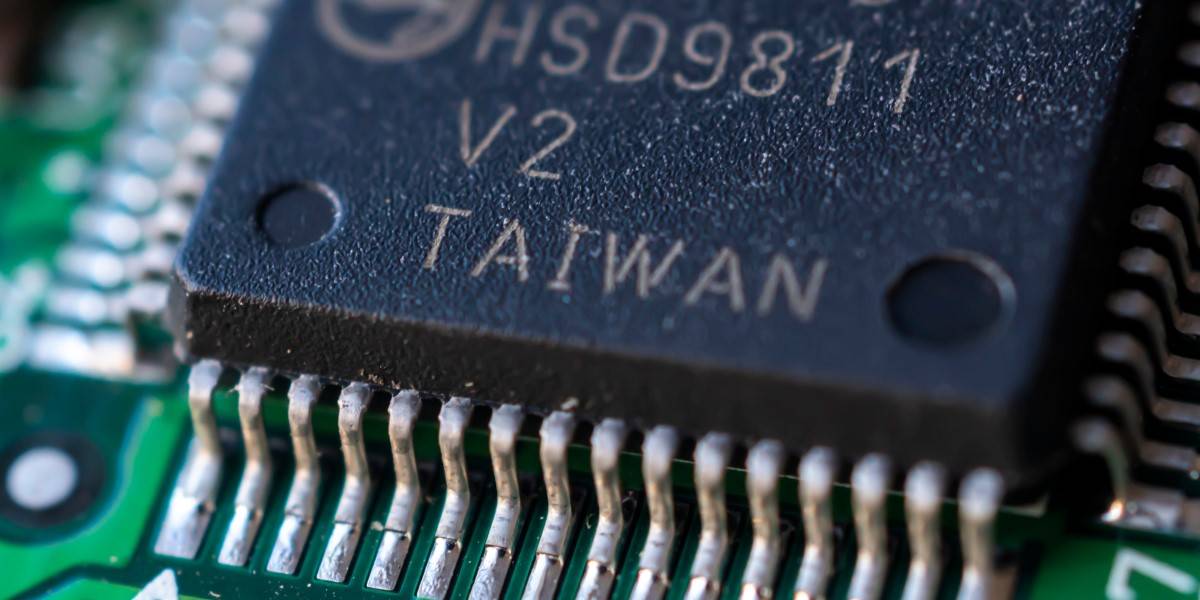
Taiwanese semiconductor exports rose during 2022 despite economic and other woes, highlighting the nation's vital importance to the global technology industry. Meanwhile, China's imports of integrated circuits fell for the first time in many years, as US sanctions bite.
According to Bloomberg, exports of semiconductors from Taiwan went up 18.4 percent year-on-year, citing data from the country's Ministry of Finance. This marks the seventh year in a row that its chip exports have grown, despite the challenges that 2022 has thrown at global supply chains, with the Russian war on Ukraine and the increasing political pressure from the US over China.
Taiwan continues to dominate the global semiconductor manufacturing industry, as we reported last year: in 2022 it controlled 48 per cent of the foundry market and 61 per cent of global capacity to manufacture chips under a 16nm process node or anything more advanced.
The country is also working to maintain its leadership position, announcing plans this month that will allow it to offer additional financial incentives to native semiconductor companies such as chip giant TSMC to encourage them to invest in new facilities within Taiwan. The plans should allow such companies to convert up to 25 percent of their annual R&D expenses into tax credits.
Such initiatives are perhaps viewed as necessary because TSMC in particular has indicated recently that it may cut capital spending, if only for the short term, and has also been in talks with other governments to build more chip fabrication plants outside Taiwan. These notably include two facilities in Arizona that are set to manufacture 4nm and 3nm chips once operational.
Meanwhile, China's imports of semiconductors fell by 15 percent during 2022, for the first time since 2004. It represents a step down to 538.4 billion units from 635.6 billion units the previous year, according to Bloomberg, quoting figures from China's General Administration of Customs.
China continues to be challenged on several fronts, not least of which is continued disruption due to Covid that saw manufacturing facilities repeatedly forced to shutdown because of lockdowns – although the country is now facing disruption from rapidly spreading Covid since it abandoned its zero covid policy.
The US has also been trying to restrict Beijing's access to technology via export controls introduced last year on chip design and manufacturing equipment, as well as blocking the sale of the most advanced memory chips and others used in AI processing.
- Asia rules the mobile world: more users, more often, generating more cash
- TSMC bucks chip biz trend with Q4 sales lift, but will cut spending in 2023
- US, Canada, Mexico ponder some sort of chip supply collab
- Samsung expects profit dive as demand for memory and devices continues to slow
Earlier this month, it was reported that China is considering alternative solutions to the chip conflict with the US, looking at other ways to boost its chipmaking industry than simply trying to match the US on spending.
The shipment data lands amid a cloudy outlook for the semiconductor industry as a whole with wafer manufacturer IQE saying this week that it expected to see demand dented by destocking.
In other words, companies in the semiconductor supply chain are looking to reduce the level of their inventory, following the stockpiling of the past year or two in response to earlier component shortages. ®
From Chip War To Cloud War: The Next Frontier In Global Tech Competition
The global chip war, characterized by intense competition among nations and corporations for supremacy in semiconductor ... Read more
The High Stakes Of Tech Regulation: Security Risks And Market Dynamics
The influence of tech giants in the global economy continues to grow, raising crucial questions about how to balance sec... Read more
The Tyranny Of Instagram Interiors: Why It's Time To Break Free From Algorithm-Driven Aesthetics
Instagram has become a dominant force in shaping interior design trends, offering a seemingly endless stream of inspirat... Read more
The Data Crunch In AI: Strategies For Sustainability
Exploring solutions to the imminent exhaustion of internet data for AI training.As the artificial intelligence (AI) indu... Read more
Google Abandons Four-Year Effort To Remove Cookies From Chrome Browser
After four years of dedicated effort, Google has decided to abandon its plan to remove third-party cookies from its Chro... Read more
LinkedIn Embraces AI And Gamification To Drive User Engagement And Revenue
In an effort to tackle slowing revenue growth and enhance user engagement, LinkedIn is turning to artificial intelligenc... Read more