

Start-up Denies Using Tech To Turn Call Centre Accents 'white'
By Shiona McCallum & Chris Vallance
Technology reporters
A Silicon Valley start-up has developed technology that can change the accents of call centre workers in real time.
The company, Sanas, has told the BBC that its technology could overcome accent-based prejudice and reduce racist abuse faced by staff.
But some critics have called it a move in the wrong direction and say language diversity should be celebrated.
News site SFGATE accused Sanas of making the agents, many of whom are from the global south, "sound white".
Sanas, which has reportedly received $32m in funding since June 2022, describes its technology as an accent translation tool.
A section on its website called "Demo" invites visitors to "hear the magic" by playing a recording of someone with an apparently South Asian accent reading a call centre script and then clicking a slider button which turns the speech into a slightly robotic sounding American accent.
SFGATE accused the start-up of attempting to make "call centre workers sound white and American, no matter the country they're from".
But Sharath Keshava Narayana, a co-founder of Sanas rejected the claim, telling the BBC's Tech Tent programme that all four of the founders were immigrants and so were 90% of the company's employees.
He said the tool had been inspired in part by the experience of a close friend of one of the other founders.
That friend, a third-year graduate student studying computer systems engineering at Stanford University in the US, had to return home to Nicaragua to support his parents.
The student found a technical support role in a call centre, but was fired after three months because, Mr Narayana said, of the discrimination he faced because of his accent.
A former call centre agent himself, Mr Narayana said in his experience agents would be abused or discriminated against because of how they sound - abuse the company believes its technology can prevent.
But Ashleigh Ainsley, co-founder of the organisation Color in Tech, argued: "Should we just alter people's skin colours because some people might not like that because they're racist?
"We cannot move in this direction. We need to build tolerance."
Mr Ainsley said he felt Sanas' efforts were misdirected, explaining: "The problem is with people who feel it's acceptable to abuse [call centre staff], not with the people who have the accent."
He said instead more effort should be made to ensure that diversity in language was celebrated and that racism should not be tolerated.
Accent discrimination
Asked if the technology pandered to racism Mr Narayana said: "Should the world be a better place? Absolutely yes. Should the world be more accepting of diversity and accent? Absolutely yes.
"But call centres have been around for 45 years and every day an agent goes through this discrimination on every single call."
The company said currently around 1,000 people use the technology, mostly in the Philippines and in India, and said it had been well-received, increasing employee retention.
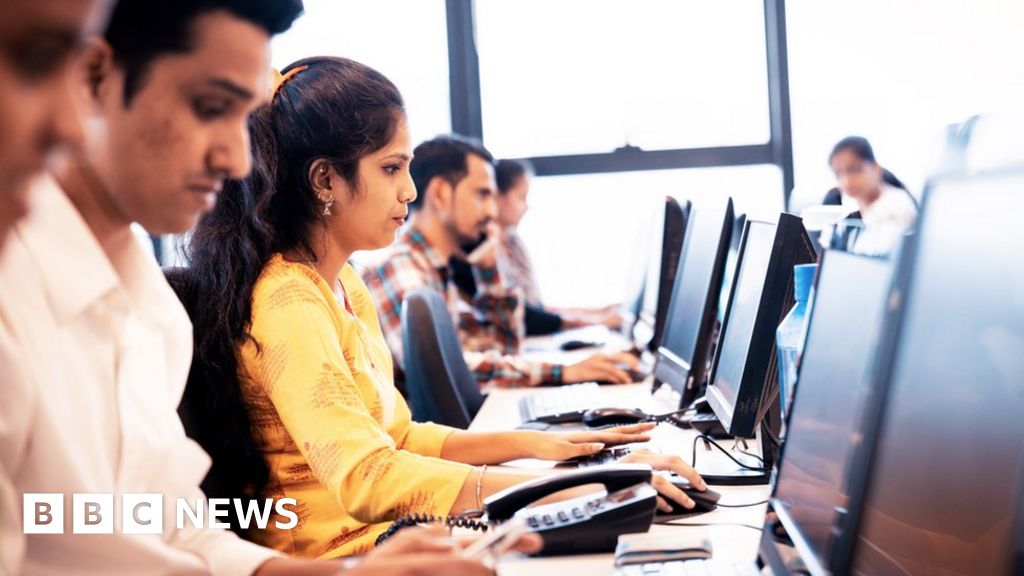
Many call centre staff have reported being expected to speak with an American accent. Shalu Yadav, a BBC journalist based in Delhi who worked at three call centres to earn extra money as a student, said employers expected her to learn about American culture and use an American accent.
Ms Yadav also spoke to two people with more recent experience of call centres about Sanas' technology.
Both said they felt the technology was a good idea. One spoke of "abuse" they received from some Americans they called who could not understand their accent.
Another said: "It was always difficult to get the grammar right, the pronunciation right, the lingo right, the slang right. So it used to be an added pressure to get the accent as well."
However, that individual felt the industry had moved on from preferring American accents and that many companies now expected something more "neutral".
Sanas said its purpose was to improve communication wherever accent might present a barrier.
It said firms were testing the technology for internal use, to ease communication between teams in Korea and the US or between teams in North and South India.
From Chip War To Cloud War: The Next Frontier In Global Tech Competition
The global chip war, characterized by intense competition among nations and corporations for supremacy in semiconductor ... Read more
The High Stakes Of Tech Regulation: Security Risks And Market Dynamics
The influence of tech giants in the global economy continues to grow, raising crucial questions about how to balance sec... Read more
The Tyranny Of Instagram Interiors: Why It's Time To Break Free From Algorithm-Driven Aesthetics
Instagram has become a dominant force in shaping interior design trends, offering a seemingly endless stream of inspirat... Read more
The Data Crunch In AI: Strategies For Sustainability
Exploring solutions to the imminent exhaustion of internet data for AI training.As the artificial intelligence (AI) indu... Read more
Google Abandons Four-Year Effort To Remove Cookies From Chrome Browser
After four years of dedicated effort, Google has decided to abandon its plan to remove third-party cookies from its Chro... Read more
LinkedIn Embraces AI And Gamification To Drive User Engagement And Revenue
In an effort to tackle slowing revenue growth and enhance user engagement, LinkedIn is turning to artificial intelligenc... Read more