

Sri Lanka Gives Government Workers Extra Day Off A Week
By Peter Hoskins
Business reporter
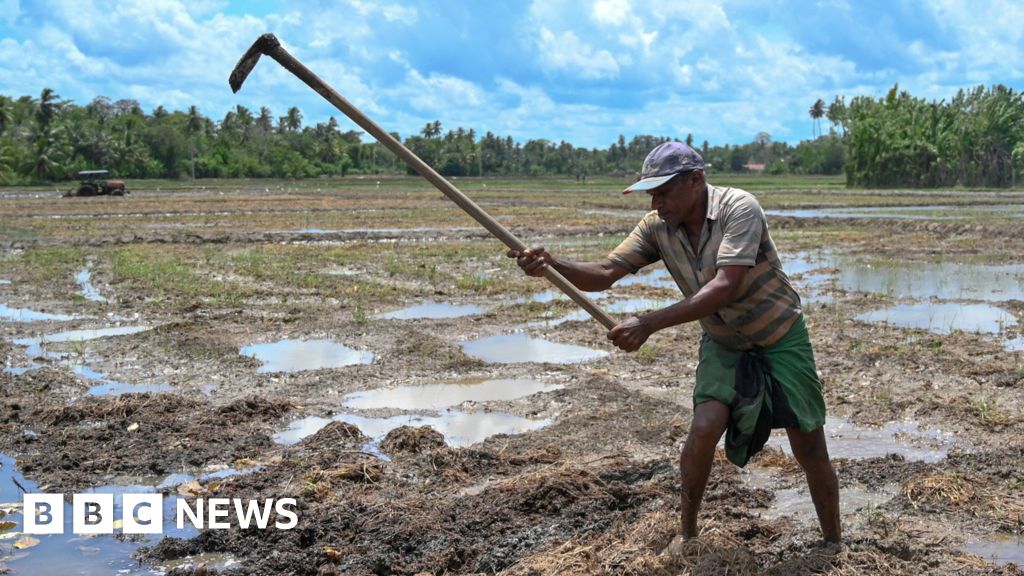
It comes as the price of food in Sri Lanka soars amid fears of shortages
Sri Lanka is giving government officials an extra day off a week to encourage them to grow food, amid fears of a food shortage.
The country has around one million public sector employees.
It comes as the island nation, home to around 22 million, faces its worst economic crisis in more than 70 years.
Sri Lanka is struggling to pay for critical imports such as food, fuel and medicine as it faces a severe shortage of foreign currencies.
Late on Monday, the government approved a proposal for public sector workers to be given leave every Friday for the next three months.
It said the decision was partly to help workers who are facing difficulties getting to work due to fuel shortages as well as to encourage them to grow fruit and vegetables to help feed themselves and their families.
"It seems appropriate to grant government officials leave for one working day of the week and provide them with the necessary facilities to engage in agricultural activities in their backyards or elsewhere as a solution to the food shortage that is expected to occur in the future," the government said in a statement on its online news portal.
Also on Monday, the United States said that it was ready to help Sri Lanka.
After a phone call with Sri Lankan Prime Minister Ranil Wickremesinghe, US Secretary of State Antony Blinken said the US "stands ready to work with Sri Lanka".
Good call today with new Sri Lankan Prime Minister @RW_UNP Wickremesinghe. During these economically and politically challenging times, the U.S. stands ready to work with Sri Lanka, in close coordination with the International Monetary Fund and the international community.
— Secretary Antony Blinken (@SecBlinken) June 13, 2022
The government is in talks over an economic bailout package, with an IMF delegation expected to arrive in the capital Colombo next Monday.
The fall in the value of the Sri Lankan rupee, rising global commodity prices and a ban chemical fertilisers - which has now been lifted - helped to push annual food price rises to more than 57% in April.
At the end of last month, the country's Agriculture Minister Mahinda Amaraweera called on farmers to grow more rice, saying "it is clear the food situation is becoming worse".
"We request all farmers to step into their fields in the next five to ten days and cultivate paddy [rice]," he added.
At the same time the government raised taxes to help shore up its finances.
PM Ranil Wickramasinghe: "There won't be a hunger crisis"
From Chip War To Cloud War: The Next Frontier In Global Tech Competition
The global chip war, characterized by intense competition among nations and corporations for supremacy in semiconductor ... Read more
The High Stakes Of Tech Regulation: Security Risks And Market Dynamics
The influence of tech giants in the global economy continues to grow, raising crucial questions about how to balance sec... Read more
The Tyranny Of Instagram Interiors: Why It's Time To Break Free From Algorithm-Driven Aesthetics
Instagram has become a dominant force in shaping interior design trends, offering a seemingly endless stream of inspirat... Read more
The Data Crunch In AI: Strategies For Sustainability
Exploring solutions to the imminent exhaustion of internet data for AI training.As the artificial intelligence (AI) indu... Read more
Google Abandons Four-Year Effort To Remove Cookies From Chrome Browser
After four years of dedicated effort, Google has decided to abandon its plan to remove third-party cookies from its Chro... Read more
LinkedIn Embraces AI And Gamification To Drive User Engagement And Revenue
In an effort to tackle slowing revenue growth and enhance user engagement, LinkedIn is turning to artificial intelligenc... Read more