

SpiceJet: Indian Airline Turns To Seaplanes To Boost Travel
- Published
image copyrightGetty Images
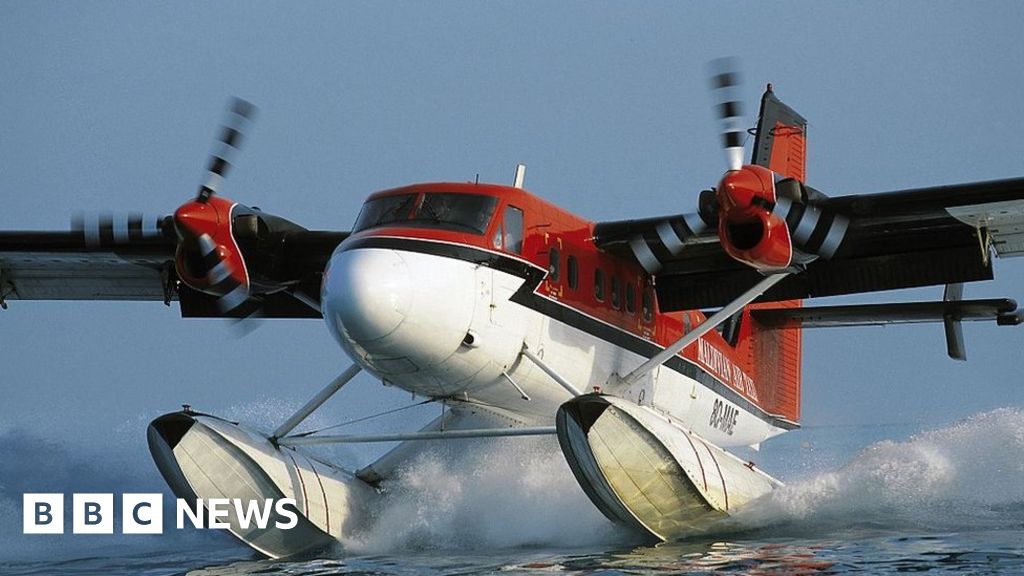
Indian airline SpiceJet is turning to seaplanes to boost travel during the pandemic downturn.
The country's biggest regional airline has approval for 18 seaplane routes.
One of these routes is to Kevadia, the site of the world's tallest statue - an 182-metre tribute to the country's first home minister, Vallabhbhai Patel.
During the pandemic, SpiceJet is focusing on new sources of revenue, including transporting cargo and regional flights using smaller planes.
Airlines have struggled during the coronavirus to remain profitable and many have gone bust, including the UK's Flybe and Virgin Australia. Many others are on the brink of survival and have made severe job cuts.
Some airlines have been looking at alternative ways of generating revenue. These include flights to nowhere and airplane meal delivery.
SpiceJet chairman Ajay Singh said the seaplanes would help improve regional connectivity - an initiative being encouraged by the Indian government - "without the high cost of building airports and runways", thanks to the planes being able to take-off and land both on small water bodies and short airstrips.
image copyrightGetty Images
India's Prime Minister Narendra Modi is expected to join the first flights from Ahmedabad to Kevadia on Saturday, the 145th anniversary of Vallabhbhai Patel's birth.
The landmark built in his honour, referred to as the Statue of Unity, sits in the state of Gujarat and is double the height of the Statue of Liberty.
The 30-minute flights will operate through its subsidiary Spice Shuttle and start from 1,500 rupees (£15.40) one-way.
Twin Otters
SpiceJet will be using Twin Otter 300 seaplanes, built by planemaker de Havilland Canada. They can seat up to 19 people, including passengers and crew.
"The Twin Otter is very popular among smaller operators, and is frequently used as a seaplane, most notably in the Maldives," said Greg Waldron at FlightGlobal magazine.
"Its small size allows it to reach locations that would not be accessible or practical for larger aircraft."
SpiceJet started conducting seaplane trials in India in 2017 in Nagpur, Guwahati and Mumbai. It has been exploring air connectivity through water bodies such as rivers or inland waterways.
During national lockdowns in India, SpiceJet remained active flying repatriation flights for more than 1m Indians.
From Chip War To Cloud War: The Next Frontier In Global Tech Competition
The global chip war, characterized by intense competition among nations and corporations for supremacy in semiconductor ... Read more
The High Stakes Of Tech Regulation: Security Risks And Market Dynamics
The influence of tech giants in the global economy continues to grow, raising crucial questions about how to balance sec... Read more
The Tyranny Of Instagram Interiors: Why It's Time To Break Free From Algorithm-Driven Aesthetics
Instagram has become a dominant force in shaping interior design trends, offering a seemingly endless stream of inspirat... Read more
The Data Crunch In AI: Strategies For Sustainability
Exploring solutions to the imminent exhaustion of internet data for AI training.As the artificial intelligence (AI) indu... Read more
Google Abandons Four-Year Effort To Remove Cookies From Chrome Browser
After four years of dedicated effort, Google has decided to abandon its plan to remove third-party cookies from its Chro... Read more
LinkedIn Embraces AI And Gamification To Drive User Engagement And Revenue
In an effort to tackle slowing revenue growth and enhance user engagement, LinkedIn is turning to artificial intelligenc... Read more