

South Korea Becomes First Major Asian Economy To Raise Interest Rates
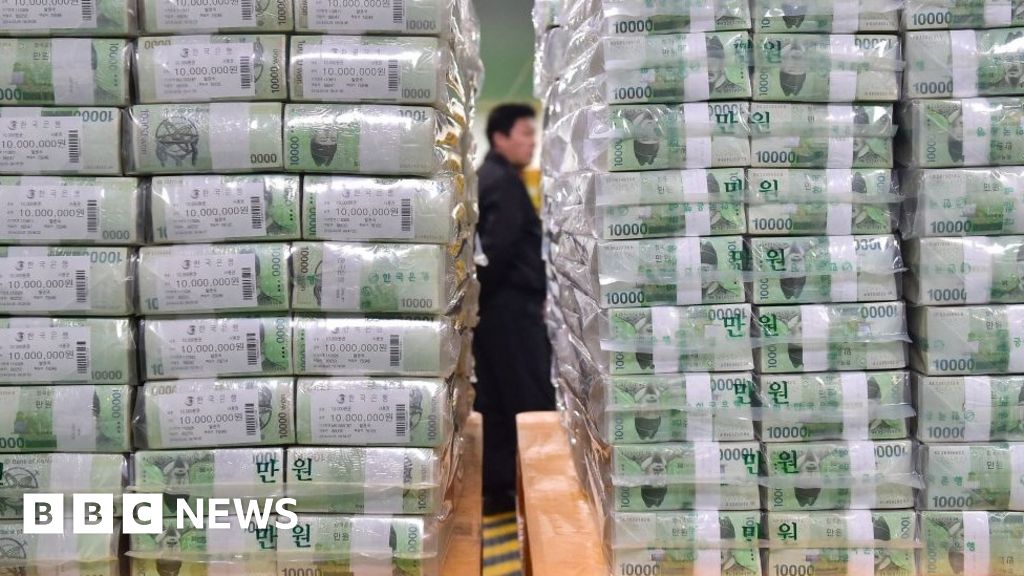
South Korea has become the first major Asian economy to raise interest rates since the coronavirus pandemic began.
The Bank of Korea increased its base rate of interest from a record low of 0.5% to 0.75%.
The move is aimed at helping curb the country's household debt and home prices, which soared in recent months.
Central banks around the world are trying to balance the impact of ongoing Covid-19 infections against economic risks such as high inflation.
It is the first time the Bank of Korea has raised its main interest rate for almost three years.
The decision comes as the central bank attempts to balance helping to support the country's economic recovery against the risks of surging debt and rising inflation.
Policy makers for Asia's fourth largest economy had been signalling that they were ready to increase the cost of borrowing since May.
The move was delayed as the latest Covid-19 outbreak put the country into a partial lockdown last month.
Central banks around the world are preparing to start dismantling their pandemic-era policies that have seen emergency stimulus measures brought in as economies were shut down to slow the spread of Covid-19.
Most countries that have raised the cost of borrowing so far this year have been in emerging economies that have seen inflation accelerate as demand for goods and services recovered.
In Asia, Sri Lanka last week became the first country in the region to raise interest rates.
Also in the Asia-Pacific region last week, New Zealand was expected to become the first advanced economy to increase rates in the wake of the coronavirus crisis.
However, the day before the monetary policy decision was announced Prime Minister Jacinda Ardern imposed a nationwide lockdown.
The Reserve Bank of New Zealand kept its rate at a record low of 0.25%, saying in a statement "the decision was made in the context of the Government's imposition of Level 4 COVID restrictions on activity across New Zealand".
You may also be interested in:
From Chip War To Cloud War: The Next Frontier In Global Tech Competition
The global chip war, characterized by intense competition among nations and corporations for supremacy in semiconductor ... Read more
The High Stakes Of Tech Regulation: Security Risks And Market Dynamics
The influence of tech giants in the global economy continues to grow, raising crucial questions about how to balance sec... Read more
The Tyranny Of Instagram Interiors: Why It's Time To Break Free From Algorithm-Driven Aesthetics
Instagram has become a dominant force in shaping interior design trends, offering a seemingly endless stream of inspirat... Read more
The Data Crunch In AI: Strategies For Sustainability
Exploring solutions to the imminent exhaustion of internet data for AI training.As the artificial intelligence (AI) indu... Read more
Google Abandons Four-Year Effort To Remove Cookies From Chrome Browser
After four years of dedicated effort, Google has decided to abandon its plan to remove third-party cookies from its Chro... Read more
LinkedIn Embraces AI And Gamification To Drive User Engagement And Revenue
In an effort to tackle slowing revenue growth and enhance user engagement, LinkedIn is turning to artificial intelligenc... Read more