

Shanghai Lockdown: China Unemployment Rate Near Pandemic Peak
By Peter Hoskins
Business reporter
Image source, Getty Images
China's jobless rate rose to 6.1% in April, the highest level since the 6.2% peak seen in the early part of the Covid-19 pandemic in February 2020.
It comes as widening lockdowns led to a sharp slowdown in activity for the world's second largest economy.
Official figures also show retailers and manufacturers were hit hard.
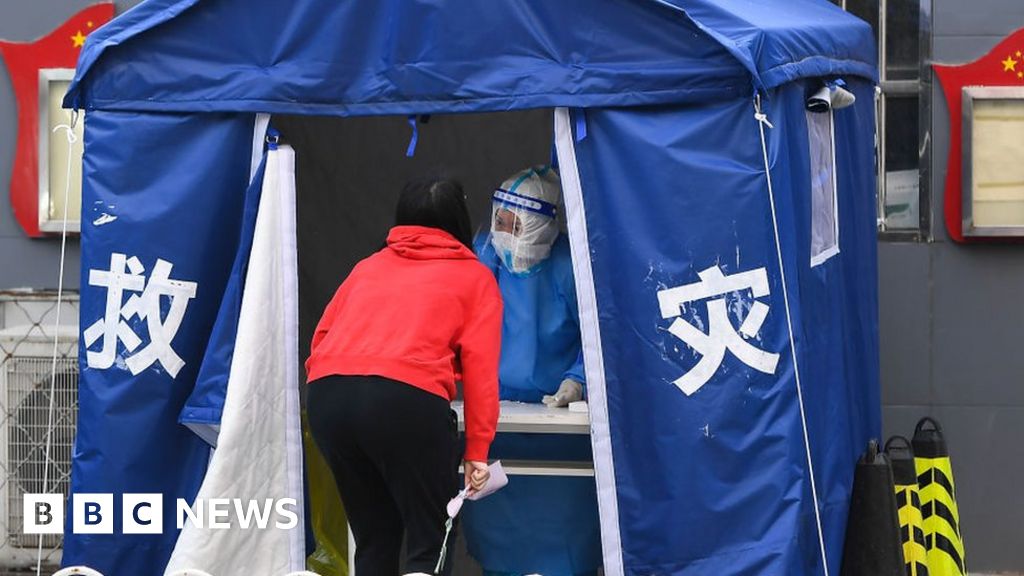
Full or partial lockdowns were imposed in dozens of cities in March and April, including a long shutdown of the commercial centre Shanghai.
Chinese Premier Li Keqiang recently described the country's employment situation "complicated and grim" following the worst outbreaks of the virus since 2020.
Still, the government aims to keep the jobless rate below 5.5% for this year as a whole.
The rise in unemployment came as lockdowns had an impact across the Chinese economy.
Retail sales saw the biggest contraction since March 2020 as they shrank by 11.1% in April from a year earlier, according to China's National Bureau of Statistics.
That was much worse than March's 3.5% drop and missed the economists' expectations of a 6.1% fall.
At the same time industrial production fell by 2.9% from a year earlier, as measures to stop the spread of the coronavirus had a major impact on supply chains.
That was the largest decline since February 2020 and marked a reversal of the 5% gain in March.
However, Shanghai on Monday set out plans for the return of more normal life from the start of next month and the end of a lockdown that has lasted more than six weeks and contributed to the sharp slowdown of China's economy.
In the clearest timetable yet, Deputy Mayor Zong Ming said the reopening of the financial, manufacturing and trading hub would be carried out in stages, with movement curbs largely to remain in place until 21 May to prevent an increase of infections, before a gradual easing.
There are no more positive cases reported outside of quarantine centres in Shanghai - and that was a key target.
Although state media has blithely reported that the "hustle and bustle" is returning, it's difficult to verify that.
Despite claims that the majority of residents are free to roam, anecdotal reporting on the ground is very different.
I am still confined to my home. Other members of the BBC team here, in various places, face similar restrictions.
Access to food and healthcare remains limited for some. Some shops are opening, but only "offline" business will resume initially.
The daily reported positive case numbers are also down to three figures now, but this is not a place that's opening up so that everyone is free to at least walk around.
You might also be interested in:
Watch: The sound of locked down residents in Shanghai protesting strict Covid measures
From Chip War To Cloud War: The Next Frontier In Global Tech Competition
The global chip war, characterized by intense competition among nations and corporations for supremacy in semiconductor ... Read more
The High Stakes Of Tech Regulation: Security Risks And Market Dynamics
The influence of tech giants in the global economy continues to grow, raising crucial questions about how to balance sec... Read more
The Tyranny Of Instagram Interiors: Why It's Time To Break Free From Algorithm-Driven Aesthetics
Instagram has become a dominant force in shaping interior design trends, offering a seemingly endless stream of inspirat... Read more
The Data Crunch In AI: Strategies For Sustainability
Exploring solutions to the imminent exhaustion of internet data for AI training.As the artificial intelligence (AI) indu... Read more
Google Abandons Four-Year Effort To Remove Cookies From Chrome Browser
After four years of dedicated effort, Google has decided to abandon its plan to remove third-party cookies from its Chro... Read more
LinkedIn Embraces AI And Gamification To Drive User Engagement And Revenue
In an effort to tackle slowing revenue growth and enhance user engagement, LinkedIn is turning to artificial intelligenc... Read more