

Seagate Demos Hard Disk Drive With An NVMe Interface. Yup, One With Spinning Platters
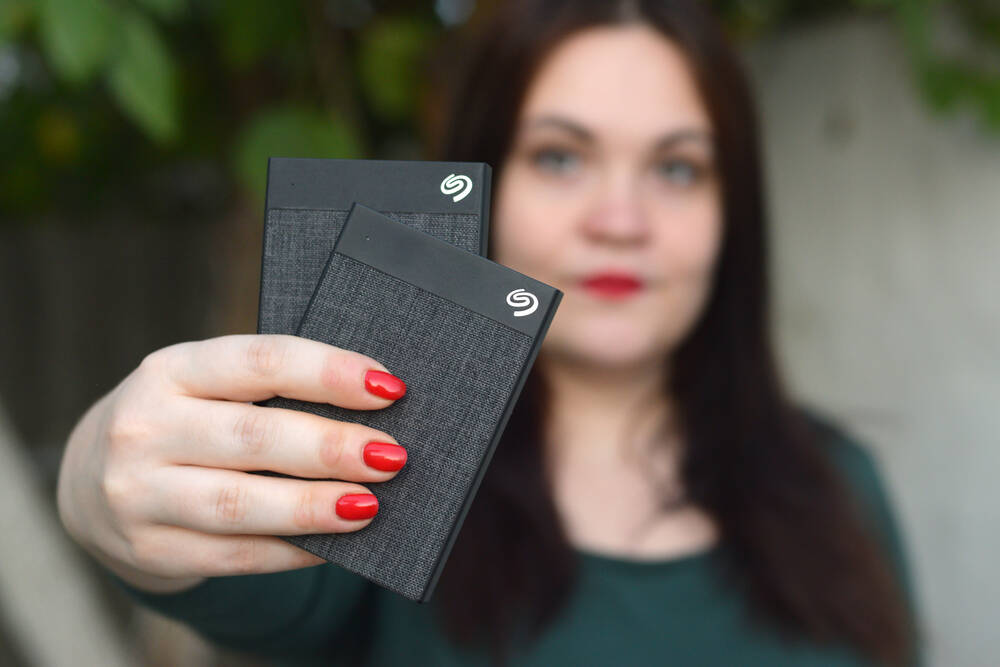
At last week's Open Compute Project global summit, Seagate demonstrated a mechanical hard disk drive with an NVMe interface – an interface normally reserved for SSDs. The clue is right there in the name: NVM, Non-Volatile Memory. So the first question is... why?
Well, one purported reason is speed. While Seagate has been promising multi-actuator hard disks for about four years now, you still can't buy them.
The idea is that by having two (or more) separate arms scuttling independently to and fro across the media, hard disks can run fast enough that current SATA interfaces will prove to be a bottleneck. That's 6Gb/s for SATA revision 3, or 600MB/s in reality, while NVMe maxes out at 20Gb/s.
- Ch-ch-ch-Chia! HDD sales soar to record levels as latest crypto craze sweeps Europe
- After quietly switching to slower NAND in an NVMe SSD, Western Digital promises to be a bit louder next time
- Dell joins the 'fast object storage revolution'
We suspect the main reason is money, but there are two aspects to that. It's not that NVMe is cheaper per se. Firstly, although you can buy commodity 4TB SSDs now, a cheap one still costs around £300 and they readily go to twice that much. That kind of wonga will buy you 18TB of spinning disk. In other words, comparing price per unit storage, spinning rust is still under a quarter of the price of flash media.
The second factor is that shipping mechanical disks with an NVMe interface will make it possible for vendors to ship servers with just that interface from now on, simplifying the design – which means reducing the costs. All in all, NVMe HDDs with multiple actuators therefore offer lower TCO, according to Seagate.
It seems these devices are due to ship to select customers in 2022, it seems.
There is still room for significant shifts in the storage space. Intel's 3D Xpoint persistent-memory technology has immense promise, even if currently it's struggling in the market. This grade of non-volatile memory can be used literally as memory – it can be fitted into a server's DIMM slots, rendering off-board interfaces such as NVMe obsolete. But there will still be a need for large-capacity slower storage, which for the foreseeable means hard disks.
Having large amounts of non-volatile main memory pulls the rug from under a lot of current axioms of OS design, and research has barely begun – even before vendors got cold feet. But it will come [PDF]. Watch this space. ®
From Chip War To Cloud War: The Next Frontier In Global Tech Competition
The global chip war, characterized by intense competition among nations and corporations for supremacy in semiconductor ... Read more
The High Stakes Of Tech Regulation: Security Risks And Market Dynamics
The influence of tech giants in the global economy continues to grow, raising crucial questions about how to balance sec... Read more
The Tyranny Of Instagram Interiors: Why It's Time To Break Free From Algorithm-Driven Aesthetics
Instagram has become a dominant force in shaping interior design trends, offering a seemingly endless stream of inspirat... Read more
The Data Crunch In AI: Strategies For Sustainability
Exploring solutions to the imminent exhaustion of internet data for AI training.As the artificial intelligence (AI) indu... Read more
Google Abandons Four-Year Effort To Remove Cookies From Chrome Browser
After four years of dedicated effort, Google has decided to abandon its plan to remove third-party cookies from its Chro... Read more
LinkedIn Embraces AI And Gamification To Drive User Engagement And Revenue
In an effort to tackle slowing revenue growth and enhance user engagement, LinkedIn is turning to artificial intelligenc... Read more