

Scratch Card Sales Fall As Cost Of Living Rises
By Noor Nanji
Business reporter, BBC News
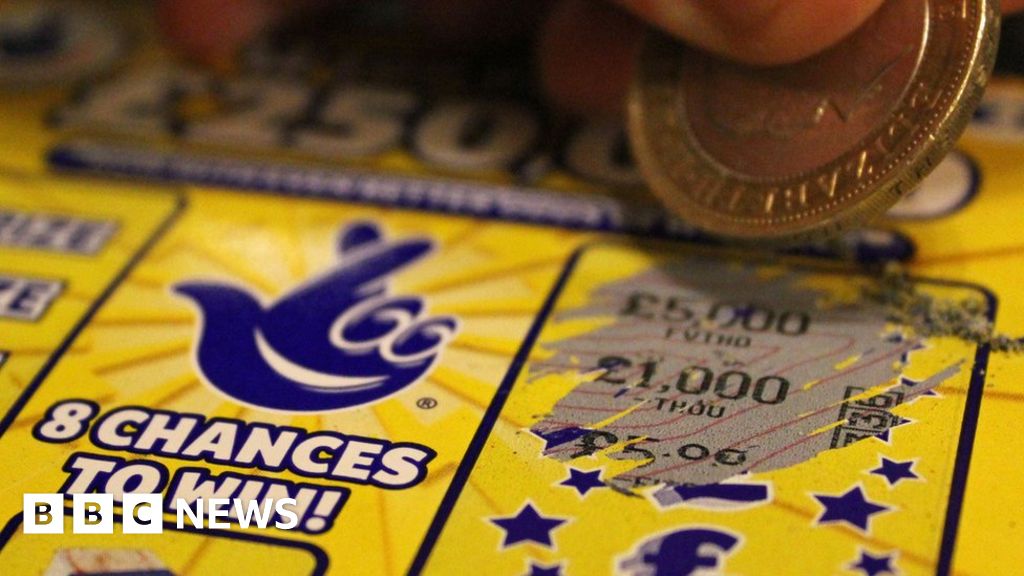
People are buying fewer scratch cards than before the pandemic as living costs soar, the boss of Camelot has said.
Nigel Railton, chief executive of the outgoing UK National Lottery operator, said there had been a "slight bubble" around scratch cards during the pandemic which has now "reversed".
It came as Camelot revealed annual sales dropped by £283.2m to £8.1bn.
The firm said it was seeing signs that players had "tightened their belts".
Camelot, which has run the National Lottery since it was launched, recently started legal action against the Gambling Commission after losing out on the next licence.
Rival Allwyn was selected as the preferred applicant for the lottery's next licence, which starts in 2024.
Camelot said its sales decline for the year ending 31 March was primarily driven by a £240m fall in sales of National Lottery Instants.
It blamed this on the lifting of lockdown restrictions, which it said led to "greater competition for people's attention and spend", as well as "growing economic uncertainty".
The cost of living crisis had slowed down the retail recovery as "consumers tightened their belts", Camelot said.
Change in buying behaviour
Mr Railton told the BBC's Today programme the company had seen a shift in consumer behaviour following the pandemic.
"There was a slight bubble around scratch cards and games in retail during Covid and that reversed, and also because we have 44,000 retailers, we saw a change in people's buying behaviour," he said.
"So scratch cards decreased by a couple of 100 million [pounds] in the year."
He said sales of scratch cards are now "well below" pre-pandemic levels.
Lazaros Gonidis, a psychology lecturer at the University of Kent, said there could be a range of factors driving the fall in scratch card sales.
"We do see that in an economic downturn, people have less spare cash and so they think twice about picking up scratch cards," he told the BBC.
"But it's also true that other people might turn to gambling in the hope of improving their personal financial situation. It could be that they're doing this more online, rather than buying scratch cards in stores," he added.
"It's a complex picture."
Image source, Getty Images
In March, the Gambling Commission announced Allwyn Entertainment Ltd as its preferred applicant for the National Lottery's next licence.
The next month, Camelot said it was taking legal action to challenge the decision.
Mr Railton told the BBC he believed the regulator had "got the decision badly wrong".
But the Gambling Commission said it had run a "fair and robust" competition.
The National Lottery is one of the world's largest lotteries and has raised more than £45bn for 660,000 causes across the UK.
It has also played a part in funding training and facilities over the past three decades for Great Britain's Olympic and Paralympic athletes.
While not being picked as the preferred applicant for the next licence, Camelot was named as the "reserve applicant".
Have you changed your habits? Are you buying fewer scratch cards due to rising living costs? Please share your experiences by emailing: haveyoursay@bbc.co.uk.
Please include a contact number if you are willing to speak to a BBC journalist. You can also get in touch in the following ways:
If you are reading this page and can't see the form you will need to visit the mobile version of the BBC website to submit your question or comment or you can email us at HaveYourSay@bbc.co.uk. Please include your name, age and location with any submission.
From Chip War To Cloud War: The Next Frontier In Global Tech Competition
The global chip war, characterized by intense competition among nations and corporations for supremacy in semiconductor ... Read more
The High Stakes Of Tech Regulation: Security Risks And Market Dynamics
The influence of tech giants in the global economy continues to grow, raising crucial questions about how to balance sec... Read more
The Tyranny Of Instagram Interiors: Why It's Time To Break Free From Algorithm-Driven Aesthetics
Instagram has become a dominant force in shaping interior design trends, offering a seemingly endless stream of inspirat... Read more
The Data Crunch In AI: Strategies For Sustainability
Exploring solutions to the imminent exhaustion of internet data for AI training.As the artificial intelligence (AI) indu... Read more
Google Abandons Four-Year Effort To Remove Cookies From Chrome Browser
After four years of dedicated effort, Google has decided to abandon its plan to remove third-party cookies from its Chro... Read more
LinkedIn Embraces AI And Gamification To Drive User Engagement And Revenue
In an effort to tackle slowing revenue growth and enhance user engagement, LinkedIn is turning to artificial intelligenc... Read more