

Samsung Starts Cranking Out 14nm DDR5 DRAM
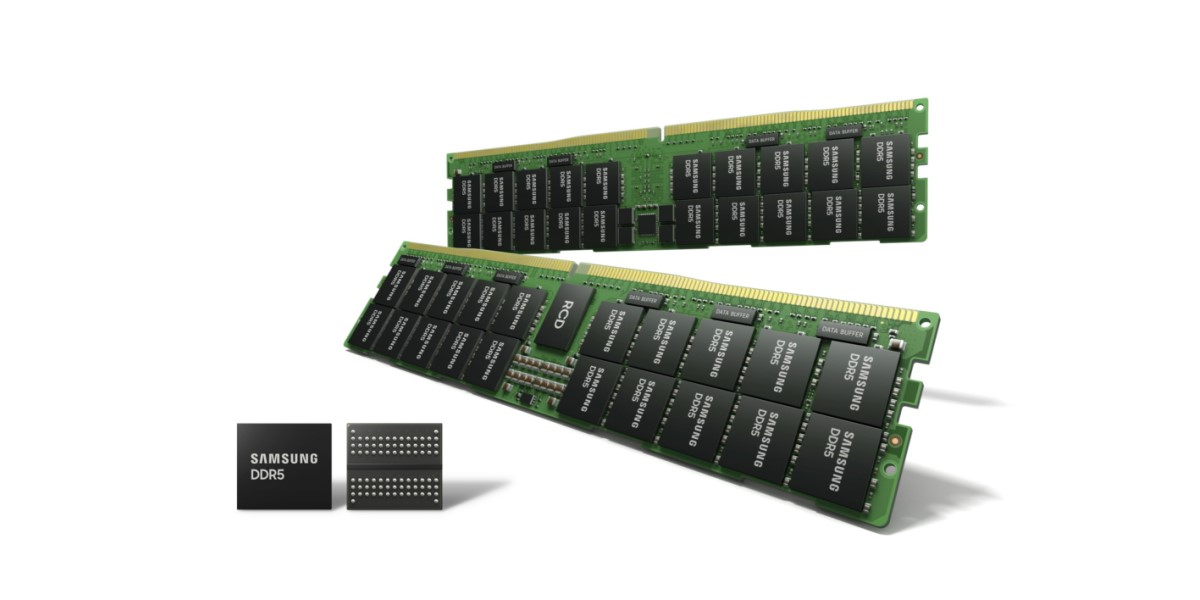
Samsung has announced it's fired up mass production of DDR5 DRAM built using five-layer extreme ultraviolet lithography (EUV).
The Korean giant debuted its EUV-etched DDR in March 2020, but offered only DDR4 built with a four-layer process and promised DDR5 sometime in 2021. In March 2021 the company delivered, by showing off some DDR5 DIMMs it had prepped for use with the Compute Express Link (CXL) – but did so without detailing the memory's specs.
The Chaebol's not improved much with its latest announcement, which tells us that the 14nm EUV process employed to make DDR5 DRAM uses five EUV layers and "has achieved the highest bit density while enhancing the overall wafer productivity by approximately 20 per cent". The extra layer matters because each layer of a chip contains transistors, so each additional layer brings with it higher density.
Samsung's announcement also states that the 14nm process used for the new DRAM "can help bring down power consumption by nearly 20 per cent compared to the previous-generation DRAM node".
Which is nice, but has two caveats – "can help" and "nearly 20 per cent" – standing between you and a lower energy bill.
- Memory price 'correction' is coming, world's fourth-largest DRAM-maker warns
- VMware imagines 'memory servers' – a new source of shared software-defined RAM
- Samsung to sling 2nm silicon in 2025, 3nm process running a little late
Samsung's new silicon conforms to the DDR5 standard, so can shunt data at up to 7.2 gigabits per second, more than double DDR4's treacly 3.2Gbit/sec. In a colossal non-surprise, Samsung suggests AI and 5G as likely early applications for the memory. It's also mentioned metaverses – graphics-intensive shared online environments – as a likely source of buyers, even though few exist.
Future applications include mainstream servers and datacentres.
The Korean giant reckons it can pack 24GB into each DDR5 chip soon, which could mean DIMMs packing 768GB.
Prices haven't been discussed. They're almost certainly very, very, high. And as DDR5 is luscious and new, those prices are probably immune from the memory price plunge predicted for 2022. ®
From Chip War To Cloud War: The Next Frontier In Global Tech Competition
The global chip war, characterized by intense competition among nations and corporations for supremacy in semiconductor ... Read more
The High Stakes Of Tech Regulation: Security Risks And Market Dynamics
The influence of tech giants in the global economy continues to grow, raising crucial questions about how to balance sec... Read more
The Tyranny Of Instagram Interiors: Why It's Time To Break Free From Algorithm-Driven Aesthetics
Instagram has become a dominant force in shaping interior design trends, offering a seemingly endless stream of inspirat... Read more
The Data Crunch In AI: Strategies For Sustainability
Exploring solutions to the imminent exhaustion of internet data for AI training.As the artificial intelligence (AI) indu... Read more
Google Abandons Four-Year Effort To Remove Cookies From Chrome Browser
After four years of dedicated effort, Google has decided to abandon its plan to remove third-party cookies from its Chro... Read more
LinkedIn Embraces AI And Gamification To Drive User Engagement And Revenue
In an effort to tackle slowing revenue growth and enhance user engagement, LinkedIn is turning to artificial intelligenc... Read more