

Samsung Slaps Processing-in-memory Chips Onto GPUs For First-of-its-kind Supercomputer
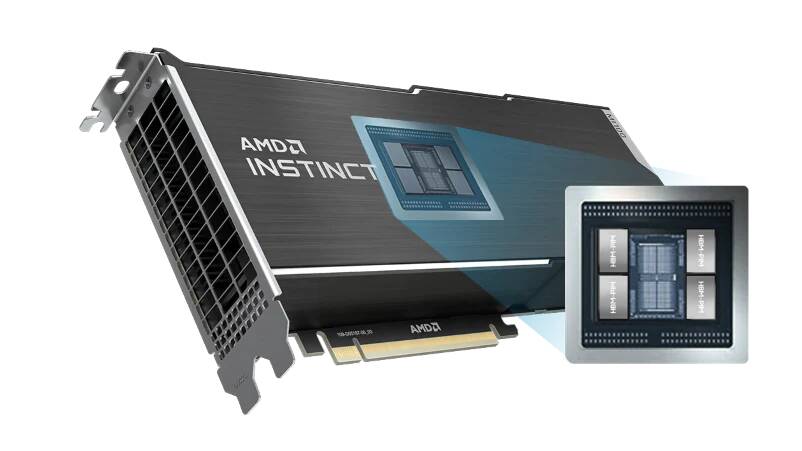
Samsung has built a claimed first-of-its-kind supercomputer containing AMD datacenter GPUs affixed with its processing-in-memory chips, which the company said can significantly improve the performance and energy efficiency of training large AI models.
The supercomputer, disclosed Tuesday at an industry event in South Korea, includes 96 AMD Instinct MI100 GPUs, each of which are loaded with a processing-in-memory (PIM) chip, a new kind of memory technology that reduces the amount of data that needs to move between the CPU and DRAM.
Choi Chang-kyu, the head of the AI Research Center at Samsung Electronics Advanced Institute of Technology, reportedly said the cluster was able to train the Text-to-Test Transfer Transformer (T5) language model developed by Google 2.5 times faster while using 2.7 times less power compared to the same cluster configuration that didn't use the PIM chips.
"It is the only one of its kind in the world," Choi said.
Samsung has said that its PIM tech has major implications for energy consumption and the environment, reducing annual energy use of a cluster by 2,100 Gigawatt hours and, consequently, cutting down 960,000 tons of carbon emissions.
As always, we should reserve judgement until these claims can be tested and verified independently, but the company said such a reduction in power is equal to the amount of carbon it would take 16 billion urban trees to absorb over a decade.
- Samsung testing memory with built-in processing for AI-centric servers
- Intel reminds everyone it's still cooking away on more PC processors
- TSMC founder says 'globalization is almost dead' as Asian foundry giant expands in US
- SK Hynix boss predicts CPUs and RAM will merge, chipmakers will hold hands to make it happen
One big reason why the PIM-powered supercomputer has so much horsepower is that each PIM chip uses high-bandwidth memory (HBM), which the industry is increasingly turning to for handling high-performance computing and AI workloads. Nvidia and AMD have used HBM in datacenter GPUs for multiple generations now, and Intel plans to introduce HBM in a forthcoming variant of server processors branded Xeon Max and a high-end datacenter GPU.
What makes Samsung HBM-PIM chips different from HBM implementations by other companies is that each memory bank on the PIM chip includes a processing unit inside. This, according to the South Korean electronics giant, reduces bottlenecks associated with moving data between the CPU and memory by shifting some of the computation inside the memory itself.
Samsung hopes to spur adoption of its PIM chips in the industry by creating software that will allow organizations to use the tech in an integrated software environment. To do this, it's relying on SYCL, a royalty-free, cross-architecture programming abstraction layer that happens to underpin Intel's implementation of C++ for its oneAPI parallel programming model.
The company has been hyping up PIM for nearly three years now, and one other way it plans to take the tech to market is through what it has called the AXDIMM, short for accelerated DIMM.
We'll know if Samsung ends up making any inroads if PIM starts appearing in new supercomputers set up by research labs, academic institutions, and other organizations over the next few years. ®
From Chip War To Cloud War: The Next Frontier In Global Tech Competition
The global chip war, characterized by intense competition among nations and corporations for supremacy in semiconductor ... Read more
The High Stakes Of Tech Regulation: Security Risks And Market Dynamics
The influence of tech giants in the global economy continues to grow, raising crucial questions about how to balance sec... Read more
The Tyranny Of Instagram Interiors: Why It's Time To Break Free From Algorithm-Driven Aesthetics
Instagram has become a dominant force in shaping interior design trends, offering a seemingly endless stream of inspirat... Read more
The Data Crunch In AI: Strategies For Sustainability
Exploring solutions to the imminent exhaustion of internet data for AI training.As the artificial intelligence (AI) indu... Read more
Google Abandons Four-Year Effort To Remove Cookies From Chrome Browser
After four years of dedicated effort, Google has decided to abandon its plan to remove third-party cookies from its Chro... Read more
LinkedIn Embraces AI And Gamification To Drive User Engagement And Revenue
In an effort to tackle slowing revenue growth and enhance user engagement, LinkedIn is turning to artificial intelligenc... Read more