

Samsung Dethrones Intel As Chip Sector Grows 26% In 2021
Despite (and perhaps because) of ongoing shortages, the semiconductor industry posted $595 billion in revenue in 2021, an increase of 26.3 percent over 2020.
The numbers, from Gartner, also make plain the effects of US sanctions against China, whose market share fell, and which did not have a single manufacturer present in the top 10 list (sorted by total 2021 revenue).
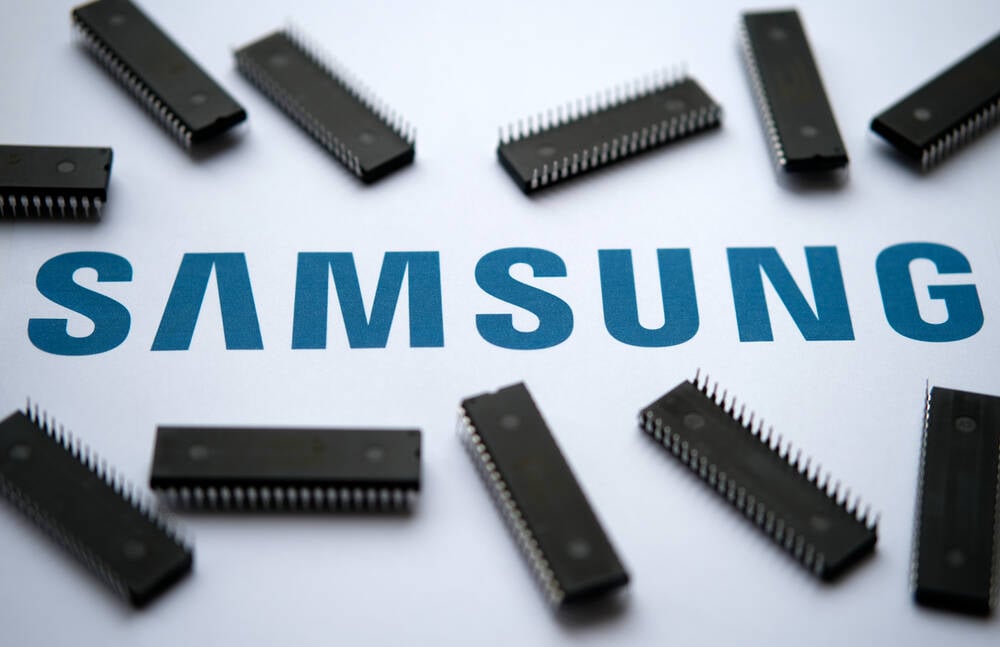
The biggest news of the report was Samsung overtaking Intel in the top spot, albeit barely: Samsung's chip biz grew 28 percent from 2020 to 2021, while Intel lost 0.3 percent over the same period. Now Samsung sits atop the list with $73.2 billion in revenue and a 12.3 percent market share, while Intel nips at its heels with $72.5 billion in revenue and a 12.2 percent share of the spoils. It's a lead, but one that could easily evaporate by the end of 2022.
- Taiwan, China square off over chip tech espionage laws
- Volkswagen: Expect chip supply problems until 2024
- AMD Threadripper CPU supply severely low, PC makers say
- Senate edges US chip world closer to $50b subsidies by passing COMPETES Act
All of this profit continues despite a chip shortage that's been ongoing for two years with signs that it may not abate as soon as predicted. On a Q1 2022 investor call, TSMC CEO CC Wei said he sees the shortage continuing, warning that TSMC will have a tight production capacity across its entire operation. Wei said the same during last year's Q1 earnings call when he warned that capacity would likely be tightened into 2023.
In China, the picture is less rosy. Gartner Research VP, Andrew Norwood, attributed this directly to US sanctions. In particular, Norwood singled out the market share decline in China (it dropped from 6.7 percent to 6.5 percent), as well as Chinese chip manufacturer HiSilicon's 81 percent decline in revenue from 2020 to 2021.
"This was a direct result of the US sanctions against the company and its parent company Huawei," Norwood said.
South Korea, home of Samsung, faired far better in 2021, being the fastest growing country by market share, of which it now commands 19.3 percent.
Profits versus parts
There have been plenty of complaints about semiconductor prices spiking in tandem with the shortage, which is the likely cause of industry revenue growing more than a quarter despite having trouble finding components to satisfy demand.
OEM manufacturers are still being hurt by the shortage, Norwood said, but "the 5G smartphone ramp up and a combination of strong demand and logistics/raw material price increases drove semiconductor average selling prices higher," he said.
Demand for smartphone chips grew by 24.6 percent in 2021, and the number of 5G handsets produced around the globe more than doubled from 251 million units made in 2020 to 556 million in 2021. That growth was topped by the automotive market, which grew 34.9 percent in 2021 and was the strongest driver of chip sector revenues.
DRAM was another huge profit driver, leading to 27.9 percent of semiconductor sales in 2021 going toward memory, 33.2 percent growth from 2020. Gartner said that memory sales grew due to increased demand for hyperscaler deployments and new datacenter hardware needed to support remote work. ®
From Chip War To Cloud War: The Next Frontier In Global Tech Competition
The global chip war, characterized by intense competition among nations and corporations for supremacy in semiconductor ... Read more
The High Stakes Of Tech Regulation: Security Risks And Market Dynamics
The influence of tech giants in the global economy continues to grow, raising crucial questions about how to balance sec... Read more
The Tyranny Of Instagram Interiors: Why It's Time To Break Free From Algorithm-Driven Aesthetics
Instagram has become a dominant force in shaping interior design trends, offering a seemingly endless stream of inspirat... Read more
The Data Crunch In AI: Strategies For Sustainability
Exploring solutions to the imminent exhaustion of internet data for AI training.As the artificial intelligence (AI) indu... Read more
Google Abandons Four-Year Effort To Remove Cookies From Chrome Browser
After four years of dedicated effort, Google has decided to abandon its plan to remove third-party cookies from its Chro... Read more
LinkedIn Embraces AI And Gamification To Drive User Engagement And Revenue
In an effort to tackle slowing revenue growth and enhance user engagement, LinkedIn is turning to artificial intelligenc... Read more