

Russia Cobbles Together Supercomputing Platform To Wean Off Foreign Suppliers
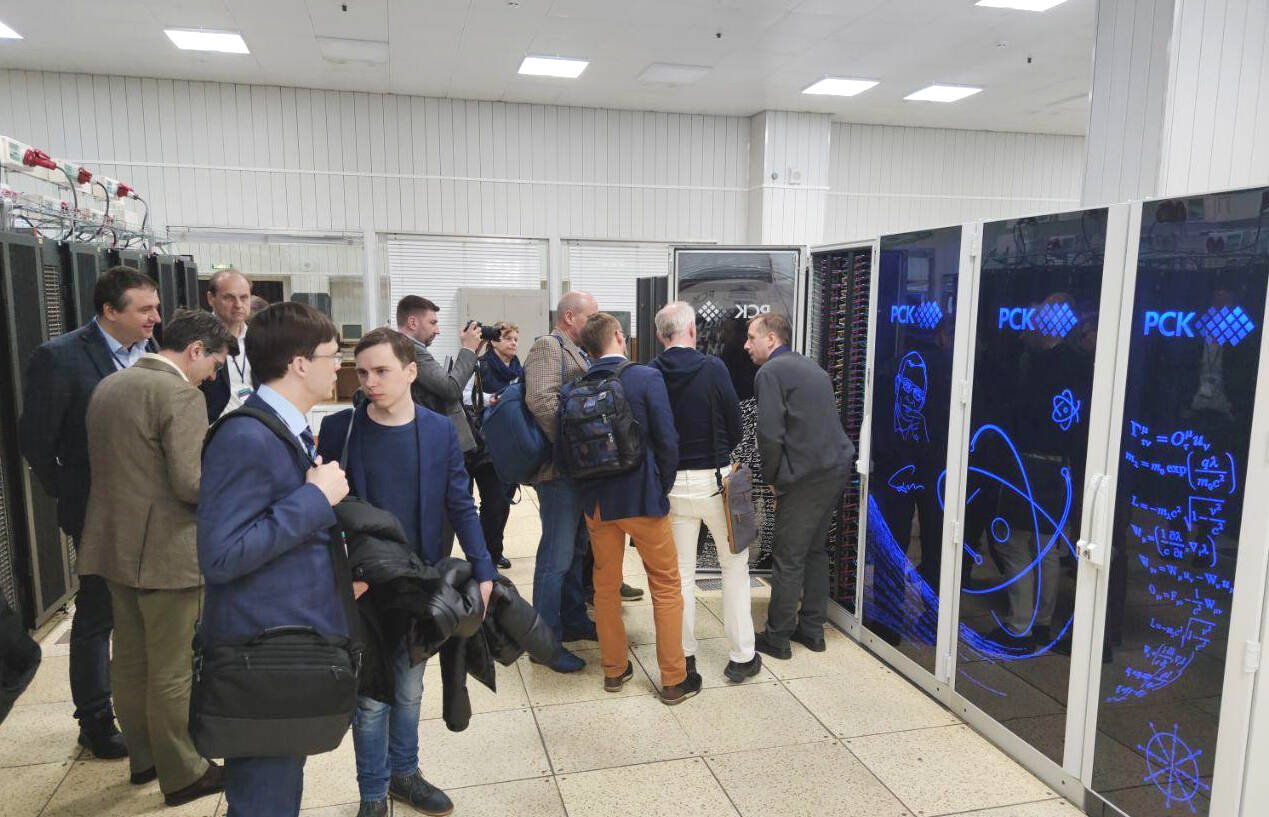
Russia is adapting to a world where it no longer has access to many technologies abroad with the development of a new supercomputer platform that can use foreign x86 processors such as Intel's in combination with the country's homegrown Elbrus processors.
The new supercomputer reference system, dubbed "RSK Tornado," was developed on behalf of the Russian government by HPC system integrator RSC Group, according to an English translation of a Russian-language press release published March 30.
- Meta says it's building world's largest AI supercomputer out of Nvidia, AMD chips
- All-Russian 'Elbrus' PCs and servers go on sale
- Russia (still) trying to weaponize Facebook for spying, Ukraine-war disinfo
- Russian devs plan alternative Android app store after Google Play bans paid apps
- Russia scrambles to bootstrap HPC clusters with native tech
RSC said it created RSK Tornado as a "unified interoperable" platform to "accelerate the pace of important substitution" for HPC systems, data processing centers and data storage systems in Russia.
In other words, the HPC system architecture is meant to help Russia quickly adjust to the fact that major chip companies such as Intel, AMD and TSMC — plus several other technology vendors, like Dell and Lenovo — have suspended product shipments to the country as a result of sanctions by the US and other countries in reaction to Russia's invasion of Ukraine.
RSK Tornado supports up to 104 servers in a rack, with the idea being to support foreign x86 processors (should they come available) as well as Russia's Elbrus processors, which debuted in 2015.
The hope appears to be the ability for Russian developers to port HPC, AI and big data applications from x86 architectures to the Elbrus architecture, which, in theory, will make it easier for Russia to rely on its own supply chain and better cope with continued sanctions from abroad.
RSK Tornado systems software is RSC proprietary and is currently used to orchestrate supercomputer resources at the Interdepartmental Supercomputer Center of the Russian Academy of Sciences, St Petersburg Polytechnic University and the Joint Institute for Nuclear Research.
RSC claims to have also developed its own liquid-cooling system for supercomputers and data storage systems, the latter of which can use Elbrus CPUs too.
These capabilities, RSC claimed, have allowed it to "take leading positions in the world in terms of energy efficiency, performance and compactness." As evidence, RSC pointed to the fact that it has four supercomputers on the IO 500 list, which ranks the world's fastest storage systems. ®
Bootnote
As for whether Russian entities will be happy with Elbrus-based servers is a big question, and there are already some doubts that such processors can meet the needs of highly demanding applications. In December, Russian-language site ServerNews.ru reported (Tom's version in English) that SberInfra, the technology division of Russia’s biggest bank Sber, found Elbrus processors were inadequate for multiple workloads due to “insufficient memory, slow memory, few cores [and] low frequency.”
From Chip War To Cloud War: The Next Frontier In Global Tech Competition
The global chip war, characterized by intense competition among nations and corporations for supremacy in semiconductor ... Read more
The High Stakes Of Tech Regulation: Security Risks And Market Dynamics
The influence of tech giants in the global economy continues to grow, raising crucial questions about how to balance sec... Read more
The Tyranny Of Instagram Interiors: Why It's Time To Break Free From Algorithm-Driven Aesthetics
Instagram has become a dominant force in shaping interior design trends, offering a seemingly endless stream of inspirat... Read more
The Data Crunch In AI: Strategies For Sustainability
Exploring solutions to the imminent exhaustion of internet data for AI training.As the artificial intelligence (AI) indu... Read more
Google Abandons Four-Year Effort To Remove Cookies From Chrome Browser
After four years of dedicated effort, Google has decided to abandon its plan to remove third-party cookies from its Chro... Read more
LinkedIn Embraces AI And Gamification To Drive User Engagement And Revenue
In an effort to tackle slowing revenue growth and enhance user engagement, LinkedIn is turning to artificial intelligenc... Read more