

Qualcomm, GlobalFoundries Double Down On US Chip Production
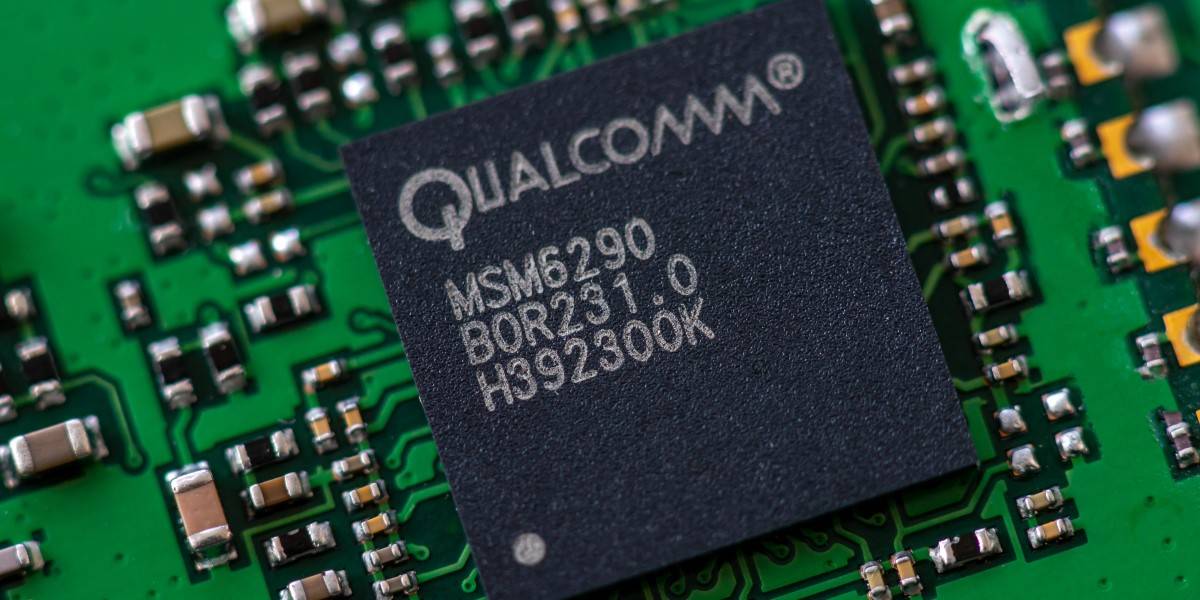
Qualcomm says it is doubling investments in US chip manufacturer GlobalFoundries in a bid to secure additional wafer capacity with government money on the table.
The partnership will see Qualcomm set up shop in GF's Malta, New York manufacturing plant. The extended partnership aims to ensure a steady supply of US-based wafer capacity.
"With accelerating demand for 5G, automotive, and IoT applications, a robust supply chain is critical for ensuring innovation in these areas remains uninterrupted," Roawen Chen, SVP and chief supply chain officer at Qualcomm, said in a statement. "Our continued collaboration with GF helps us to expand the next generation of wireless innovation as we move toward a world where everyone and everything can be intelligently connected."
The deal comes on the heels of the $280 billion CHIPs and Science Act's passage, which allocates roughly $52 billion in subsidies for the construction of additional semiconductor manufacturing in the US. The bill also includes $24 billion in tax incentives for chipmakers engaged in US chip production and another $170 billion for scientific research over the next five years.
The serendipitous timing of the announcement wasn't lost on Senate Majority Leader Chuck Schumer, who was a staunch supporter of the CHIPs bill in its various forms.
"This is terrific news for GlobalFoundries, Qualcomm Technologies, and for upstate New York. Just days after we passed my historic, bipartisan CHIPs and Science bill, we can already see the semiconductor industry reinvesting in the United States," the senator from New York said in a statement.
- How TSMC killed 450mm wafers for fear of Intel, Samsung
- Nvidia books $1.32b inventory charge as PC market slows
- India to revisit hardware incentives after struggling to move manufacturers out of China
- Too little, too late: Intel's legacy is eroding
GlobalFoundries' CEO Thomas Caulfield clearly wants a piece of that funding. In a statement, the foundry's leader cited Qualcomm's investments coupled with funding from the CHIPs bill as drivers of the company's US expansion plans.
GlobalFoundries occupies an interesting space within the semiconductor ecosystem. For years, the company was the leading supplier for AMD for whom it produced advanced process tech down to 12nm. However, in 2018, the company dropped its plans to develop a 7nm process to compete with rivals Samsung and TSMC.
The decision ultimately cost GF a sizable chunk of AMD's business, but allowed it to focus its efforts on a more diverse set of process tech targeted at areas that don't necessary want or need bleeding-edge silicon, including radio communications, imaging, optical, automotive, industrial, and IoT.
Today's partnership builds on a long-standing collab between the two companies. In 2021, a Qualcomm subsidiary penned a long-term contract to manufacture components at GlobalFoundries' Dresden, Germany facility.
That partnership has since expanded to include additional capacity at the company's fabs in Crolles, France, and production of 8SW radio-frequency silicon-on-insulator tech used in mid-band 5G communications at the foundry's Singapore facilities. GF expects to ramp production of the latter early next year.
Qualcomm's investments in domestic manufacturing capacity also come as the US takes an increasingly domestic view of the semiconductor industry. America is already mulling additional measures that would restrict access to US-made chipmaking equipment and intellectual property to foundry operators in China.
Meanwhile, tensions between China and Taiwan — the home of TSMC and one of Qualcomm's largest foundry suppliers — have grown heated in recent weeks, exacerbated in part by Speaker of the House Nancy Pelosi's visit earlier this month. The situation has raised fears of a military invasion of Taiwan that would see TSMC's fabs seized or rendered inoperable. ®
From Chip War To Cloud War: The Next Frontier In Global Tech Competition
The global chip war, characterized by intense competition among nations and corporations for supremacy in semiconductor ... Read more
The High Stakes Of Tech Regulation: Security Risks And Market Dynamics
The influence of tech giants in the global economy continues to grow, raising crucial questions about how to balance sec... Read more
The Tyranny Of Instagram Interiors: Why It's Time To Break Free From Algorithm-Driven Aesthetics
Instagram has become a dominant force in shaping interior design trends, offering a seemingly endless stream of inspirat... Read more
The Data Crunch In AI: Strategies For Sustainability
Exploring solutions to the imminent exhaustion of internet data for AI training.As the artificial intelligence (AI) indu... Read more
Google Abandons Four-Year Effort To Remove Cookies From Chrome Browser
After four years of dedicated effort, Google has decided to abandon its plan to remove third-party cookies from its Chro... Read more
LinkedIn Embraces AI And Gamification To Drive User Engagement And Revenue
In an effort to tackle slowing revenue growth and enhance user engagement, LinkedIn is turning to artificial intelligenc... Read more