

Qualcomm Doesn't Fear Custom Chips – In A Weird Way Its Modems Matter More
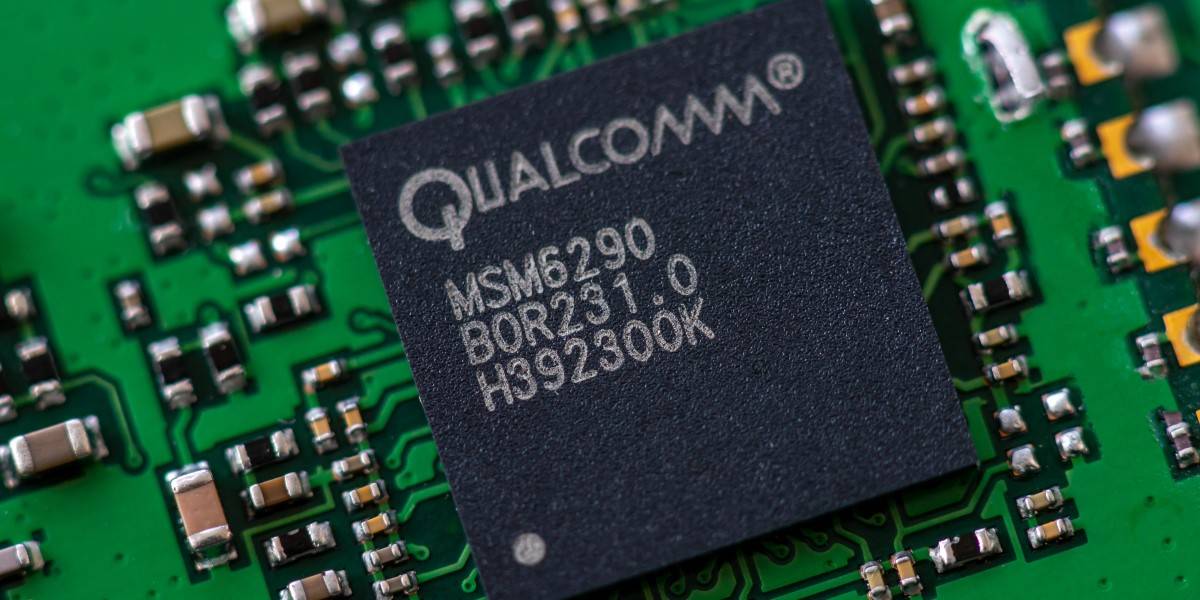
Qualcomm this week made clear it wasn't interested in offering smartphone makers heavy customisation of its off-the-shelf Snapdragon chips – even though some of its customers are developing their own custom silicon.
The company addressed the issue at the Snapdragon Tech Summit in Hawaii this week, where it announced the Snapdragon 8 Gen 1, which is expected to find its way into flagship smartphones from OnePlus, Xiaomi, Oppo, Vivo and others.
Qualcomm CEO Cristiano Amon used his keynote to hail Google and the open source Android ecosystem for driving many smartphone innovations. But the giant elephant in the room was the fact that Google earlier this year dropped Snapdragon in favor of its homegrown Tensor chip for Pixel 6 smartphones.
But for Amon, the elephant isn't that giant, because smartphones using Tensor have not sold in large volumes. Huawei, which developed smartphones with its own chips, has also faded out, allowing smartphones with Snapdragon chips to bounce back in key markets like China.
"Companies like Xiaomi, Oppo, Vivo, Honor, that's where Android lives. That's where you have the volume," Amon said, responding to a question from The Register during a Q&A session with the media. "I don't think Android will succeed turning itself into a competing ecosystem."
Yet another attendee remarked that if Google, like Apple, decides to go all out and pour billions of dollars into developing custom chips, it could mean trouble for Qualcomm.
Yet even Samsung, which uses homegrown Exynos SoCs in most markets, has adopted Qualcomm chipsets for its smartphones in the US.
- Specs appeal: Qualcomm and Meta insist headgear to plug you into the metaverse will 'supersede mobile'
- Qualcomm kinda spins out Snapdragon – as a brand, not a business
- Arm'd with ex-Apple engineers from Nuvia, Qualcomm hopes to make Apple M1-matching chips for Windows PCs
Qualcomm's 5G modems – widely considered the fastest available – may well be the reason for that decision, as US carriers have historically preferred its modems. T-Mobile, for example, talks to device makers about the modems on its network.
"That decision-making is talking to [device makers] about where modem leadership is coming, which modems work best on our network, which ones bring the feature sets that we covet for our network, and give the customer the best experience," Ryan Sullivan, vice president of device engineering at T-Mobile, told The Register.
Qualcomm's Snapdragon 8 Gen 1 chip integrates the X65 5G Modem-RF System, which tops out at 10Gbit/sec in terms of wireless data transfer. It also covers a wider spectrum in the sub-6GHz and millimetre wave.
Moreover, Qualcomm's integrated modem approach means device makers are under pressure to buy the entire chip rather than integrate a discrete modem.
"The OEMs will decide if they want to build their own silicon. It happened on CDMA, 2G, 3G, 4G. As long as the technology matters, the roadmap isn't stale, especially on connectivity – that's what we do for a living," Amon said.
Qualcomm makes heavy investments in developing a chipset, and its core competency isn't running a fab or customisation, Amon said.
But the CEO did say customisation is an option as Qualcomm targets devices other than smartphones. The company has already customised the SQ2 chip for Microsoft's Arm-based Surface Pro X device.
"We do have the ability, as a horizontal player, to add technology and IP for differentiation," Amon said. "I expect that to continue as devices take different form factors." ®
From Chip War To Cloud War: The Next Frontier In Global Tech Competition
The global chip war, characterized by intense competition among nations and corporations for supremacy in semiconductor ... Read more
The High Stakes Of Tech Regulation: Security Risks And Market Dynamics
The influence of tech giants in the global economy continues to grow, raising crucial questions about how to balance sec... Read more
The Tyranny Of Instagram Interiors: Why It's Time To Break Free From Algorithm-Driven Aesthetics
Instagram has become a dominant force in shaping interior design trends, offering a seemingly endless stream of inspirat... Read more
The Data Crunch In AI: Strategies For Sustainability
Exploring solutions to the imminent exhaustion of internet data for AI training.As the artificial intelligence (AI) indu... Read more
Google Abandons Four-Year Effort To Remove Cookies From Chrome Browser
After four years of dedicated effort, Google has decided to abandon its plan to remove third-party cookies from its Chro... Read more
LinkedIn Embraces AI And Gamification To Drive User Engagement And Revenue
In an effort to tackle slowing revenue growth and enhance user engagement, LinkedIn is turning to artificial intelligenc... Read more