

Prince Philip, Inadvertent Father Of The Computer Misuse Act, Dies Aged 99
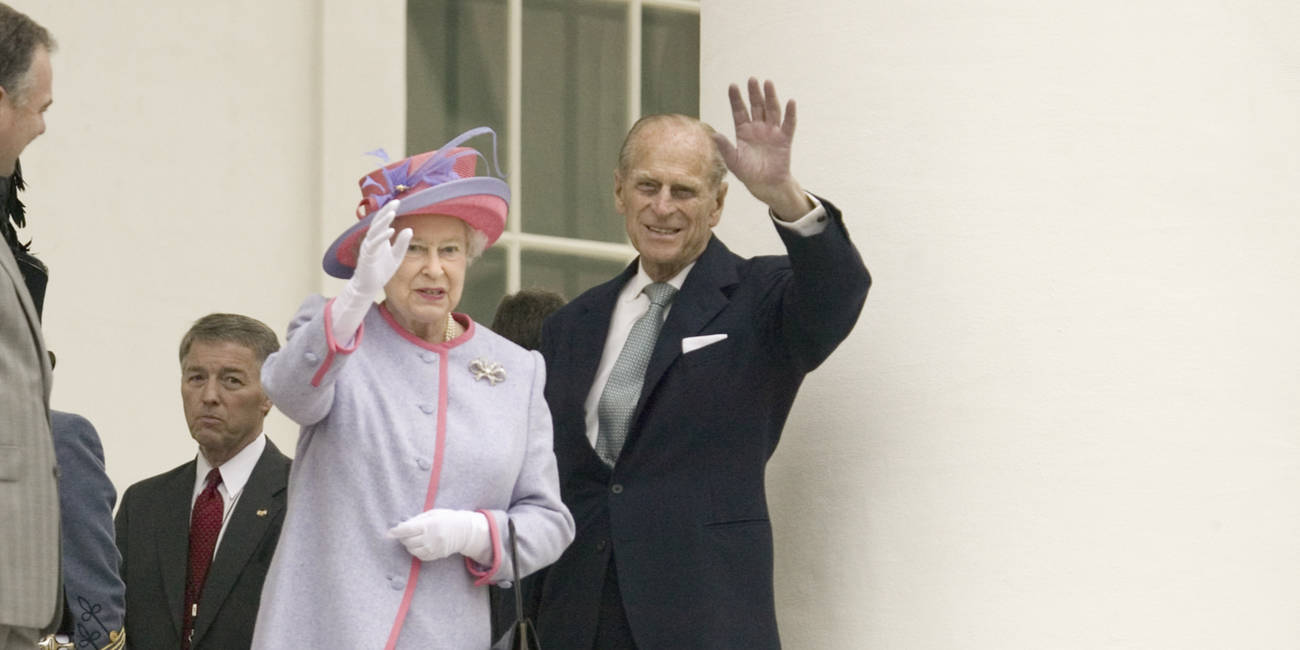
Obit Prince Philip, the Duke of Edinburgh, has died at the age of 99. The Queen's husband died at Windsor Castle this morning.
His death was announced by Buckingham Palace at midday today.
PM Boris Johnson addressed locked-down Brits from the steps of 10 Downing Street, saying: "We mourn today with Her Majesty the Queen." The prince, said Johnson, was the Queen's "strength and stay of more than 70 years."
Prince Philip's most memorable contribution to the world of British technology was a passive one: it was his personal ViewData message box that was targeted by Prestel hackers Robert Schifreen and Steve Gold, as Schifreen related to us in depth back in 2015, on the 30th anniversary of the duo being nicked. The Reg was told at the time that the prince's message box "mostly contained birthday greetings to Princess Diana from random members of the public" and showed no signs of Philip himself using it.
Once Philip learnt of the hack, he is said to have "delivered a blistering laser beam of disapproval from Buck House" at BT, which operated the insecure infrastructure to which Gold and Schifreen were trying to draw public attention. The ultimate result of the Prestel hack was the Computer Misuse Act 1990, whose enforcement has been chronicled here on The Register ever since our illustrious organ first arose in the late '90s.
Less prosaically, the duke kept a weather eye on the uses – and abuses – of technology, especially after the World Wide Web reached Great Britain. Back in 1999, DofE described the internet as "a fantastic development" while touring South Korea that year, but tempered this praise with a warning: "Information technology has produced immense benefits for humanity but only when it is used with honesty and integrity. The opportunities that technology offers to humanity are greater than ever but so are the risks."
As part of his royal duties, he also visited various technological establishments around the country such as Bletchley Park, and was present when the Queen sent her first email in 1976. The British Army had set up an ARPAnet terminal at the Royal Signals Research Establishment in Malvern for the occasion, and Reg reader Paul, who wrote to us in 2006, told us more, quoting the Association for Computing Machinery:
Aside from technology, the Duke of Edinburgh took his social duties as royal consort seriously; as well as the eponymous award for schoolchildren, some have credited him with a leading role at the start of the modern environmentalist movement – a green disposition that the duke passed on to Prince Charles.
Not all was smooth sailing, however. Perhaps borne from 10 years spent in the Royal Navy during and after the Second World War, during which he was first lieutenant (second in command) of the destroyer HMS Whelp, Prince Philip always had a very salty sense of humour which looks decidedly old fashioned to modern eyes.
The BBC rounded up some of his more printable gaffes in 2017 when he retired from royal duties. Among other things of more or indeed, much less amusement value, the duke told Afghan women's education rights campaigner Malala Yousafzai: "Children go to school because their parents don't want them in the house." This to someone who survived a Taliban murder attempt targeted at her precisely because she had been trying to go to school.
Inevitably, fire begat fire and "Phil the Greek" was the subject of more than a few unflattering nicknames during his lifetime, some inspired by his decidedly non-British origins as the son of a German princess who married into the Greek royal family. The duke's approach to all this was neatly summed up in an anecdote published in Private Eye 1543, which we reproduce here because frankly it's too good not to:
The prince was also a literal god, at least as far as the islanders of Yaohnanen in Vanuatu were concerned; Prince Philip was regarded as a deity by about 150 villagers on the Pacific island of Tanna, who apparently believed he was "the embodiment of a returning volcano spirit who had moved far away to marry a powerful woman." The duke sent them an autographed photo of himself. ®
Bootnote
The British news media has occasionally dropped the ball and published obituaries of Prince Philip while the man was still alive – as the Daily Telegraph, among many others, managed to do in 2017.
From Chip War To Cloud War: The Next Frontier In Global Tech Competition
The global chip war, characterized by intense competition among nations and corporations for supremacy in semiconductor ... Read more
The High Stakes Of Tech Regulation: Security Risks And Market Dynamics
The influence of tech giants in the global economy continues to grow, raising crucial questions about how to balance sec... Read more
The Tyranny Of Instagram Interiors: Why It's Time To Break Free From Algorithm-Driven Aesthetics
Instagram has become a dominant force in shaping interior design trends, offering a seemingly endless stream of inspirat... Read more
The Data Crunch In AI: Strategies For Sustainability
Exploring solutions to the imminent exhaustion of internet data for AI training.As the artificial intelligence (AI) indu... Read more
Google Abandons Four-Year Effort To Remove Cookies From Chrome Browser
After four years of dedicated effort, Google has decided to abandon its plan to remove third-party cookies from its Chro... Read more
LinkedIn Embraces AI And Gamification To Drive User Engagement And Revenue
In an effort to tackle slowing revenue growth and enhance user engagement, LinkedIn is turning to artificial intelligenc... Read more