

People Splash Out On Food And Drink For Euro 2020
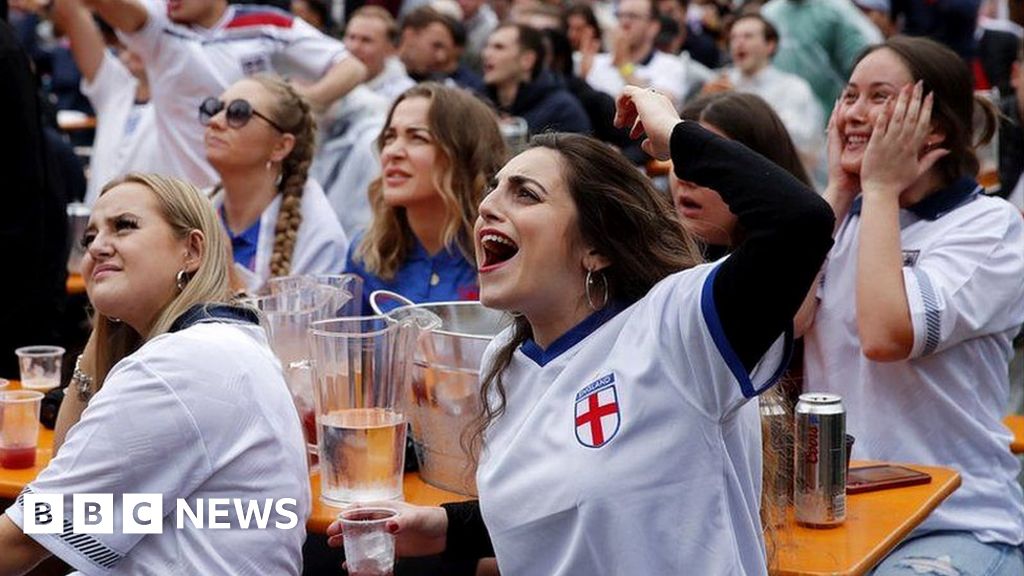
image copyrightGetty Images
Retail sales in the UK rose between May and June, boosted by demand for food and drink as millions watched the Euro 2020 football tournament.
Sales rose 0.5% month-on-month following a drop in May, official figures showed.
Growth came from "food and drink sales, boosted by football fans across Britain enjoying the Euros", the Office for National Statistics (ONS) said.
June retail sales were 9.5% higher than before the pandemic in February 2020.
The largest contribution to total retail sales growth in June was from food shops where sales rose by 4.2%.
Supermarkets sales had dropped in May as shoppers chose to dine out after some Covid restrictions were lifted in the hospitality sector.
The ONS said: "Feedback from some retailers suggested that sales were positively boosted in June by the start of the Euro 2020 football championship."
Conversely, sales at non-food shops dropped by 1.7% between May and June, with a sharp fall in demand for furniture and clothing.
The ONS said sales of petrol and diesel rose by 2.3% "as people continued to increase their amount of travel". But it said sales of automotive fuel remain 2,1% below pre-pandemic levels.
Coronavirus restrictions easing explained the sharp monthly rise in sales in April; non-essential shops reopened and there was pent-up demand. There was subsequent a drop in May, the month hospitality re-started outdoors so people could eat out again.
With no big changes of restrictions in June, the overall number is less dramatic. But retailers are likely to view these figures as encouraging, especially with June sales more than 9% above pre-virus levels.
Despite a small fall, internet shopping still accounted for comfortably over a quarter of spending. That's still a greater proportion than before the pandemic. Further evidence of how the past 18 months have shifted consumer behaviour, potentially for good.
Total retail sales for June were better than an expected 0.1% fall. Aled Patchett, head of retail and consumer goods at Lloyds Bank, said: "Retailers will be hoping June marked the start of the turnaround they have been hoping for."
He added: "All eyes now are on the impact of the gradual unlocking of society across the UK. On the surface the easing of restrictions and commuters returning back to city centre offices should be good news for the sector, but workers having to self-isolate means many businesses are reporting a shortage of staff just as demand looks likely to peak."
Online sales
People continued to shop online but the amount they spent fell by 4.7% between May and June in all sectors except for clothing.
The overall proportion of retail spending online fell to 26.7% from 28.4% in May, the fourth consecutive monthly fall. "Retailers suggested that the easing of retail restrictions had affected online sales as consumers returned to physical stores," said the ONS.
From Chip War To Cloud War: The Next Frontier In Global Tech Competition
The global chip war, characterized by intense competition among nations and corporations for supremacy in semiconductor ... Read more
The High Stakes Of Tech Regulation: Security Risks And Market Dynamics
The influence of tech giants in the global economy continues to grow, raising crucial questions about how to balance sec... Read more
The Tyranny Of Instagram Interiors: Why It's Time To Break Free From Algorithm-Driven Aesthetics
Instagram has become a dominant force in shaping interior design trends, offering a seemingly endless stream of inspirat... Read more
The Data Crunch In AI: Strategies For Sustainability
Exploring solutions to the imminent exhaustion of internet data for AI training.As the artificial intelligence (AI) indu... Read more
Google Abandons Four-Year Effort To Remove Cookies From Chrome Browser
After four years of dedicated effort, Google has decided to abandon its plan to remove third-party cookies from its Chro... Read more
LinkedIn Embraces AI And Gamification To Drive User Engagement And Revenue
In an effort to tackle slowing revenue growth and enhance user engagement, LinkedIn is turning to artificial intelligenc... Read more