

Nvidia CEO Says China Wouldn't Risk Building Military Supers With American AI Chips
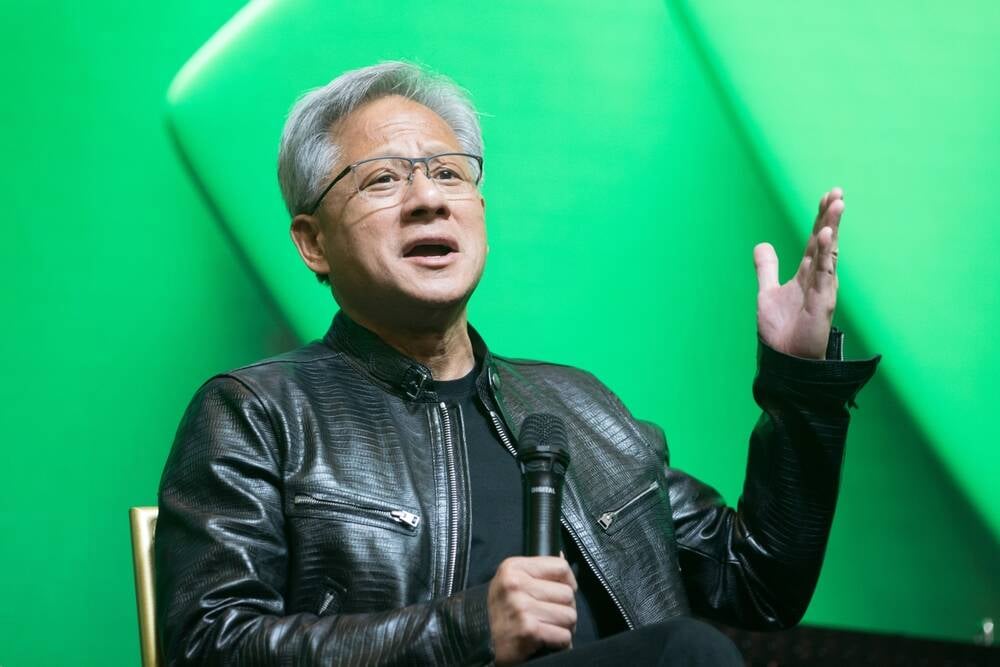
If the US military wouldn't be caught dead building supercomputers using Chinese kit, there's no reason to think the People's Liberation Army would risk doing the same, argues Nvidia CEO Jensen Huang.
"The Chinese military, no different than the American military, will not seek each other's technology out to be built on top of it," he said during a recent interview with CNN's Fareed Zakaria.
Huang's rationale is the Chinese can't rely on the technology to work when they need it, as it could be "limited at any time."
He added that it's not as though China's military doesn't have access to enough computing power already. "If you just think about the number of supercomputers that are in China, built by amazing Chinese engineers that are already in operation, they don't need Nvidia's chips or American tech stacks in order to build their military."
It's well established at this point that China is already home to some of the most powerful supercomputers, and many of these are powered by homegrown silicon.
However, the idea that Beijing wouldn't use Nvidia's chips even if it could get their hands on them is a bit naive, he opined. China's Academy of Engineering Physics (CAEP) has reportedly employed Intel and Nvidia-based systems to further the development and maintenance of nuclear weapons.
Huang's comments come as he heads to Beijing and in the wake of repeated steps by both the Biden and Trump administrations to limit the sale of advanced semiconductors, like Nvidia's chips, in China.
The most recent crackdown saw the sale of Nvidia's H20 accelerators — essentially a cut-down version of its H200 GPUs designed for the Chinese market — blocked. As we've previously reported, this decision will cost Nvidia $10.5 billion in lost revenues in the first half of the 2026 fiscal year.
Among the reasons given for the effective ban were that these chips could fuel Chinese supercomputing efforts into AI and other military applications. Supercomputers are commonly employed by world governments, including the US, for military research and development, as well as nuclear proliferation.
- Chinese TV uses AI to translate broadcasts into sign language. It's not going well
- China successfully tests hypersonic aircraft, maybe at Mach 12
- Top AI models - even American ones - parrot Chinese propaganda, report finds
- China just two years behind USA on chip design, says White House tech Czar
Huang is not a fan of these rules, which have effectively cut off Nvidia from a nation with one of the greatest possible potentials to fuel the company's growth. "China's incredible in AI because 50 percent of the world's AI developers are in China," he said, arguing that efforts to deny the Middle Kingdom American silicon have backfired, encouraging the development of homegrown alternatives.
If the US is serious about maintaining its technological advantage, it should ensure that world AIs, including those built by the Chinese, are developed using American silicon, Huang told Zakaria.
Huang isn't alone in making this argument. Executives from Microsoft, AMD, OpenAI, and CoreWeave have made similar comments following Uncle Sam's latest round of AI chip restrictions. ®
From Chip War To Cloud War: The Next Frontier In Global Tech Competition
The global chip war, characterized by intense competition among nations and corporations for supremacy in semiconductor ... Read more
The High Stakes Of Tech Regulation: Security Risks And Market Dynamics
The influence of tech giants in the global economy continues to grow, raising crucial questions about how to balance sec... Read more
The Tyranny Of Instagram Interiors: Why It's Time To Break Free From Algorithm-Driven Aesthetics
Instagram has become a dominant force in shaping interior design trends, offering a seemingly endless stream of inspirat... Read more
The Data Crunch In AI: Strategies For Sustainability
Exploring solutions to the imminent exhaustion of internet data for AI training.As the artificial intelligence (AI) indu... Read more
Google Abandons Four-Year Effort To Remove Cookies From Chrome Browser
After four years of dedicated effort, Google has decided to abandon its plan to remove third-party cookies from its Chro... Read more
LinkedIn Embraces AI And Gamification To Drive User Engagement And Revenue
In an effort to tackle slowing revenue growth and enhance user engagement, LinkedIn is turning to artificial intelligenc... Read more