

Nvidia CEO Jensen Huang Labels US GPU Export Bans Precisely Wrong And A Failure
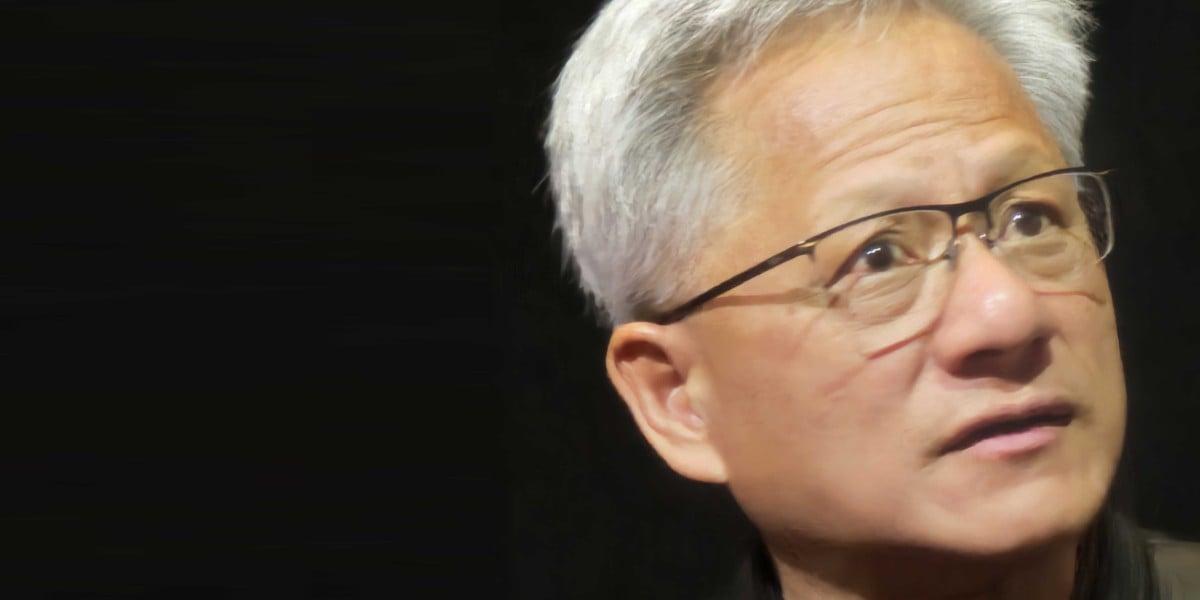
Computex Nvidia CEO Jensen Huang has said the USA’s ban on exports of his company’s most powerful accelerators to China is “precisely the wrong policy” and “a failure”.
Speaking at a Q&A session during the Computex conference in Taiwan, Huang bemoaned the Trump administration decision to bar sales of Nvidia’s H20 accelerator in China. He regretted that the decision will harm Nvidia’s revenue and profit, and therefore its ability to pay taxes and hire people in the USA.
He also thinks the policy will harm humanity, because half of the world’s AI researchers are in China and he rates their output as among the world’s finest. He wants them using on Nvidia hardware so their work can be used around the world.
“DeepSeek was built on Nvidia,” he said, before describing it as “a gift” due to the many optimization techniques the company used to create its R1 model.
Investors panicked when R1 arrived, and the value of AI hardware stocks slumped.
Huang thinks that reaction misread the situation, because AI has moved on from what he calls “one-shot” applications such as using generative AI to respond to a prompt – a job that requires a single burst of computing. DeepSeek offers reasoning models that require more computing – Huang thinks R1 has therefore spurred innovation that collectively increased the need for computing by 100 to 1000 times.
He argued that preventing Nvidia from selling to China will mean Middle Kingdom researchers stop working with the company’s hardware, and Nvidia users elsewhere would not be able to tap their innovations and the company sells less stuff and pays less taxes.
Huang pointed out Chinese firms are creating their own AI hardware, meaning US policy has spurred rather than slowed innovation. He said the policy is therefore "a failure".
Haung said Nvidia will try to create accelerators that comply with US export controls, but said “We do not know how to degrade [the GPU architecture] Hopper anymore. What we are trying to do right now is how to best serve the market. We have degraded the product so severely it will be hard.”
- Nvidia part of plans for mega 1.4 GW AI datacenter near Paris
- Intel bets you'll stack cheap GPUs to avoid spending top dollar on Nvidia Pros
- Nvidia builds a server to run x86 workloads alongside agentic AI
- Wanted: A handy metric for gauging if GPUs are being used optimally
The CEO also had some praise for Trump administration policies, especially the changed AI diffusion stance that means the USA will permit exports of AI infrastructure to more countries. Huang said the changed policy will help Nvidia to grow, and help US-made AI tech to dominate the world.
But he also thinks governments need to do more to accelerate approval for energy generation projects – using any source of energy – so datacenters can get the juice needed to run AI workloads.
He also had faint praise for the Trump administration’s policy of building more onshore manufacturing facilities, by saying that the AI boom will create both enormous demand and an opportunity to build more products in the USA. However he also said it is “impossible to do all manufacturing onshore” and in numerous appearances at Computex has pointed out that Nvidia systems comprise over a million components sourced from manufacturers around the world.
UALink stinks and sinks?
Huang also used the Q&A session to spruik Nvidia’s NVlink Fusion, which allows multiple accelerators from different vendors to use Nvidia’s NVLink interconnect.
The CEO said Nvidia customers have been asking to use NVLink in more places, because in his view “UALink is not going so well”.
UALink is an interconnect spec developed by a consortium of Nvidia’s rivals, who in April delivered a first spec, while admitting products that use it are at least a year away.
Huang said NVLink Fusion will gain traction while customers wait for UALink, but was dismissive when asked about the latter’s progress and prospects.
He also dismissed reports that Nvidia plans to build an R&D center in China, saying that the office there simply lacks space.
“The reason we need a new offices is we do not have enough chairs,” he said. “If one person types, the other person has to stop.”
Bigger offices will therefore make Nvidia more efficient.
“There will be more bathrooms, and the lines will be shorter,” Huang said, perhaps showing that some very human problems remain unsolvable by AI. ®
From Chip War To Cloud War: The Next Frontier In Global Tech Competition
The global chip war, characterized by intense competition among nations and corporations for supremacy in semiconductor ... Read more
The High Stakes Of Tech Regulation: Security Risks And Market Dynamics
The influence of tech giants in the global economy continues to grow, raising crucial questions about how to balance sec... Read more
The Tyranny Of Instagram Interiors: Why It's Time To Break Free From Algorithm-Driven Aesthetics
Instagram has become a dominant force in shaping interior design trends, offering a seemingly endless stream of inspirat... Read more
The Data Crunch In AI: Strategies For Sustainability
Exploring solutions to the imminent exhaustion of internet data for AI training.As the artificial intelligence (AI) indu... Read more
Google Abandons Four-Year Effort To Remove Cookies From Chrome Browser
After four years of dedicated effort, Google has decided to abandon its plan to remove third-party cookies from its Chro... Read more
LinkedIn Embraces AI And Gamification To Drive User Engagement And Revenue
In an effort to tackle slowing revenue growth and enhance user engagement, LinkedIn is turning to artificial intelligenc... Read more