

November Car Production Hits Lowest Level Since 1984
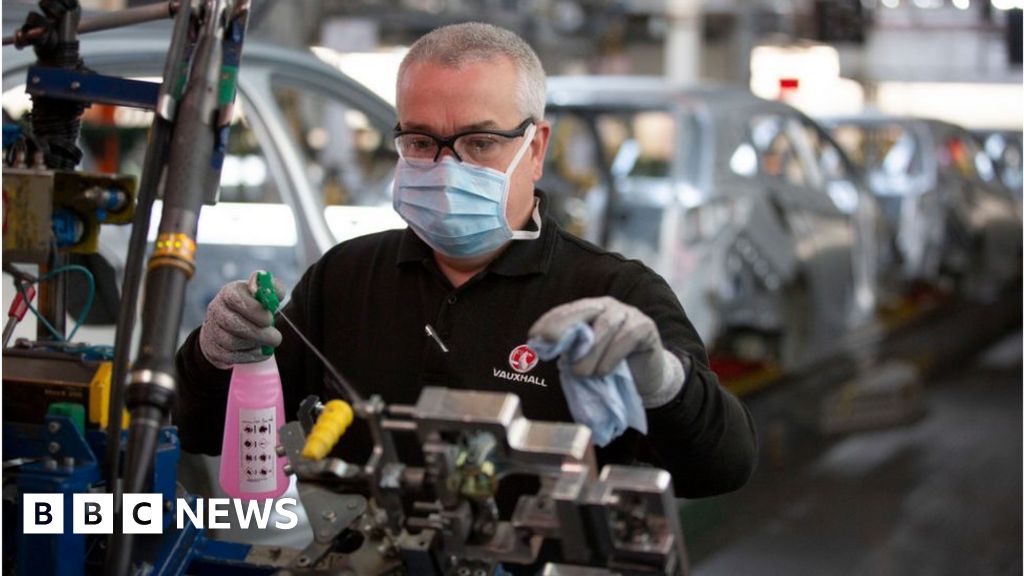
Image source, Getty Images
UK car production in November hit its lowest level since 1984 as Covid continued to affect supply chains, a motoring industry group has said.
Output fell by 28.7% to 75,756 units, marking the fifth consecutive month of decline, the Society of Motor Manufacturers and Traders (SMMT) said.
It called the figures "incredibly worrying", blaming a continuing shortage of semiconductors.
The start of full Brexit customs controls could also hit firms, it said.
The UK has been short of semiconductors - which are commonly used components in cars - for the past year.
Under Covid restrictions, Asian factories have struggled to keep up with demand as economies have reopened.
SMMT boss Mike Hawes said the problem was "likely to affect the sector throughout next year", and called for more government support.
'Keep trade flowing smoothly'
He added the industry was as prepared as it could be for the start of full EU customs checks from 1 January, but warned any delays arising "from ill-prepared freight or systems will place further stress on businesses".
"Should any problems arise, contingency measures must be implemented immediately to keep cross border trade flowing smoothly," he said.
In September the UK delayed implementing post-Brexit checks on food and farming imports to England, Scotland and Wales until 1 January 2022.
Checks on goods going the other way were also postponed until the same date.
One highlight of the November figures was that electric cars continued to grow their share of overall production.
Electric, plug-in hybrid and hybrid cars accounted for 32.7% of all cars made last month, the SMMT said.
Battery electric vehicle output, in particular, grew by 52.9% to 10,359 units, hitting a new high of 13.7% of all production - more than double the level a year ago.
From Chip War To Cloud War: The Next Frontier In Global Tech Competition
The global chip war, characterized by intense competition among nations and corporations for supremacy in semiconductor ... Read more
The High Stakes Of Tech Regulation: Security Risks And Market Dynamics
The influence of tech giants in the global economy continues to grow, raising crucial questions about how to balance sec... Read more
The Tyranny Of Instagram Interiors: Why It's Time To Break Free From Algorithm-Driven Aesthetics
Instagram has become a dominant force in shaping interior design trends, offering a seemingly endless stream of inspirat... Read more
The Data Crunch In AI: Strategies For Sustainability
Exploring solutions to the imminent exhaustion of internet data for AI training.As the artificial intelligence (AI) indu... Read more
Google Abandons Four-Year Effort To Remove Cookies From Chrome Browser
After four years of dedicated effort, Google has decided to abandon its plan to remove third-party cookies from its Chro... Read more
LinkedIn Embraces AI And Gamification To Drive User Engagement And Revenue
In an effort to tackle slowing revenue growth and enhance user engagement, LinkedIn is turning to artificial intelligenc... Read more