

No, Working In IT Does Not Mean You Can Fix Anything With A Soldering Iron
On Call As another working week ebbs away into history, dispel any thoughts that your efforts have made no mark in history by wallowing in other readers’ misery in another instalment of On-Call, The Register’s weekly tale of being asked to fix the ridiculous and absurd.
This week, meet a reader we’ll Regomize as “Sebastian” who told us that from nine to five he works as an engineer of embedded software and is regularly called on to support customers when all other avenues of assistance have been exhausted, and someone who can read the code is thought to be the most likely source of a fix.
Sebastian’s work feats have been noted by family and friends.
You can guess what’s coming next: they all therefore think he’s just the chap to help with domestic IT disasters.
Or as Sebastian put it in his mail to On-Call: “To most of them anything involving computers is all 'IT', and therefore the moment their latest iDevice won't send their emails or their printer has started speaking French I'm definitely the best person to talk to.”
- Fixing an upside-down USB plug: A case of supporting the insupportable
- Datacenter migration plan missed one vital detail: The leaky roof
- Keeping printers quiet broke disk drives, thanks to very fuzzy logic
- Using the datacenter as a dining room destroyed the platters that matter
A few weeks back, that appraisal of Sebastian’s talents led to a call from a friend who said they had a cable that needed some repairs, probably with a soldering iron.
Sebastian is a generous fellow so replied that he’s a competent soldering iron practitioner but would like to get a look at the job before committing.
His friend sent the following photo.
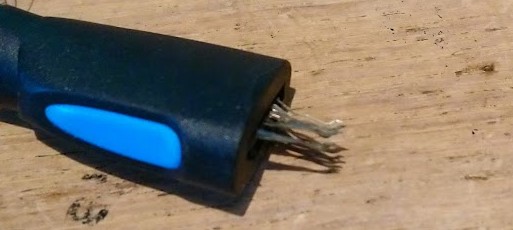
A rather dead HDMI cable - Click to enlarge
Sebastian’s assessment of the image above, with which the On Call desk concurs, is that it depicts “one end of an HDMI cable.”
“I have no idea how it got in that state, nor do I particularly want to know,” Sebastian said. But his friend had the missing metal connector that once made it a functioning cable.
“They wanted to know if I could solder it back together because 'you're good at soldering',” Sebastian told On Call, incredulity making itself evident in his email.
Sebastian didn’t finish his story – we’ll assume because no happy ending is possible!
Have your repair skills been utterly overrated? Or have you been asked to address physical layer problems that are completely beyond your remit? If so, share your story with an email to On Call and we may well share your story in a future column. ®
From Chip War To Cloud War: The Next Frontier In Global Tech Competition
The global chip war, characterized by intense competition among nations and corporations for supremacy in semiconductor ... Read more
The High Stakes Of Tech Regulation: Security Risks And Market Dynamics
The influence of tech giants in the global economy continues to grow, raising crucial questions about how to balance sec... Read more
The Tyranny Of Instagram Interiors: Why It's Time To Break Free From Algorithm-Driven Aesthetics
Instagram has become a dominant force in shaping interior design trends, offering a seemingly endless stream of inspirat... Read more
The Data Crunch In AI: Strategies For Sustainability
Exploring solutions to the imminent exhaustion of internet data for AI training.As the artificial intelligence (AI) indu... Read more
Google Abandons Four-Year Effort To Remove Cookies From Chrome Browser
After four years of dedicated effort, Google has decided to abandon its plan to remove third-party cookies from its Chro... Read more
LinkedIn Embraces AI And Gamification To Drive User Engagement And Revenue
In an effort to tackle slowing revenue growth and enhance user engagement, LinkedIn is turning to artificial intelligenc... Read more