

New York State Senate First To Pass Landmark Right-to-repair Bill – But Don't Go Popping The Champagne Just Yet
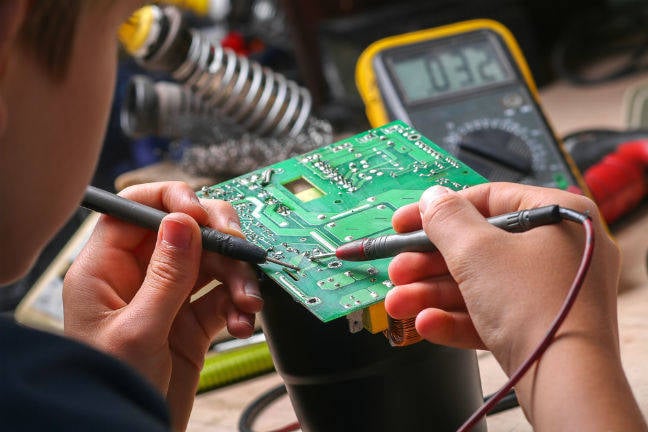
The New York State Senate has approved landmark right-to-repair legislation which forces original equipment manufacturers to provide schematics, parts, and tools to independent repair providers and consumers.
S4104, which advances the Digital Fair Repair act, was passed with overwhelming bipartisan support. At a virtual session, 51 senators approved the motion, with just 12 voting against.
Some distance remains before the bill ultimately becomes law. It must win the approval of lawmakers from the lower house, the New York State Assembly, which is currently considering its own version of the bill (A7006).
The 2021 legislative session concluded on Thursday. It is hoped that A7006, which is currently being considered in the committee stage, will be passed in the 2022 sitting, which is scheduled to convene on January 6, 2022.
Although not yet law, senate approval of the bill has been interpreted as a win for the right-to-repair movement, which has secured several crucial victories in recent months.
"In passing this bill, the New York Senate proved they're not afraid to stand up to powerful interests by fighting for the rights of all New Yorkers to fix, and truly own, their devices," commented Kerry Maeve Sheehan, US policy lead for iFixit.
"This is a major win for small repair businesses throughout the state, for the environment, for low income communities, and for everyone who just wants to be able to fix their stuff."
Last November, Massachusetts voters approved a referendum that would extend the right-to-repair to the automotive sector. Taking effect in 2022, the Motor Vehicle Owners' Right to Repair Act would allow independent repair shops to access crucial telematics data required for diagnosing and resolving faults in vehicles.
The automotive industry fought vociferously against this bill, spending millions on a marketing campaign that unabashedly veered into the sensational. A series of splashy adverts implied the proposed legislation would make life easier for hackers hoping to cause harm to drivers, and in one heavily criticised and ultimately deleted video, suggested the bill would be a gift horse to high-tech voyeurs.
This, obviously, was nonsense and voters rightly rejected it. Nonetheless, it illustrated the levels of pressure emanating from sectors that most keenly oppose right-to-repair legislation.
In particular, the consumer technology industry has repeatedly conflated the right-to-repair with piracy, suggesting to lawmakers that it would force American companies to release the source code to proprietary software, and would ultimately undermine end-user privacy and security.
These arguments are bogus. A third-party engineer doesn't need to see the source code of macOS to replace a single faulty power management chip on a MacBook Pro. But to lawmakers concerned about the decline of American technological supremacy, these arguments are compelling, even if they're divorced from reality.
If legislators in New York opt to revisit S4104 and A7006 in the next sitting, it wouldn't come as a surprise to see the same levels of disingenuous lobbying. ®
From Chip War To Cloud War: The Next Frontier In Global Tech Competition
The global chip war, characterized by intense competition among nations and corporations for supremacy in semiconductor ... Read more
The High Stakes Of Tech Regulation: Security Risks And Market Dynamics
The influence of tech giants in the global economy continues to grow, raising crucial questions about how to balance sec... Read more
The Tyranny Of Instagram Interiors: Why It's Time To Break Free From Algorithm-Driven Aesthetics
Instagram has become a dominant force in shaping interior design trends, offering a seemingly endless stream of inspirat... Read more
The Data Crunch In AI: Strategies For Sustainability
Exploring solutions to the imminent exhaustion of internet data for AI training.As the artificial intelligence (AI) indu... Read more
Google Abandons Four-Year Effort To Remove Cookies From Chrome Browser
After four years of dedicated effort, Google has decided to abandon its plan to remove third-party cookies from its Chro... Read more
LinkedIn Embraces AI And Gamification To Drive User Engagement And Revenue
In an effort to tackle slowing revenue growth and enhance user engagement, LinkedIn is turning to artificial intelligenc... Read more