

NASA's Artemis Mission Finally Launches After Faulty Ethernet Switch Delayed Countdown
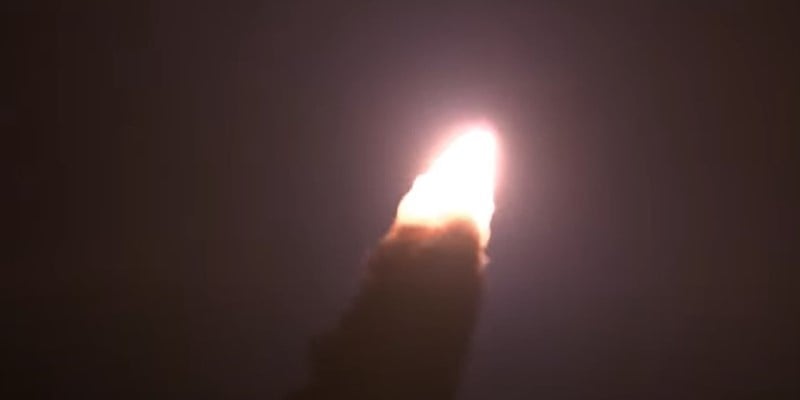
NASA has successfully launched its first Artemis mission, after a faulty Ethernet switch threatened the debut of the USA's Space Launch System and return to Lunar exploration.
The switch was on site at the Eastern Range radar facility, which NASA wrote is "necessary for launch." NASA's liveblog of the launch said the fault switch caused "loss of signal."
The countdown was therefore paused at T-10:00 while the switch was replaced and tests conducted to ensure the new hardware was ready for the launch. That work meant the launch was pushed out of its scheduled time and into the two-hour launch window.
The switch wasn't the only problem for Artemis and the Space Launch System (SLS) that carries it into space and towards Luna: NASA also reported a leaky valve on mobile launcher.
A "red team" – technicians trained to work on the SLS while it is fueled – went onto the launchpad and "tightened connections in the area of a leaky valve on the mobile launcher."
Other work was necessary on the liquid oxygen valves on the SLS's upper stage.
NASA ironed that all out and at 1:37AM US Eastern Time resumed the countdown before launching without any apparent hitches.
- NASA identifies landing sites for America's return trip to the Moon
- NASA wheels SLS rocket out to the launchpad for another attempt to get off the ground
- NASA's Artemis rocket makers explain that it's a marathon and a sprint
- NASA tricks Artemis launch computer by masking data showing a leak
- Two Scotts among volunteers helping NASA to track Artemis mission
Solid rocket boosters were jettisoned as planned, and without incident, around three minutes into the flight. Service module fairings and the launch abort system were let go a couple of minutes later.
The SLS's four main core stage engines continued to fire until eight minutes into the flight, by which time the craft had cracked 16,000 mp/h (25,750 km/h). The engines cut off and the core stage separated successfully, leaving the Orion spacecraft on its way to the Moon.
The @NASA_SLS rocket has reached main engine cutoff, or MECO, in the mission timeline. The RS-25 engines have powered off and the core stage has separated. @NASA_Orion is now in orbit. pic.twitter.com/OlnxhFAlET
— NASA (@NASA) November 16, 2022
The hour or so needed to fix the Ethernet switch was just one of many, many, delays to the launch, which was first scheduled for August 29th but was disrupted by weather, leaks, an engine that would not chill out and myriad other glitches
With the rocket now finally in space, and on its way to Luna for a mission that will test a future crewed expedition to the satellite's surface, the USA's and humanity's long haul towards putting people on Mars has begun. ®
From Chip War To Cloud War: The Next Frontier In Global Tech Competition
The global chip war, characterized by intense competition among nations and corporations for supremacy in semiconductor ... Read more
The High Stakes Of Tech Regulation: Security Risks And Market Dynamics
The influence of tech giants in the global economy continues to grow, raising crucial questions about how to balance sec... Read more
The Tyranny Of Instagram Interiors: Why It's Time To Break Free From Algorithm-Driven Aesthetics
Instagram has become a dominant force in shaping interior design trends, offering a seemingly endless stream of inspirat... Read more
The Data Crunch In AI: Strategies For Sustainability
Exploring solutions to the imminent exhaustion of internet data for AI training.As the artificial intelligence (AI) indu... Read more
Google Abandons Four-Year Effort To Remove Cookies From Chrome Browser
After four years of dedicated effort, Google has decided to abandon its plan to remove third-party cookies from its Chro... Read more
LinkedIn Embraces AI And Gamification To Drive User Engagement And Revenue
In an effort to tackle slowing revenue growth and enhance user engagement, LinkedIn is turning to artificial intelligenc... Read more