

More Than 17,000 Chain Store Shops Closed Last Year
By Emma Simpson
Business correspondent, BBC News
Image source, Getty Images
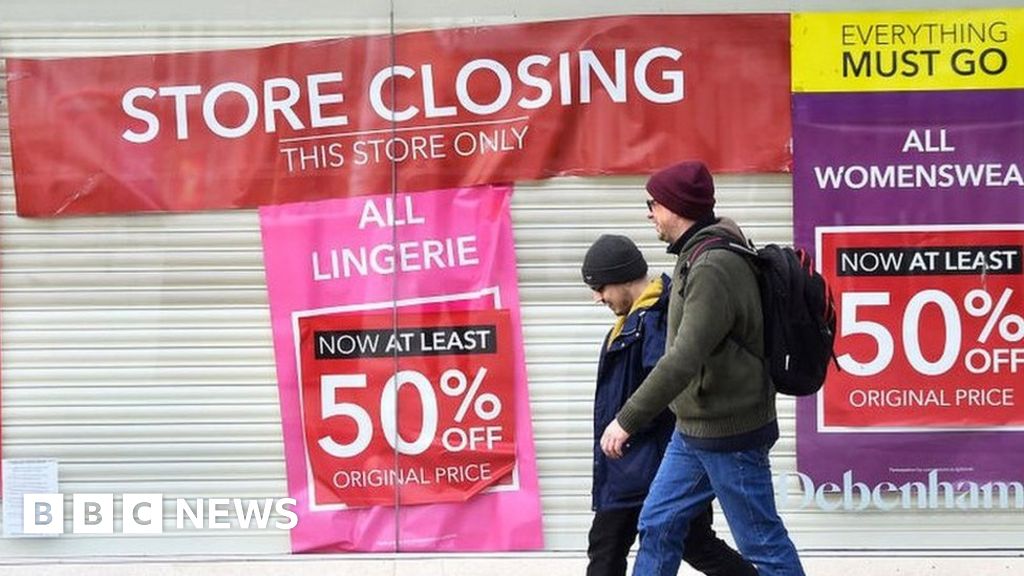
More than 17,000 chain store outlets closed across Britain last year, according to new research.
The figures, compiled for the accountancy firm PwC, reflect the rise of online shopping and the impact of the pandemic.
However, the data suggests the rate of closures is slowing as more independent firms take on space.
"The worst could now be over," said Lisa Hooker, head of consumer markets at PwC.
The research was compiled by the Local Data Company, which has been tracking more than 200,000 outlets on High Streets, shopping centres and retail parks operated by businesses with more than five shops.
The figures include retailers, restaurants, bars and gyms as well as banks, takeaways and hairdressers.
As the chart below shows, there was a slight reduction in the number of closures last year, to 17,219. That's an average of 47 stores shutting every day and down from 48 in 2020.
But there was also another sharp drop in the number of openings, which led to a net loss of 10,059 outlets, the biggest fall since 2014.
"There's no doubt that the numbers are stark and 2021 saw an acceleration in net closures across this sector, which in isolation looks dramatic," said Lucy Stainton, commercial director at the Local Data Company.
The pandemic has accelerated the changes already under way across retail, causing upheaval for many High Streets and town centres.
But it's not the death of the High Street, insists Ms Stainton, but rather a final shake-out of some of the heritage brands.
The last two years have seen the fall of some of big household names, such as Sir Philip Green's retail empire, Arcadia, and Debenhams. These closures, along with a host of other retail restructurings, are captured in the figures.
Meanwhile, some locations continue to do better than others.
Yet again, retail parks - clusters of large stores often on the edge of town - have proved to be the most resilient.
They've become more popular with shoppers during Covid thanks to easier access and parking. In contrast, shopping centres have gone from being the most popular retail locations in 2015 to the worst performing over the last two years.
They've been hit hard by a swathe of closures of fashion shops, department store chains and casual dining outlets.
"Location matters most to consumers," said PwC's Lisa Hooker. "Retail parks and standalone sites have broad appeal. Multiple operators are taking note of this changing consumer behaviour and are relocating stores to where their customers need them to be."
So what are the kinds of businesses stepping in to fill the huge gaps right across our High Streets and town centres?
When it comes to chain outlets, there has been growth among takeaways, cake shops and job centres. But this expansion is nowhere near enough to make up for the wave of closures led by fashion retailers and banks that have accelerated during the pandemic.
Although 2021 was extremely challenging for retailers, Lucy Stainton says vacancy rates have started to stabilise and that the number of empty shops is no longer increasing.
She said: "The rental tone is softening, and more space has become available in prime locations previously occupied by bigger brands, paving the way for new and upcoming operators.
"There's been a big uptick in independent retail and leisure firms taking on empty sites," she added.
These businesses are not included in the figures. But the numbers do highlight the huge challenges ahead, with many places still blighted by vacant units and shop fronts.
There's now a pressing need to radically reshape or even repurpose some of our towns and city centres, says Lisa Hooker.
"The last two years have been tumultuous for retailers.
"To regain lost footfall, High Streets must understand why retail parks are so attractive to consumers or look for ways to better serve local needs, encouraging independent retailers and entrepreneurs to take this opportunity to grow into the gaps that are emerging."
From Chip War To Cloud War: The Next Frontier In Global Tech Competition
The global chip war, characterized by intense competition among nations and corporations for supremacy in semiconductor ... Read more
The High Stakes Of Tech Regulation: Security Risks And Market Dynamics
The influence of tech giants in the global economy continues to grow, raising crucial questions about how to balance sec... Read more
The Tyranny Of Instagram Interiors: Why It's Time To Break Free From Algorithm-Driven Aesthetics
Instagram has become a dominant force in shaping interior design trends, offering a seemingly endless stream of inspirat... Read more
The Data Crunch In AI: Strategies For Sustainability
Exploring solutions to the imminent exhaustion of internet data for AI training.As the artificial intelligence (AI) indu... Read more
Google Abandons Four-Year Effort To Remove Cookies From Chrome Browser
After four years of dedicated effort, Google has decided to abandon its plan to remove third-party cookies from its Chro... Read more
LinkedIn Embraces AI And Gamification To Drive User Engagement And Revenue
In an effort to tackle slowing revenue growth and enhance user engagement, LinkedIn is turning to artificial intelligenc... Read more