

Microsoft Wants To Quit Building Army VR Goggles, Hand Contract To Anduril
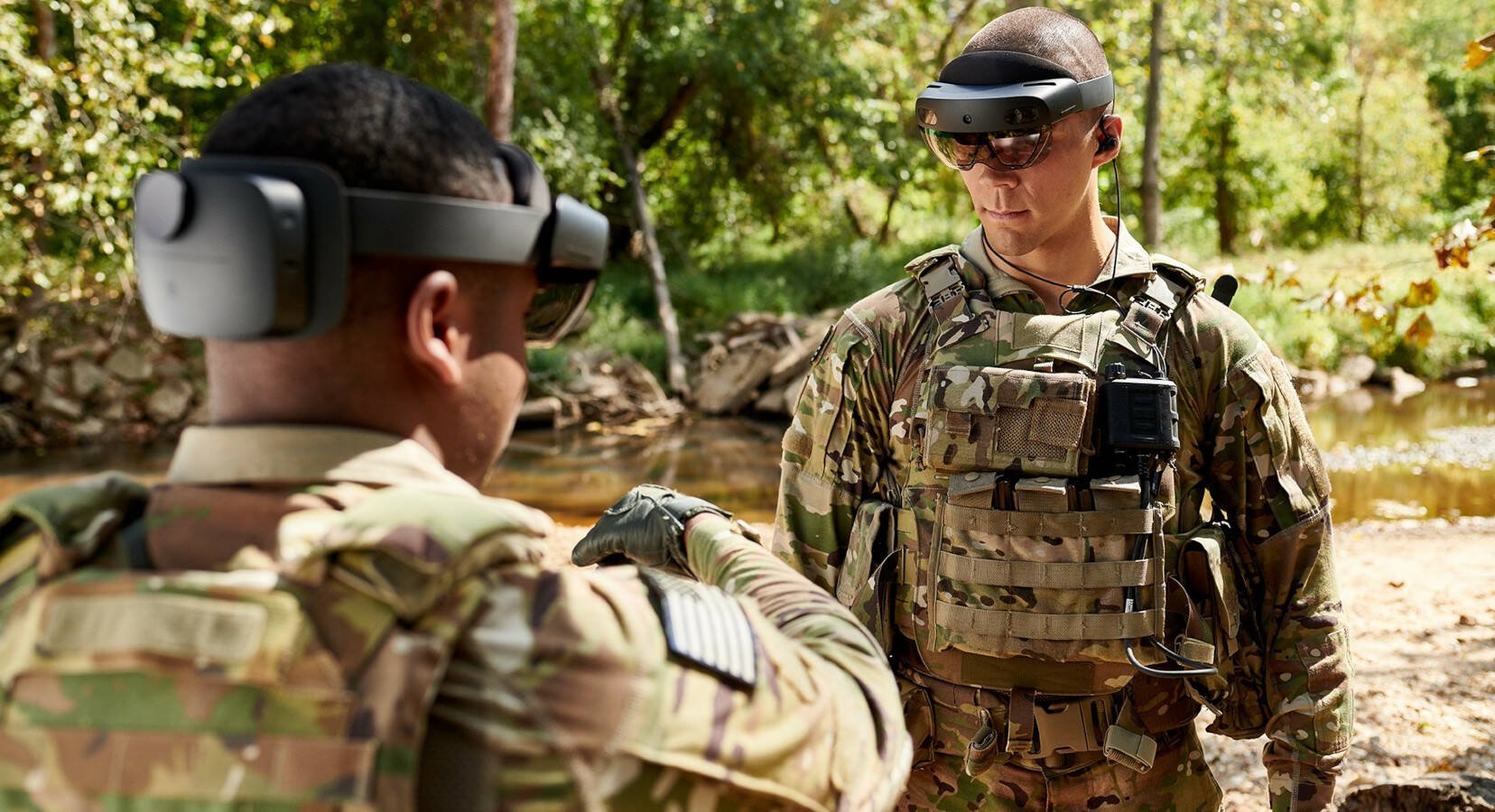
Microsoft plans to quit developing augmented-reality headsets for the US Army and have Oculus founder Palmer Luckey's Anduril Industries take over the gig.
The software giant’s AR-for-Army project is called the Integrated Visual Augmentation System (IVAS) and began in 2018 using hardware based on Microsoft's now-discontinued HoloLens headsets.
It hasn’t gone well. The Army signed a $22 billion deal with Microsoft for custom-made kit in 2021, but later that year delayed a roll-out of the headsets without providing much explanation other than to say extra time would give the Army and Microsoft the opportunity "to continue to enhance" the headsets.
A possible reason for the delay emerged in 2022 with the leak of a report that found soldiers wearing the modified HoloLenses suffered "mission-affecting physical impairments" including headaches, eyestrain, and nausea. The Army understandably asked Microsoft to revisit its designs.
Army officials had been skeptical of the need for IVAS early in the project, with the Department of Defense's Inspector General finding that the whole project might be a waste of money - and that was before the nauseating results of the 2022 tests.
By early 2023, Congress decided to yank funding for the program, telling the Pentagon it refused to fund anything but new hardware that didn't make soldiers sick. The DoD planned to test version 1.2 of IVAS in FY 2025 and a few of those headsets were tested by the Army in early 2024.
Results of that test haven't been made public.
A new deal, announced today pending Pentagon approval, will see Anduril "assume oversight of production, future development of hardware and software, and delivery timelines" for the augmented reality headsets. Microsoft will step back from developing the devices and take a role providing cloud services for Anduril's work on IVAS.
Anduril and Microsoft announced an earlier IVAS partnership last September that would see Luckey's company add its Lattice software to IVAS headsets, with Luckey personally leading the project.
"This project is my top priority at Anduril, and it has been for some time now," Luckey said in September. "It's one of the Army's most critical programs."
- DARPA worried battlefield mixed reality vulnerable to 'cognitive attacks'
- Microsoft's HoloLens goes galactic in $19.8M augmented reality adventure
- Anduril picks Ohio for 5 million square foot autonomous weapon factory
- We can't make this stuff up: Palantir, Anduril form fellowship for AI adventures
It's not clear whether Luckey and Co.'s work on IVAS last year led to a decision to get more involved, or if Microsoft simply realized the Oculus creator was better positioned to developing a military headset.
Microsoft demurred when asked, echoing a statement from Microsoft Mixed Reality EVP Robin Seiler accompanying the announcement that said the company is "incredibly proud of the work our teams have put in to help the U.S. Army transform its concept of a soldier-borne, AR headset into reality with the IVAS program," and that Microsoft was "excited to partner with Anduril for the next phase of IVAS."
The Army, on the other hand, told us Microsoft informed it of the plan to hand IVAS development off to Anduril despite the program "meeting all performance objectives" validated by soldier assessments to date.
"Microsoft has submitted a request for Army approval to novate the Integrated Visual Augmentation System production agreement to Anduril," Army spokesperson Ellen Lovett told us in an email. "The Army will work with both industry partners throughout the process."
It's unknown whether Anduril will simply pick up where Microsoft left off, or if Luckey's firm plans to redesign IVAS. One thing we expect the Army will want left off? The ability for the headset to kill its wearer if they muck up a training maneuver. ®
From Chip War To Cloud War: The Next Frontier In Global Tech Competition
The global chip war, characterized by intense competition among nations and corporations for supremacy in semiconductor ... Read more
The High Stakes Of Tech Regulation: Security Risks And Market Dynamics
The influence of tech giants in the global economy continues to grow, raising crucial questions about how to balance sec... Read more
The Tyranny Of Instagram Interiors: Why It's Time To Break Free From Algorithm-Driven Aesthetics
Instagram has become a dominant force in shaping interior design trends, offering a seemingly endless stream of inspirat... Read more
The Data Crunch In AI: Strategies For Sustainability
Exploring solutions to the imminent exhaustion of internet data for AI training.As the artificial intelligence (AI) indu... Read more
Google Abandons Four-Year Effort To Remove Cookies From Chrome Browser
After four years of dedicated effort, Google has decided to abandon its plan to remove third-party cookies from its Chro... Read more
LinkedIn Embraces AI And Gamification To Drive User Engagement And Revenue
In an effort to tackle slowing revenue growth and enhance user engagement, LinkedIn is turning to artificial intelligenc... Read more